Every marketing leader faces the same dreaded question: “Can you prove the ROI?” Retainer models bury hours in vague deliverables, leaving budgets hard to defend. Hour-based models solve that problem by logging every hour, linking it to tasks, and connecting those tasks to measurable outcomes.
Why Traditional ROI Reporting Fails

Glossy reports don’t cut it anymore. Finance leaders want precision: how much time was spent, what was delivered, and what business impact it created. McKinsey research shows that agile marketing teams—those that track and reallocate quickly—outperform peers in revenue growth.
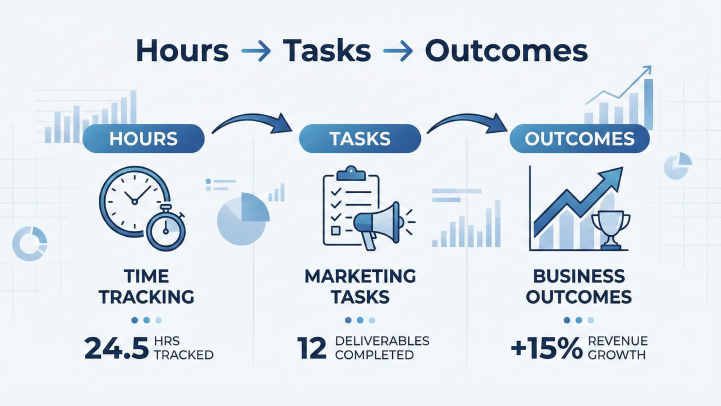
The Hour → Task → Outcome Framework
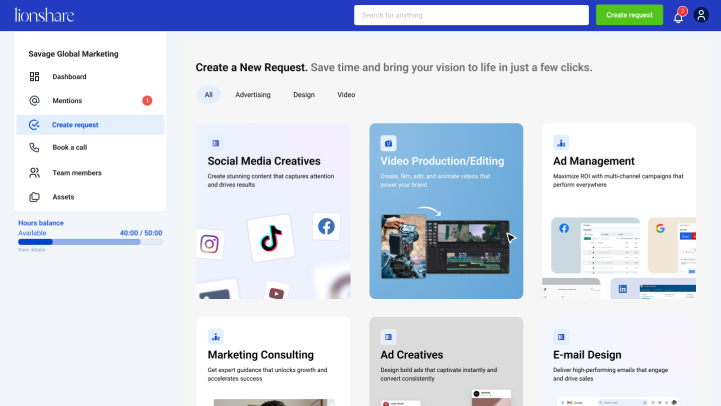
- Hours: Logged transparently in Lionshare.app
- Tasks: Clear deliverables like CRO experiments, PPC optimizations, or content creation
- Outcomes: Tied to conversions, leads, or pipeline growth
This framework turns marketing into a ledger leaders can trust.
Case Example
A SaaS client reallocated 30 hours from low-intent paid search keywords into CRO experiments. Within 60 days, conversion rates jumped 22% and the CMO finally had boardroom-ready proof of ROI.
Why Finance Leaders Love It
- CFOs see efficiency—every dollar is accounted for.
- CEOs see growth—metrics tied directly to outcomes.
- CMOs gain trust—budgets defended with data, not fluff.
Edelman’s 2025 Trust Barometer reinforces this point: transparency builds trust, and trust drives investment.
Final Word
ROI shouldn’t be a mystery. Hour-based marketing makes it visible and defensible, turning budget reviews from stressful debates into growth conversations.