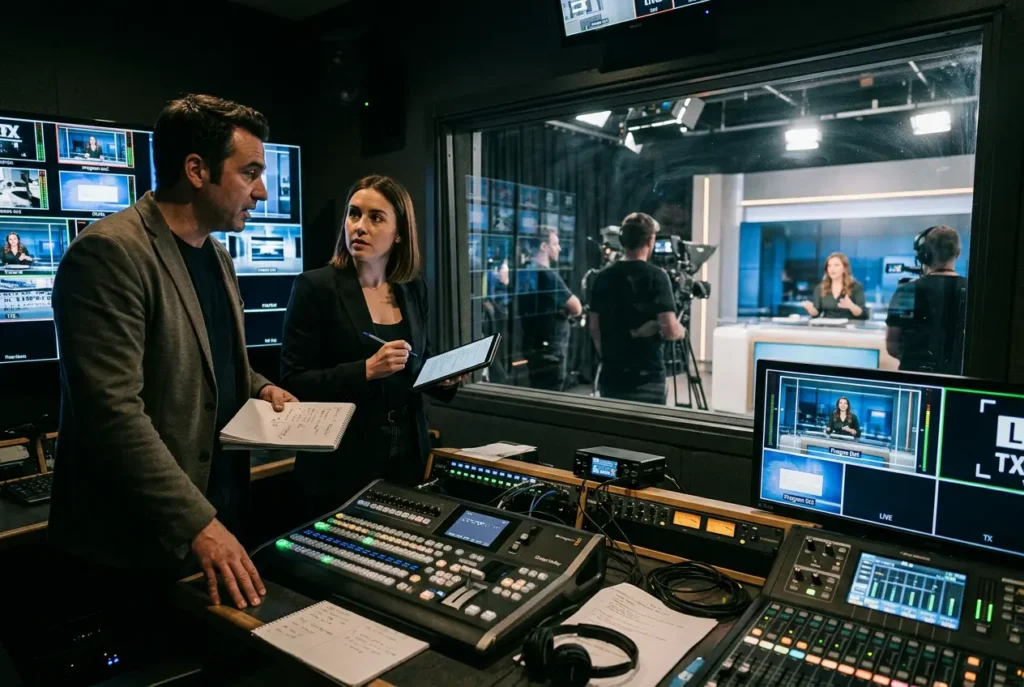
The promise of AI-generated video is seductive: unlimited content production at a fraction of the cost of traditional filming. For B2B service brands—consultancies, SaaS platforms, financial firms, and agencies—where “trust” is the primary product, this promise comes with a heavy caveat.
In the service industry, human connection is currency. If your content feels synthetic, your brand feels fake. Yet, ignoring the efficiency of generative video is a strategic error that allows competitors to outpace your market presence.
The question for 2026 isn’t if you should use AI video, but where it acts as a performance multiplier and where it becomes a liability. This article cuts through the vendor hype to provide a decision-making framework for integrating AI video into your service delivery and growth engines.
The Reality Check: Asset vs. Hype
To determine if AI video is an asset, we must first strip away the “magic” and look at the mechanics. Generative video tools (like Veo, Sora, HeyGen, and Synthesia) have moved beyond the “uncanny valley” of 2023. They can now produce photorealistic avatars, synthesize voice with emotional inflection, and localize content into 40+ languages instantly.
However, the “hype” often ignores the Authenticity Gap.
- The Hype: “Replace your entire video production team with AI.”
- The Reality: AI cannot replicate the nuance of a founder’s story, the raw energy of a live event, or the empathy required in high-stakes client advisory.
- The Asset: AI excels at volume, velocity, and variance. It is a tool for scaling communication that does not require deep emotional resonance, such as personalized prospect outreach, technical explainers, and multilingual onboarding.
For service brands, AI video is not a replacement for premium brand storytelling; it is an engine for operationalizing communication.
High-Impact Use Cases for Service Brands
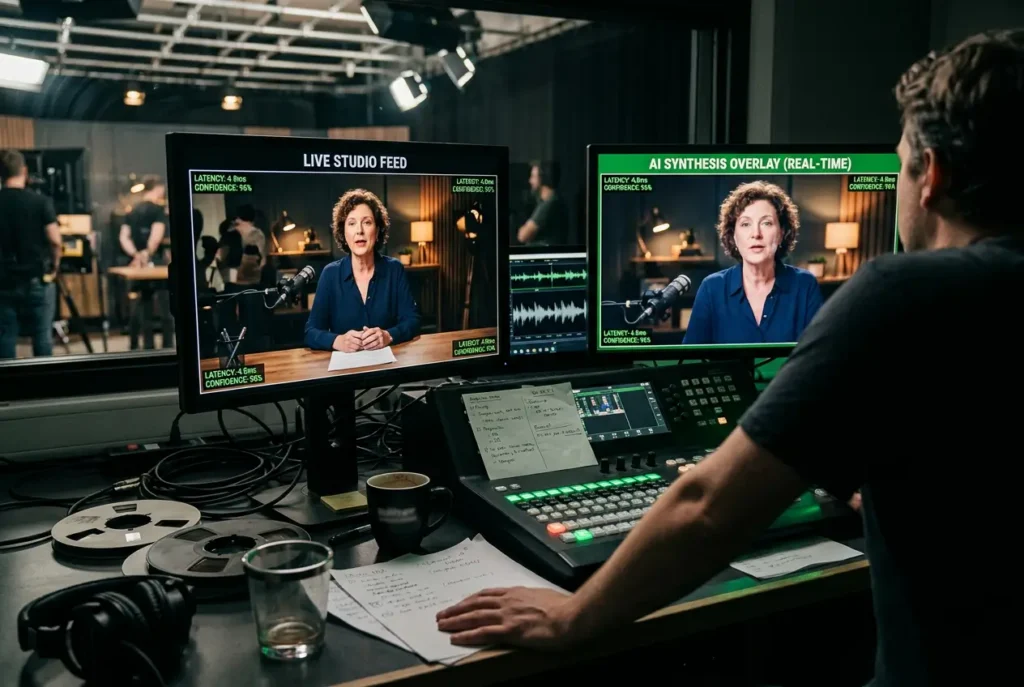
Where does AI-generated video actually drive revenue and retention? Focus on these three high-leverage areas.
1. Hyper-Personalized Sales Outreach
Cold text emails have a response rate approaching zero. Video prospecting works, but recording unique videos for 500 prospects is impossible.
AI video bridges this gap. By recording a single “base” video and using generative AI to lip-sync and voice-match specific variables (Company Name, First Name, Pain Point), your SDRs can send 500 “personalized” videos in the time it takes to record one.
- The Metric: Service firms report 3x to 5x increases in meeting book rates when shifting from text to personalized AI video.
2. Scalable Client Onboarding & Training
In technical service sectors (like Cybersecurity or IT consulting), client education is a bottleneck. Updating training videos requires re-hiring actors, booking studios, and re-editing.
With AI avatars, updating a protocol or changing a regulation in a video is as simple as editing a text document. The avatar speaks the new lines perfectly, maintaining visual continuity.
- The Asset: Reduces production costs by ~90% and ensures clients always have up-to-date compliance information.
3. Rapid Global Localization
For firms expanding into new markets (e.g., LATAM or EMEA), language barriers slow down content velocity. AI video tools can instantly translate a partner’s English thought leadership piece into Spanish, French, or German, preserving their voice and lip movements.
- The Win: Immediate thought leadership presence in non-native markets without local production teams.
The Risks: Protecting Brand Integrity

Adopting AI-generated video for service brands is not without peril. Inaccurate execution can damage the very trust you sell.
The “Deepfake” Association
If your AI avatars look robotic or “glitchy,” viewers subconsciously associate your brand with low quality or spam. In high-ticket B2B sales, this is fatal.
- Mitigation: Only use “Studio Quality” avatars (often custom-made digital twins of your actual executives) and avoid stock avatars that prospects may have seen used by other companies.
Legal and IP Ambiguity
Who owns the output of an AI video? As of 2026, copyright laws regarding purely AI-generated content are still fluid. Furthermore, using public figures or stock actors without strict licensing can lead to “Right of Publicity” lawsuits.
- Strategy: Ensure your vendor contracts explicitly state that you own the rights to the input (your script and likeness) and the output. Avoid using public generation models for sensitive client data.
The Human Disconnect
Over-reliance on AI video for high-touch moments (like apologies, crisis management, or strategic pivots) will backfire. Clients pay a premium for human access.
- Rule of Thumb: Never use AI for empathy-driven communication.
[Internal Link: Brand Reputation Management]
Strategic Implementation Framework
To deploy AI video effectively, follow this tiered approach:
Tier 1: Low-Risk, High-Volume (Start Here)
- Content: FAQ videos, technical documentation, internal staff updates, multilingual dubbing.
- Goal: Efficiency and cost reduction.
- Success Metric: Time-to-publish reduced by 50%+.
Tier 2: Mid-Risk, Performance-Driven
- Content: Outbound sales prospecting, webinar invitations, newsletter summaries.
- Goal: Conversion and engagement.
- Success Metric: Increase in click-through rates (CTR) and reply rates.
Tier 3: High-Risk, Brand-Critical (Avoid AI)
- Content: Founder stories, client case study interviews, crisis communications, high-level strategic advisory.
- Goal: Emotional resonance and trust transfer.
- Method: Stick to traditional, high-fidelity human production.
FAQ: Executive Considerations on AI Video
Q: Is AI-generated video expensive to implement?
A: No. Compared to traditional production, it is significantly cheaper. Enterprise licenses for top-tier platforms (like Synthesia or HeyGen) cost a fraction of a single day’s shoot with a professional crew. The primary cost is the initial setup of custom “digital twins” for your executives, which is a one-time investment.
Q: Will our clients know the video is AI-generated?
A: Likely, yes. Transparency is key. Rather than trying to trick the viewer, lean into the efficiency. For example, a personalized sales video can end with, “I used AI to send this specific message to you so I could respect your time, but I’d love to have a real human conversation next week.” This reframes the tech as a tool for service, not deception.
Q: How do we handle data privacy with AI video tools?
A: Select enterprise-grade vendors that offer SOC 2 compliance and data encryption. Ensure that your scripts (which may contain proprietary insights) are not used to train the vendor’s public models.
Q: Can AI video help with SEO?
A: Indirectly, yes. Video increases dwell time on pages, a positive signal for Google. Furthermore, because AI allows you to produce video transcripts and summaries instantly, you can create rich, multimedia blog posts that rank for diverse keywords.
Q: How long does it take to create a custom avatar?
A: Creating a high-fidelity custom avatar usually takes 5–10 minutes of recording a real human in a studio setting. Once processed (typically 24–48 hours), that avatar can generate infinite hours of video content instantly from text.
Conclusion: The Hybrid Future

Is AI-generated video hype? For those who expect a “make viral video” button, yes. But for service leaders who view it as an operational asset, it is a game-changer.
The winning strategy for 2026 is Hybrid Video. Use AI to handle the volume—the explainers, the updates, the personalized outreach—so your human talent is freed up to deliver the high-value, creative, and emotional work that actually closes the deal.
Your competitors are likely already testing these waters. The risk is no longer in adopting the technology, but in failing to build the governance to use it well.