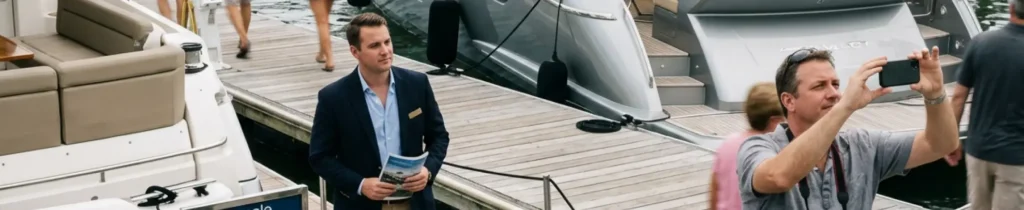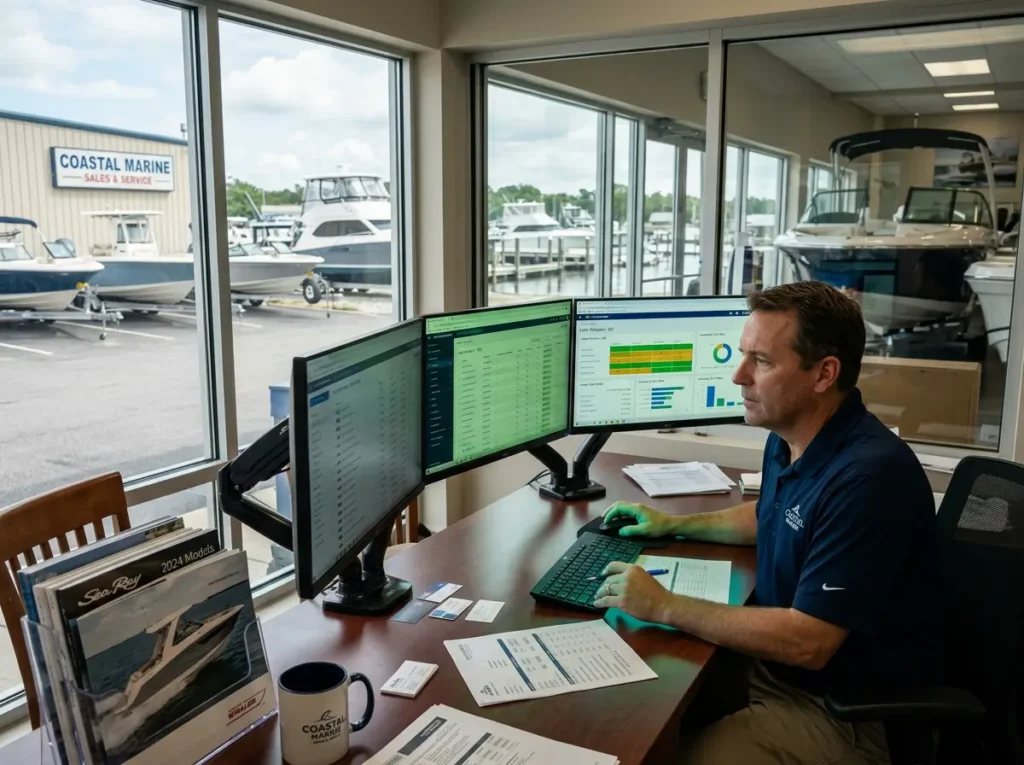
The marine industry is undergoing a structural shift in how high-net-worth individuals and recreational enthusiasts purchase vessels. Historically, boat dealerships relied heavily on showroom walk-ins, print advertising, and boat show handshakes to drive revenue. Today, the buyer’s journey is definitively digital-first. Before a prospect ever sets foot on a dealership lot or schedules a sea trial, they have consumed dozens of digital touchpoints—comparing hull designs, researching financing terms, and evaluating dealer reputation.
For boat dealership executives and operators, this presents a distinct challenge: capturing demand early in a long, complex sales cycle and nurturing that demand until the prospect is ready to transact. A fragmented marketing approach consisting of disjointed social media posts and sporadic email blasts is no longer sufficient to move premium inventory.
What is required is a cohesive, measurable, and highly structured approach to customer acquisition. This guide outlines a comprehensive 90-day boat dealership marketing strategy designed to rebuild your digital infrastructure, scale demand generation, and align your marketing efforts tightly with your showroom sales team.
Phase 1: Days 1–30 – Foundation and Infrastructure

The first 30 days of this marketing plan for boat dealers must focus strictly on digital infrastructure. Scaling advertising spend before establishing proper tracking, inventory visibility, and customer relationship management (CRM) architecture will inevitably result in wasted capital and lost leads.
CRM Architecture and Pipeline Visibility
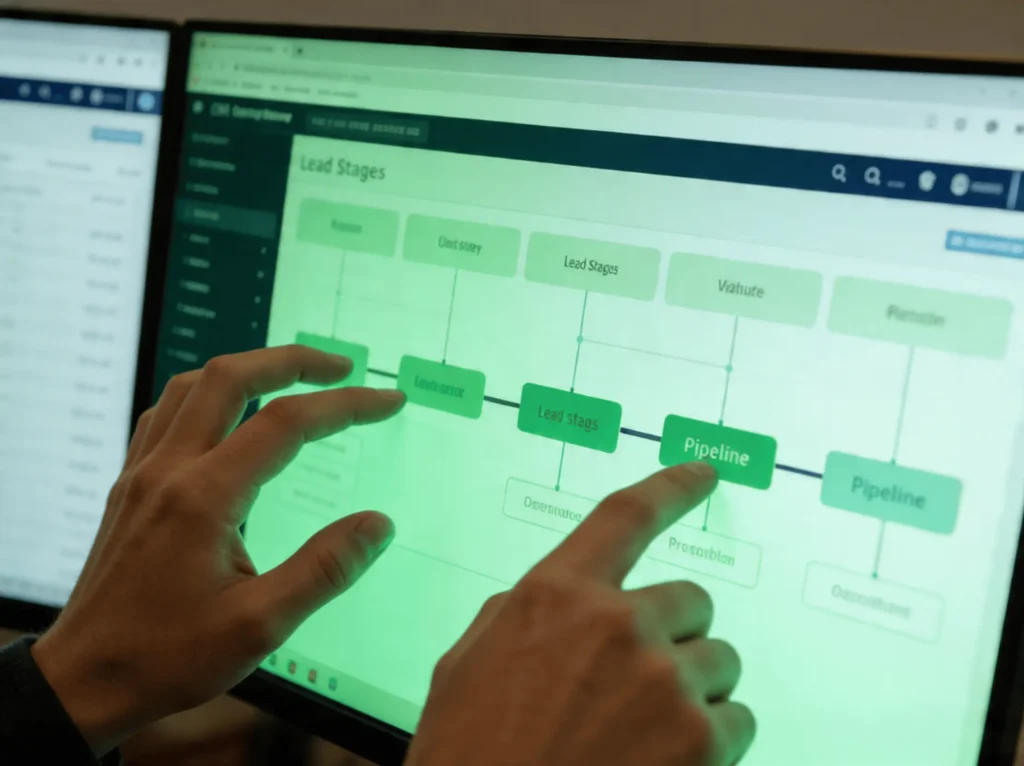
High-ticket marine sales require rigorous pipeline management. If your dealership is managing leads via shared inboxes or disparate spreadsheets, fixing this is priority one.
Implementing a robust CRM system (such as HubSpot or Salesforce) allows management to track a prospect from their first website visit to the final contract signature. During this phase, you must define lifecycle stages:
- Marketing Qualified Lead (MQL): A user who has downloaded a buyer’s guide or subscribed to a newsletter.
- Sales Qualified Lead (SQL): A user who has requested a quote on a specific model, valued a trade-in, or used a financing calculator.
- Opportunity: A prospect who has scheduled a showroom visit or sea trial.
By clearly defining these stages, operators can identify exactly where bottlenecks occur in the boat sales funnel. [Internal Link: CRM Implementation for High-Ticket Retail]
Digital Showroom Optimization
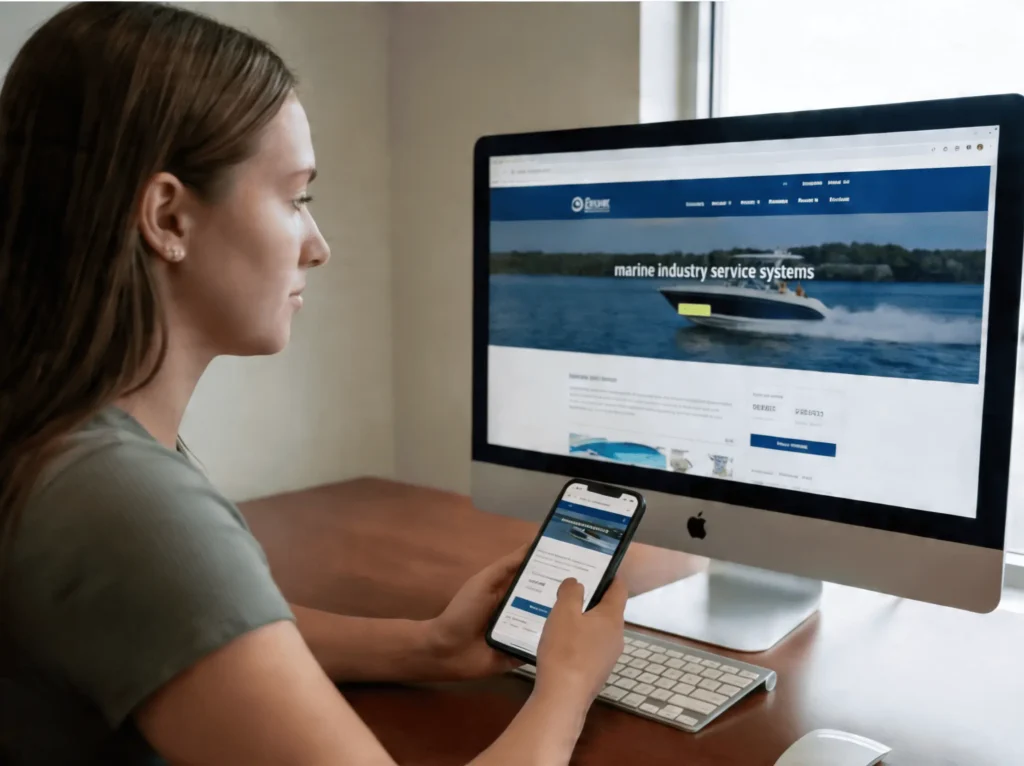
Your website is your digital showroom, and its performance directly dictates your lead volume. In the marine industry, buyers expect high-fidelity visuals, precise specifications, and transparent pricing (or clear pathways to request quotes).
In the first 30 days, execute a technical and user experience (UX) audit of your website. Key priorities include:
- Dynamic Inventory Integration: Ensure your website pulls real-time inventory data from your dealer management system (DMS). Dead listings frustrate buyers and damage brand trust.
- Mobile Optimization: Upwards of 60% of early-stage boat research occurs on mobile devices. If a user cannot comfortably view a gallery of a 35-foot center console on their smartphone, they will bounce to a competitor.
- Site Architecture and Site Speed: High-resolution marine photography and video tours are necessary but can severely slow down website loading times. Compress assets and utilize content delivery networks (CDNs) to maintain load speeds under three seconds, a critical factor for both UX and boat dealer SEO.
Phase 2: Days 31–60 – Demand Generation and Lead Acquisition
With tracking protocols established and the digital showroom optimized, the second phase shifts toward actively driving high-intent traffic to your inventory. This requires a balanced deployment of organic search strategy and targeted paid acquisition.
Search Intent and Boat Dealer SEO
Search engine optimization in the marine sector must go beyond ranking for your dealership’s name. A mature boat dealer SEO strategy targets commercial intent queries across the entire buying funnel.
- Top-of-Funnel (Informational): Queries like “outboard vs inboard motors” or “best family boats for wakeboarding.” Capturing this traffic builds brand awareness early in the cycle.
- Middle-of-Funnel (Evaluation): Queries such as “Yamaha 252SD reviews” or “Sea Ray vs Cobalt.” Content comparing specific brands you carry against competitors positions your dealership as an objective authority.
- Bottom-of-Funnel (Transactional): High-intent queries like “Boston Whaler dealers near me” or “2025 MasterCraft XT23 price.”
Ensure every boat model you carry has a dedicated, indexable landing page optimized for these transactional keywords. Furthermore, optimize your Google Business Profile to capture local SEO traffic, as geographic proximity remains a primary driver for dealership selection and post-sale servicing. [Internal Link: Advanced Local SEO Strategies for Regional Businesses]
Omnichannel Paid Acquisition
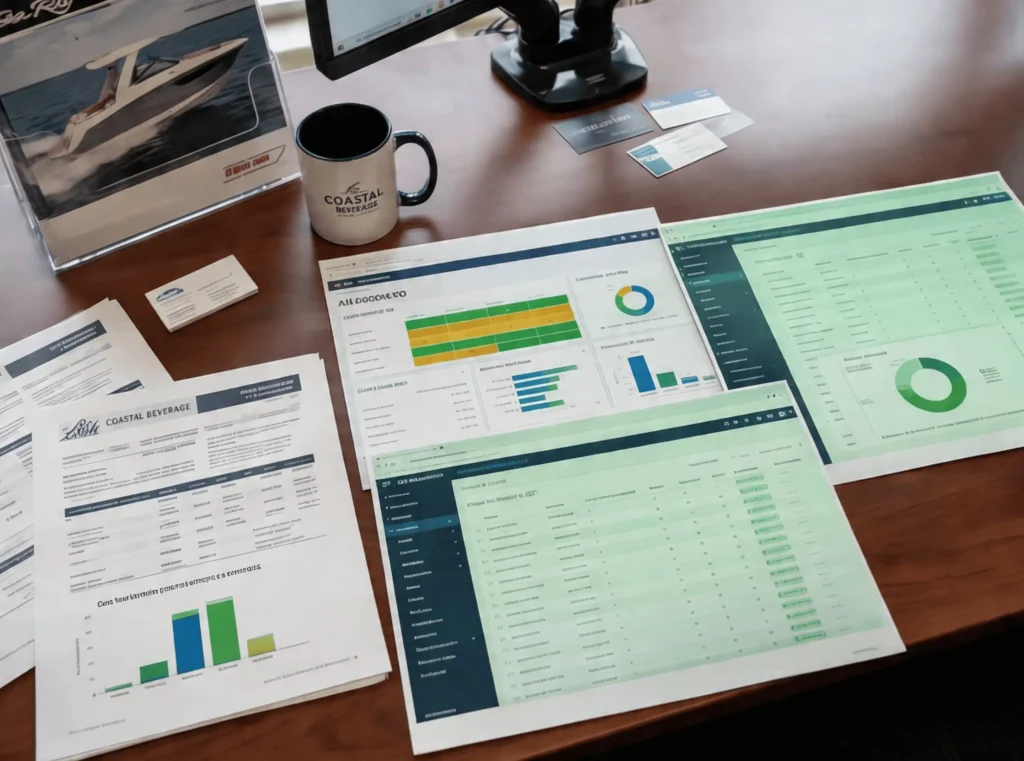
Organic visibility takes time to compound. To generate immediate marine industry lead generation, deploy targeted paid campaigns across Google Search and Meta (Facebook/Instagram).
- Google Search Ads: Bid aggressively on high-intent, bottom-of-funnel keywords. If a user is searching for “finance a pontoon boat,” your dealership should own the top ad placement with a direct link to your financing application.
- Dynamic Remarketing: The boat buying cycle can take three to nine months. Implement dynamic remarketing campaigns on Meta and the Google Display Network. If a prospect views a specific yacht on your website, they should see targeted ads featuring that exact vessel—along with complementary financing offers—as they browse the internet over the subsequent weeks.
- Geofencing and Custom Audiences: Utilize advanced targeting to serve ads to users who have recently visited marinas, competing dealerships, or regional boat shows. Furthermore, upload your current customer list to create “lookalike audiences,” allowing algorithms to find new prospects with similar demographic and financial profiles to your past buyers.
Phase 3: Days 61–90 – Conversion, Nurturing, and Sales Alignment
Generating leads is only half the equation; converting those leads into closed deals requires sophisticated nurturing and strict alignment between the marketing and sales departments. Phase 3 focuses on optimizing the handoff and automating follow-ups.
Marketing Automation for High-Ticket Sales
When a prospect downloads a brochure or inquires about a boat, an immediate, automated response is non-negotiable. However, automation must feel personalized.
Develop segmented email nurture sequences based on user behavior.
- The First-Time Buyer Sequence: Focuses on educational content, what to expect during a sea trial, slip rental information, and basic financing terms.
- The Upgrade/Trade-In Sequence: Targets past customers or leads inquiring about trade-in values. Content should highlight the benefits of new models, tax advantages of trading in, and VIP loyalty incentives.
Implement lead scoring within your CRM. Assign point values to specific actions: +5 points for opening an email, +10 points for viewing a pricing page, +20 points for using a payment calculator. When a lead crosses a specific threshold, the system should automatically alert the sales team that the prospect is “hot” and ready for direct outreach.
Sales Enablement and Handoff Protocols
The most common failure point in a boat dealership marketing strategy is the friction between the marketing team and the showroom floor. Marketing claims they are delivering leads; sales claims the leads are unqualified.
To resolve this, institute a closed-loop reporting system. Establish a strict Service Level Agreement (SLA) between departments. For example, the sales team must attempt to contact every SQL within 15 minutes during business hours and log the outcome in the CRM. Management must review this data weekly to assess lead quality and refine marketing targeting accordingly. By providing sales with behavioral context—such as knowing exactly which boats the prospect viewed online before calling—you empower them to have highly relevant, consultative conversations from the first interaction.
Measuring Success: KPIs for Marine Marketing Leaders
At the conclusion of the 90-day roadmap, executive decision-makers must evaluate performance based on hard data, not vanity metrics like social media impressions or website hits. Focus on the following Key Performance Indicators (KPIs):
- Cost Per Acquisition (CPA): How much marketing spend is required to acquire one net-new boat sale?
- Lead-to-Opportunity Conversion Rate: What percentage of total website leads actually progress to a scheduled sea trial or serious financial discussion?
- Marketing Originated Customer Percentage: What percentage of total dealership revenue can be directly attributed to digital marketing efforts versus walk-ins or past referrals?
- Return on Ad Spend (ROAS): For every dollar spent on Google and Meta ads, how many dollars of gross margin are returned to the dealership?
Frequently Asked Questions (FAQ)
What is the most effective digital marketing channel for boat dealerships?
There is no single “silver bullet” channel; effectiveness depends entirely on the buyer’s stage in the journey. For capturing immediate, high-intent demand, Google Search Ads (PPC) targeting specific boat models and financing terms is the most effective channel. However, for generating initial awareness and nurturing long-term interest, highly targeted Meta (Facebook/Instagram) advertising utilizing dynamic inventory feeds yields the highest engagement for visual products like boats. A mature strategy requires both search and social working in tandem.
How much should a boat dealership spend on marketing?
While budgets vary based on regional competition and inventory size, established boat dealerships typically allocate between 1.5% and 3% of their projected gross revenue to marketing. Dealerships actively trying to capture market share from competitors or launch new locations often push this toward 4% to 5%. It is crucial to view this budget not as a fixed operational expense, but as a flexible acquisition cost; if a specific campaign is generating a 10x ROAS, budget should be reallocated dynamically to scale that success.
How do we track ROI on our marine marketing campaigns accurately?
Accurate ROI tracking requires implementing a closed-loop multi-touch attribution model via a CRM (like HubSpot or Salesforce). This involves integrating your digital marketing platforms, website analytics, and Dealer Management System (DMS). By doing so, you can track a specific customer from their first Google click, through their website browsing history, into the CRM as a lead, and finally to the closed-won contract in your accounting software. This data allows you to attribute exact revenue figures to specific marketing campaigns.
Why are our online boat dealership leads not converting into sales?
Low conversion rates typically stem from two structural issues: poor lead qualification or slow speed-to-lead. If your marketing campaigns are generating broad, informational leads (e.g., people looking at boat pictures with no intent to buy), your sales team will waste time. You must tighten your ad targeting and use form friction (requiring timelines or budgets) to filter out low-intent users. Secondly, if the sales team is taking longer than 15 minutes to follow up on a high-intent web inquiry, conversion rates drop exponentially. A strict sales SLA is required to fix this.
How can SEO improve our boat sales revenue?
SEO drives high-margin revenue by capturing prospects at the exact moment they are researching a purchase, reducing your reliance on expensive paid advertising over time. By structurally optimizing your website for commercial intent queries—such as “[Brand] boats for sale in [City]” or “best offshore fishing boats under $150k”—you build a permanent digital asset that generates organic leads 24/7. Furthermore, local SEO ensures your dealership appears in the Google “Map Pack,” which is heavily utilized by buyers looking for nearby showrooms and ongoing service centers.
Strategic Conclusion
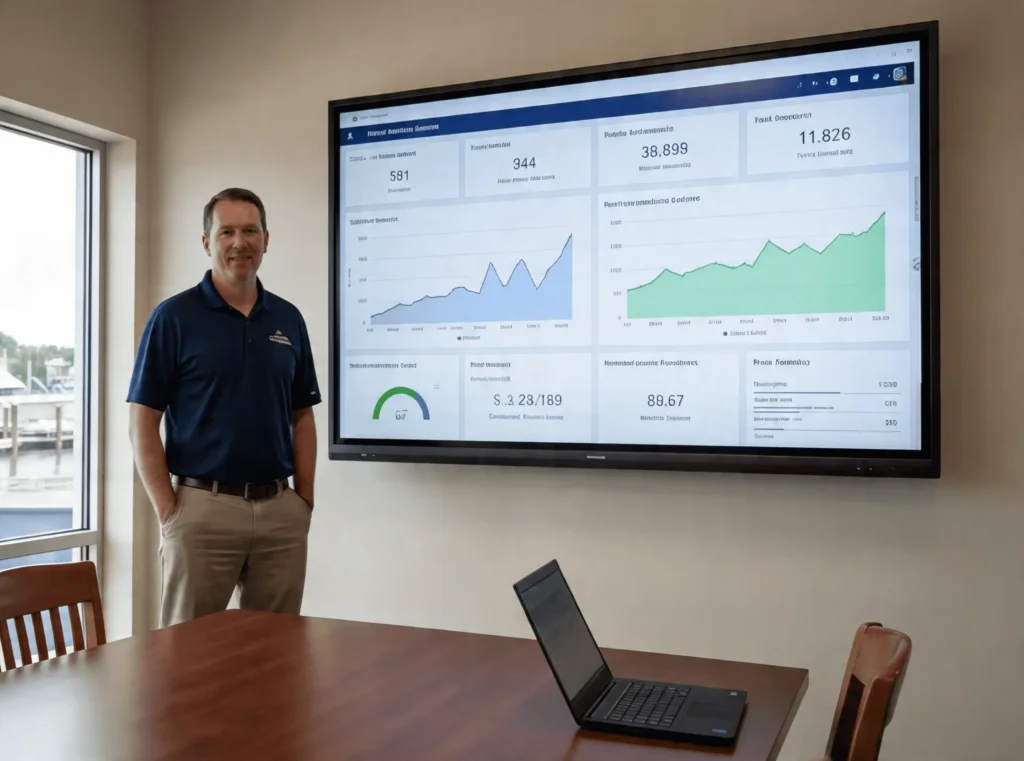
Transitioning a boat dealership from a traditional, showroom-reliant sales model to a modern, digital-first revenue engine does not happen by accident. It requires a systematic, disciplined approach to infrastructure, demand generation, and sales alignment. The 90-day marketing roadmap outlined above is not a theoretical exercise; it is a proven framework for capturing market share in the highly competitive marine industry.
By prioritizing data hygiene, aligning your organic and paid acquisition channels, and enforcing strict follow-up protocols, dealership operators can take control of their sales pipeline, reduce customer acquisition costs, and consistently move premium inventory.
Ready to accelerate your dealership’s growth? Would you like me to help you outline a custom lead-scoring matrix specifically for your dealership’s CRM?