Introduction: The Governance Gap in Co-Op Media
For franchisors and multi-unit operators, the “Brand Fund” is often the most significant lever for growth—and the most frequent source of friction. The challenge is structural: how do you balance the national brand’s need for consistency with the individual franchisee’s demand for local lead generation?
Ineffective co-op media management leads to fragmented messaging, inefficient ad spend, and “leakage” where regional efforts cannibalize national brand search terms. To achieve maximum regional reach, executives must move beyond simple fund collection and toward a data-driven, unified media architecture. This article outlines the strategic frameworks required to transform co-op funds from a source of conflict into a competitive moat.
1. The Multi-Tiered Media Architecture
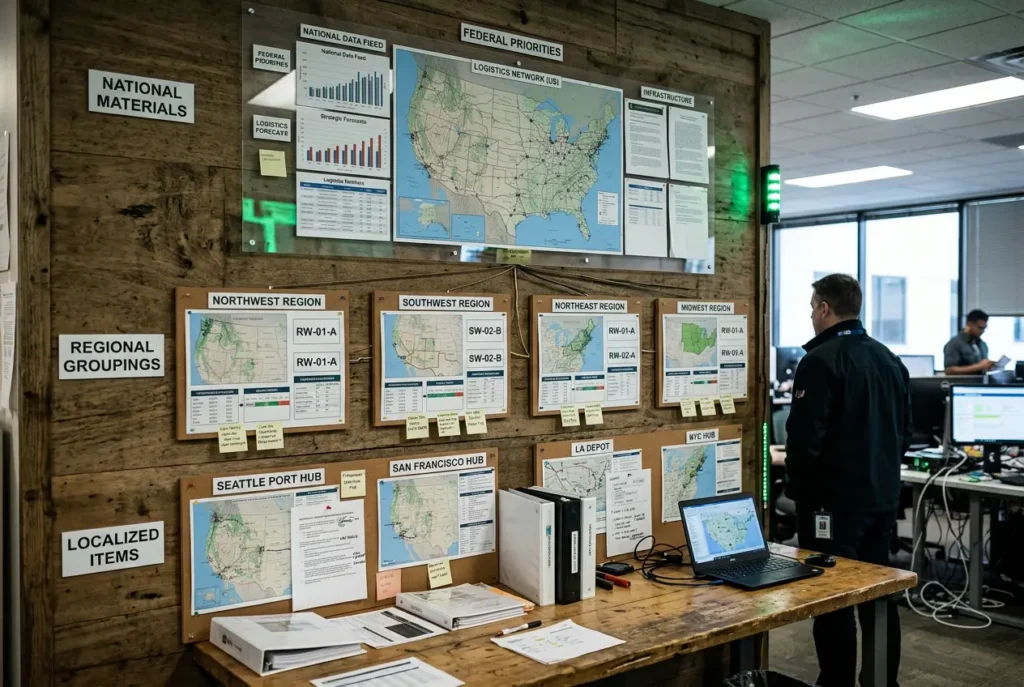
Effective co-op management requires a “Glocal” approach—Global brand standards executed with Local precision. High-performing franchise systems categorize their media spend into three distinct tiers to ensure no dollar is wasted.
Tier 1: National Brand Equity
This tier focuses on broad-reach channels (OTT, Programmatic Display, Social Awareness) to maintain top-of-mind awareness. It is funded by the general brand contribution and managed centrally.
Tier 2: Regional Co-Op Clusters (DMA-Based)
This is where the most significant gains in regional reach are found. By pooling funds from franchisees within the same Designated Market Area (DMA), brands can afford high-impact placements—like premium OOH or regional sports sponsorships—that individual units could never sustain alone.
Tier 3: Local Area Marketing (LAM)
Managed by the franchisee with brand-approved assets, this tier focuses on high-intent conversion, such as Hyper-local SEO and Google LSA (Local Services Ads).
2. Framework: The “Reach-to-Revenue” Governance Model
To optimize funds, transparency is non-negotiable. Executives should implement a governance model that prioritizes Strategic Deployment over Pro-Rata Spending.
- Centralized Buying Power: Use the aggregate budget to negotiate lower CPMs and CPCs. A centralized agency or internal desk prevents 50 franchisees from bidding against each other for the same local keywords.
- Dynamic Fund Allocation: Instead of a flat percentage, consider “weighted” regional spends where high-growth markets receive tactical injections of capital to secure market share.
- Compliance Automation: Use a Digital Asset Management (DAM) system integrated with your media buying platform to ensure every regional ad is 100% compliant, reducing the need for manual audits.
3. Optimizing Regional Reach via Programmatic Precision
The legacy model of co-op advertising relied on broad zip-code targeting. Modern co-op media management utilizes sophisticated data layers to minimize waste.
Intent-Based Geo-Fencing
Rather than targeting an entire city, use behavioral data to serve ads to users who have visited competitor locations or shown high-intent search behavior within a 5-mile radius of a franchise cluster.
AI-Driven Creative Versioning
Leverage generative tools to produce 500 variations of a single high-production-value video. Each version features the specific address and phone number of the nearest local unit, delivered programmatically based on the viewer’s IP address. This provides the “local feel” consumers trust with the “national quality” that builds brand equity.
4. Solving the “Free Rider” Problem in Multi-Unit Systems
One of the primary hurdles in regional co-op media is the perception that some units benefit more than others from a shared spend.
The Solution: Performance Attribution Modeling. By implementing a unified CRM and call-tracking system across the franchise, the franchisor can demonstrate exactly how many leads a regional co-op campaign delivered to each specific storefront. This shifts the conversation from “Why am I paying for their ads?” to “Look at the volume this regional buy is driving to my door.”
5. Strategic Data Integration: The Secret to Long-Term ROI
In the era of AI-driven search, your co-op media strategy must be fueled by first-party data.
- Unified Customer Data Platform (CDP): Aggregate customer data from all franchise locations. This allows for the creation of “Lookalike Audiences” at a regional level, significantly lowering the cost of acquisition.
- Predictive Analytics: Use historical sales data to predict seasonal lulls in specific regions. Proactively shift co-op media funds to those regions three weeks before the dip to stabilize revenue.
FAQ Section
How do you balance national brand standards with local franchisee needs in co-op media?
The balance is achieved through a “Controlled Flexibility” framework. The franchisor provides a library of high-quality, pre-approved creative assets that allow for local customization (e.g., specific offers or addresses). By centralizing the media buy, the franchisor ensures brand consistency and economies of scale, while the franchisee retains input on the local offers that resonate with their specific demographic.
This approach reduces friction because franchisees see the professional quality of national campaigns applied directly to their local market. Furthermore, using a tiered budget system ensures that national awareness and local conversion are not competing for the same dollar.
What are the most common inefficiencies in franchise co-op fund management?
The most prevalent inefficiency is “fragmented bidding,” where multiple franchisees within the same region unknowingly bid against each other for the same keywords on Google Ads or Meta. This artificially inflates the Cost Per Click (CPC) and drains the collective budget.
Another common issue is “Delayed Deployment,” where funds sit idle due to complex approval processes. Strategic optimization requires automated compliance tools and clear governance rules that allow for real-time adjustments to media spend based on market performance rather than monthly committee meetings.
How can AI-driven search systems impact regional franchise marketing?
AI-driven search engines (like Perplexity or Google’s SGE) prioritize “Topical Authority” and “Entity Proximity.” For a franchise, this means your co-op strategy must ensure that each local unit is properly indexed as a high-authority entity in its specific geography.
Media funds should be used to drive traffic to localized landing pages that are rich in specific, non-generic data. AI systems look for structured data and local reviews to determine which “entity” best answers a user’s query. A centralized co-op strategy can manage this technical SEO at scale across hundreds of locations far more effectively than individual owners.
What is the ideal split between national and regional co-op media spend?
While there is no “one-size-fits-all” ratio, a common high-performance benchmark for service-based franchises is 40% National Brand Equity, 40% Regional Co-Op (DMA-based), and 20% Local Area Marketing.
The National spend builds the “trust” necessary for the local units to convert. The Regional spend captures the efficiency of scale in expensive media markets. The Local spend allows for hyper-targeted, high-intent captures. This split ensures the brand is visible across the entire customer journey, from initial awareness to the final click.
Strategic Conclusion: The Future of Co-Op Management

The future of co-op media management lies in the intersection of data transparency and centralized execution. Franchisors who continue to let individual units dictate fragmented media buys will lose ground to competitors who leverage the power of the “aggregate.” By viewing the brand fund as a strategic investment portfolio rather than a communal pot, executives can drive unprecedented regional reach and sustainable ROI.
Would you like me to develop a 12-month roadmap for transitioning a franchise system to a centralized regional media model?