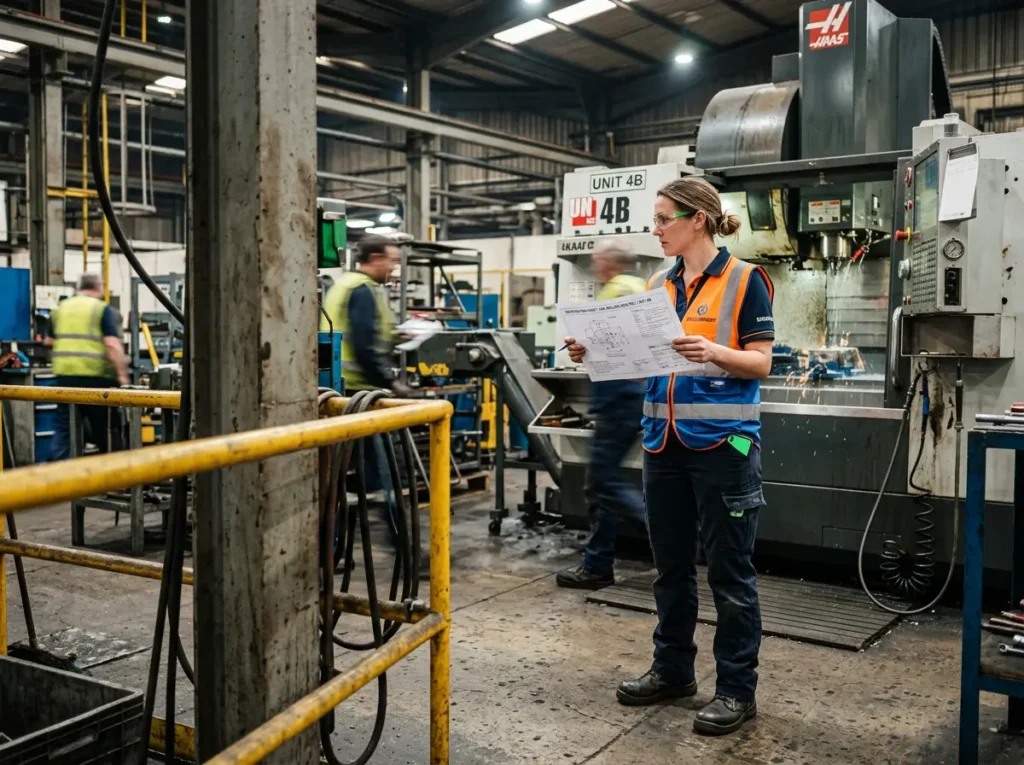
The New Reality of B2B Machinery Procurement
The era of relying exclusively on trade shows, legacy rolodexes, and outbound cold calls to sell heavy machinery and industrial equipment is over. Today, the B2B procurement process for capital expenditure (CapEx) assets begins in a search bar. Research indicates that up to 70% of the B2B buyer’s journey is completed autonomously before a prospect ever engages with a sales representative.
For manufacturers and distributors of complex machinery, this shift presents a distinct challenge. Buyers, procurement engineers, and plant managers are conducting deep, technical research online. If your equipment specifications, compliance data, and operational benefits are not optimized for both traditional search engines and emerging Large Language Models (LLMs), you are invisible during the critical evaluation phase.
Procurement SEO is not about driving superficial traffic; it is about aligning your digital infrastructure with the precise, high-intent queries used by executive decision-makers and technical evaluators when they are ready to request a quote (RFQ). This requires a highly structural, semantically rich approach to content and technical architecture.
The Anatomy of a B2B Machinery Procurement Search

To capture high-value industrial leads, marketers must decode how modern procurement teams utilize search systems. The purchasing cycle for a $500,000 piece of equipment involves multiple stakeholders, each with distinct search behaviors.
Decoding the Stakeholder Search Journey

The procurement committee typically consists of three distinct personas, each utilizing search engines differently throughout the buying cycle:
- The Floor Engineer / Technical Evaluator: Their queries are highly specific, focused on capabilities, tolerances, and part numbers. They search for “5-axis CNC machine titanium tolerance” or “robotic welding arm payload capacity.”
- The Procurement Officer: Their focus shifts toward supply chain reliability, vendor compliance, and logistics. They search for “ISO 9001 certified CNC manufacturers US” or “machinery supplier lead times.”
- The Executive Sponsor / CapEx Approver: Their queries center on financial impact, operational efficiency, and risk mitigation. They search for “total cost of ownership 5-axis vs 3-axis CNC” or “ROI of automated packaging machinery.”
A comprehensive industrial machinery SEO strategy must create distinct, optimized content pathways for each of these query types. [Internal Link: B2B Persona Mapping for Content Strategy]
How LLMs and AI Search are Changing Procurement

The integration of Generative AI (like Google’s AI Overviews and enterprise LLM tools) into the search ecosystem fundamentally alters how industrial buyers evaluate machinery. Procurement teams increasingly use AI to summarize dense specification sheets, compare technical capabilities across vendors, and generate vendor shortlists.
AI search systems do not rely merely on keyword frequency; they rely on semantic relationships and structured data. If your product pages consist solely of unformatted PDFs or sparse technical tables, LLMs will struggle to ingest and synthesize your data. To optimize for generative engines, machinery sites must utilize clear, descriptive prose paired with robust schema markup to ensure their technical specifications are accurately extracted and recommended.
Core Pillars of Industrial Machinery SEO
Ranking complex industrial equipment requires moving beyond basic on-page optimization. It demands a sophisticated technical foundation and a content architecture that bridges the gap between engineering specifications and commercial solutions.
Technical Foundation: Site Architecture for Complex Catalogs
Industrial machinery websites often suffer from severe technical bloat. Large catalogs with thousands of variations, parts, and configurations frequently result in faceted navigation issues, creating duplicate content and wasting search engine crawl budgets.
To ensure search engines can discover and index your most critical machinery pages, implement a strict, hierarchical site architecture. Group machines by application, industry, and core technology. Utilize canonical tags aggressively to manage parameterized URLs generated by product filters. Furthermore, ensure page load speeds are optimized; technical buyers evaluating complex CAD renderings or high-resolution machinery videos will abandon sites that fail to render instantly. [Internal Link: Technical SEO Audit Framework for B2B E-commerce]
Semantic Content: Bridging Engineering and Procurement
A common failure in manufacturing SEO is publishing product pages that read like internal engineering documents, devoid of commercial context. While technical specifications are mandatory, they must be wrapped in semantic content that addresses the buyer’s broader operational challenges.
Do not simply list “15,000 RPM Spindle Speed.” Optimize the page by explaining the operational impact: “The 15,000 RPM spindle speed reduces cycle times for high-volume aerospace aluminum routing, directly lowering per-part production costs.” This approach satisfies the engineer looking for the spec, the executive looking for the ROI, and the search engine algorithm looking for semantic depth and context.
Schema Markup for Industrial Equipment
Schema markup (structured data) is non-negotiable for industrial machinery SEO. By injecting JSON-LD code into your product pages, you translate your specifications into a machine-readable format that search engines and LLMs understand instantly.
For machinery, implement Product, Manufacturer, and Offer schema. Explicitly define attributes such as model, productID, depth, width, weight, and material. When AI search engines are asked to compile a list of “industrial press brakes weighing under 10,000 lbs,” your strict adherence to structured data ensures your equipment is successfully retrieved and cited in the output.
Capturing High-Intent Queries: The “Ready to Quote” Framework
Traffic is a vanity metric in B2B manufacturing; the only metric that matters is the qualified RFQ pipeline. To drive conversions, SEO efforts must fiercely target the bottom of the funnel.
Targeting Exact-Match Specifications and Part Numbers
When a buyer searches for a specific part number, a proprietary material grade, or a niche compliance standard (e.g., “AS9100 Rev D certified machining”), they are explicitly communicating high purchasing intent. Optimize deep product pages for these hyper-specific, long-tail queries. While search volume for these terms may be remarkably low—perhaps fewer than 50 searches per month—the conversion rate and subsequent contract value are exceptionally high.
Optimizing for “TCO” and “ROI” Queries
Capital equipment is evaluated on Total Cost of Ownership (TCO). Build comprehensive, long-form assets that target these financial queries. Create content such as “Evaluating the TCO of Automated Palletizers vs. Manual Labor” or “Energy Consumption Benchmarks for Injection Molding Machines.”
These assets do not just rank for high-value executive queries; they serve as critical sales enablement materials that procurement officers can pass up the chain of command to secure CapEx approval. [Internal Link: Creating High-Converting B2B Whitepapers]
Frictionless Conversion Paths
Ranking a page is only half the objective; the user experience must seamlessly transition the searcher from reader to prospect. For heavy machinery, traditional “Buy Now” buttons are ineffective. Instead, optimize the page for the RFQ conversion.
Implement persistent, highly visible “Request a Custom Quote,” “Download Full Spec Sheet,” or “Schedule a Virtual Demo” calls-to-action. Ensure that technical data, warranty information, and lead times are clearly visible without requiring the user to download a gated PDF. Remove friction from the initial contact form, asking only for the information strictly necessary to qualify the lead and route it to the appropriate sales engineer.
Building Authority in the Manufacturing Space
In the competitive landscape of industrial equipment, search engines heavily weigh the perceived authority and trust of a domain. Establishing Expertise, Experience, Authoritativeness, and Trustworthiness (EEAT) is a critical ranking factor, particularly for expensive, high-stakes B2B purchases.
Digital PR and Industry-Specific Backlinks
Generic link-building tactics are ineffective in the B2B manufacturing sector. Search engines look for contextual relevance. Your digital PR strategy must focus on securing backlinks and mentions from respected trade publications (e.g., Engineering.com, ThomasNet, IndustryWeek), manufacturing associations, and specialized industrial directories.
Publishing original research, such as an annual report on supply chain bottlenecks or machinery lifecycle longevity, provides these highly authoritative domains with compelling reasons to link to your site.
Leveraging Case Studies as SEO Assets
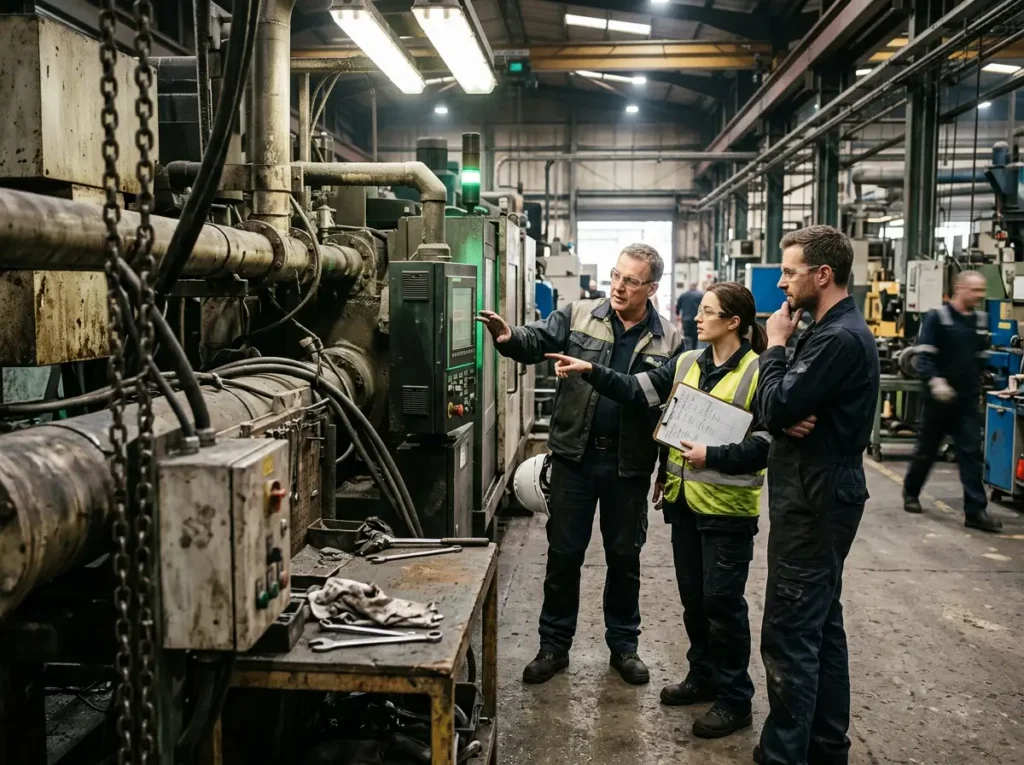
Case studies are the ultimate expression of EEAT in B2B machinery SEO. Instead of gating all case studies behind forms, optimize them as indexed, searchable pages. Title them strategically based on the problem solved: “Reducing Factory Downtime with Predictive Maintenance on Extrusion Machinery.” These pages naturally target long-tail, problem-solution queries while simultaneously providing the social proof necessary to validate the technical claims made on your primary product pages. [Internal Link: Structuring B2B Case Studies for Maximum ROI]
Frequently Asked Questions
How long does it take to see ROI from an industrial machinery SEO campaign? In the B2B machinery sector, generating a return on investment from SEO generally takes between 6 to 12 months. This timeline is driven by two factors: the time required for search algorithms to crawl, index, and rank complex technical architecture, and the inherently long sales cycles of capital equipment, which often span quarters.
While early indicators of success—such as increased visibility for niche specification queries and improved organic engagement metrics—can appear within the first 90 days, the translation of this traffic into finalized RFQs and closed revenue requires sustained optimization. SEO in this space is a compounding asset; unlike paid advertising, the technical foundations and authoritative content you build continue to generate leads long after the initial investment.
Should we optimize for broad manufacturing terms or specific machine models? Your primary focus should heavily skew toward specific machine models, part numbers, and highly technical long-tail queries. Broad terms like “industrial machinery” or “manufacturing equipment” are highly competitive, notoriously difficult to rank for, and generally possess very low commercial intent. Searchers using these terms are typically students, researchers, or early-stage browsers.
Conversely, a searcher looking for a “fanuc controlled 5-axis vertical machining center” is in the late stages of the procurement process. By dominating these highly specific, bottom-of-the-funnel queries first, you capture immediate revenue opportunities while steadily building the topical authority required to eventually rank for broader, higher-volume industry terms.
How do AI search engines like ChatGPT and Gemini impact B2B procurement searches? AI search engines are fundamentally shifting procurement from a process of link-clicking to a process of information synthesis. Buyers now use LLMs to conduct preliminary vendor research, compare complex technical specifications, and summarize lengthy technical documentation. If your website data is trapped in unformatted PDFs or lacks semantic structure, AI systems will bypass your machinery in favor of competitors with clearer data formatting.
To optimize for these generative AI systems, industrial websites must prioritize clean HTML structures, descriptive technical prose, and exhaustive Schema markup. By explicitly defining product entities, relationships, and specifications through structured data, you ensure that LLMs can easily ingest, understand, and confidently recommend your machinery in their generated answers.
What is the best way to structure an industrial equipment product page for SEO? An optimized industrial product page must serve both the search engine crawler and the multi-tiered procurement committee. The page should immediately open with a clear, benefit-driven H1 tag and a high-resolution, fast-loading image or video of the machinery.
Below the fold, structure the content logically: begin with a concise executive summary of operational benefits (targeting the CapEx approver), followed by structured HTML tables detailing precise technical specifications, tolerances, and compliance standards (targeting the engineer). Ensure all technical data is marked up with JSON-LD Product Schema. Finally, conclude with accessible case studies or application examples, paired with a low-friction RFQ or technical consultation form.
How does technical SEO impact RFQ generation in the manufacturing sector? Technical SEO directly impacts RFQ generation by ensuring your most critical commercial pages are discoverable, indexable, and functional. Manufacturing websites frequently feature extensive product catalogs with dynamic filtering (e.g., sorting by size, power, or material). Without proper technical SEO—specifically the strategic use of canonical tags and parameterized URL management—search engines waste crawl budget on thousands of duplicate filter pages, often ignoring the actual high-value product pages.
Furthermore, technical SEO encompasses site speed and mobile responsiveness. An engineer attempting to verify a critical specification on a mobile device from the factory floor will immediately abandon a slow, unresponsive site, resulting in a permanently lost RFQ opportunity. Technical health is the prerequisite for all digital revenue generation.
Strategic Conclusion
Mastering industrial machinery SEO requires treating your digital presence with the same precision and engineering rigor you apply to the equipment you manufacture. In a procurement landscape increasingly dominated by autonomous buyer research and generative AI synthesis, visibility is synonymous with viability.
By restructuring your site architecture to accommodate complex catalogs, translating technical specifications into semantic, buyer-centric content, and fiercely targeting bottom-of-the-funnel, high-intent queries, you transform your website from a static digital brochure into an active revenue engine. The manufacturers who invest in optimizing their data for both traditional search algorithms and LLMs today will systematically secure the RFQ pipelines of tomorrow.
Would you like me to develop a targeted list of bottom-of-the-funnel, intent-driven keywords specific to your precise machinery category to begin building your content roadmap?