For marina operators and marine facility executives, transient dockage presents a paradox. On the surface, transient slips offer high yield per linear foot and maximize facility utilization during peak migratory seasons. However, the transactional nature of transient moorage creates a highly inefficient revenue model. A vessel arrives, pays a nightly fee, utilizes utilities, and departs—taking their future fuel, service, and winter storage revenue to a competitor’s facility down the coast.
Viewing transient boaters merely as short-term rental revenue is a critical strategic error. Sophisticated operators view the transient dock not as an end product, but as a top-of-funnel customer acquisition channel. The vessel is physically at your facility; the captain has already experienced your infrastructure and interacted with your staff. The friction of acquisition has been eliminated. The failure lies in post-departure retention.
Without a structured marina email automation strategy, transient guests become lost data points. To capture the full economic potential of these vessels, executives must bridge the gap between operations and marketing. By implementing automated, data-driven communication frameworks, marinas can transform one-time visitors into recurring seasonal guests, permanent slip holders, and high-value service department clients.
This article details the strategic architecture required to build a “digital mooring”—an automated retention ecosystem designed to maximize the Customer Lifetime Value (CLV) of every vessel that touches your docks.
The Financial Imperative of Transient Conversion
To justify the investment in marketing infrastructure, marina executives must reevaluate how they measure the profitability of their transient operations. The metric of success is not merely occupancy rate; it is the conversion rate of transients into recurring revenue streams.
Redefining Customer Lifetime Value (CLV) in Marinas
The immediate revenue from a three-night transient stay for a 60-foot motor yacht is negligible compared to the total addressable wallet share of that vessel. That same yacht requires tens of thousands of dollars annually in preventative maintenance, bottom painting, winterization, and eventual refit work.
When a transient guest leaves without entering an automated nurturing sequence, the marina forfeits all future revenue. Effective transient boater retention strategies capture the initial data and methodically market the facility’s higher-margin offerings. By converting just 5% of annual transient traffic into winter storage or annual slip contracts, a marina can fundamentally alter its financial trajectory, effectively using the transient dock as a self-liquidating lead generation engine.
The Cost of Anonymous Departures
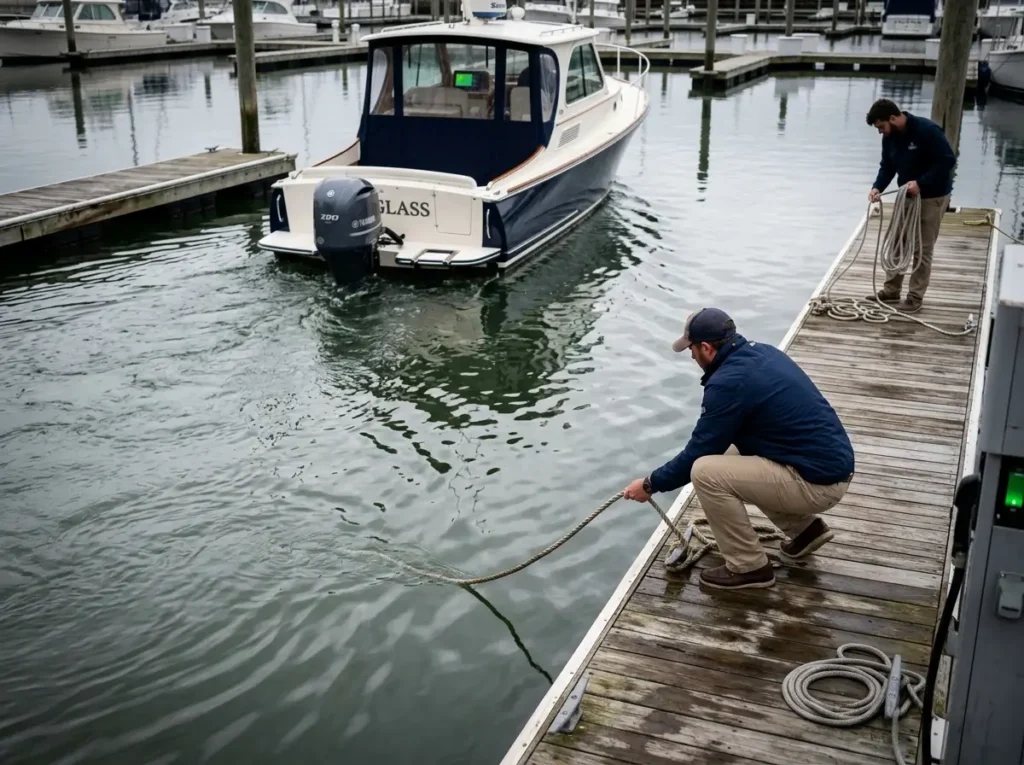
Many facilities operate with legacy dockmaster software that acts merely as a cash register. A guest checks in, pays via credit card, and leaves. The marina captures a name and an email, but that data sits dormant in a siloed system.
This operational blind spot allows competitors with aggressive digital marketing for marinas to capture your transient guests when they begin planning their next voyage or looking for off-season storage. Mitigating this risk requires extracting guest data from operational silos and injecting it into a dynamic, automated marketing environment.
Foundational Infrastructure for Marina Email Automation
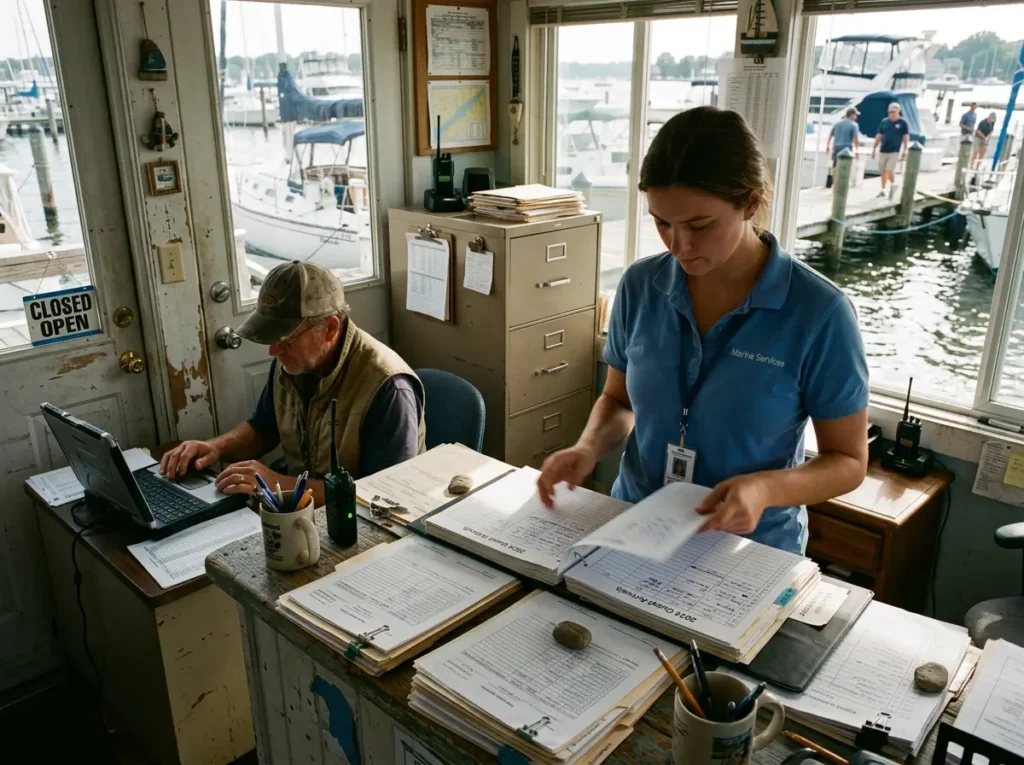
Automation cannot function without structured, pristine data. Before drafting a single email, marina operators must ensure their technology stack is capable of triggering communications based on specific operational events.
Integrating Dockmaster Software with the CRM
The cornerstone of a successful marina email automation strategy is a bidirectional API integration between your reservation management system (e.g., Dockwa, Snag-A-Slip, Marina Master) and your Customer Relationship Management (CRM) platform (e.g., HubSpot, Salesforce).
When a reservation is created, modified, or completed in the dockmaster software, that data must instantly populate the CRM. This integration allows marketing teams to trigger automated workflows based on real-time operational realities, such as check-in dates, departure dates, and total nights stayed.
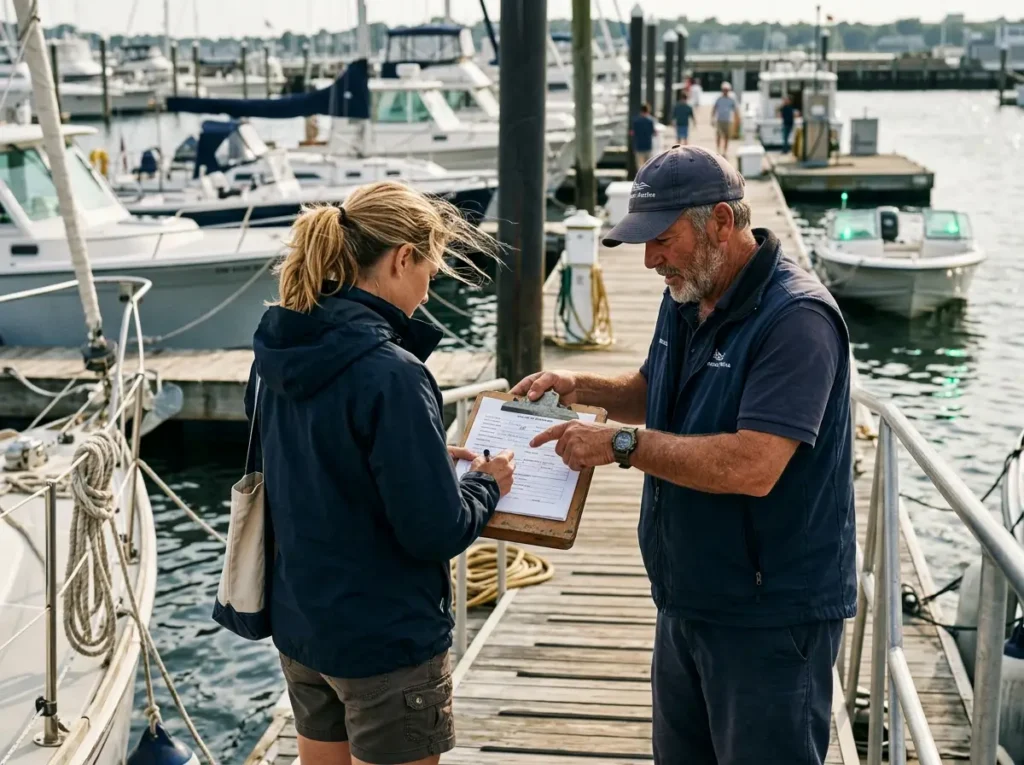
Zero-Friction Data Capture at Check-In
Garbage data yields garbage automation. The check-in process must be optimized to capture actionable intelligence without creating friction for the boater.
Beyond the standard name and email, your digital intake forms should mandate specific fields:
- Vessel Specifications: Length Overall (LOA), draft, and beam (critical for future storage or service targeting).
- Vessel Make and Model: Allows for targeted service campaigns (e.g., sending outboard repower offers to center console owners).
- Home Port: Identifies whether the guest is a local boater suitable for an annual slip or a migratory boater suitable for transient retention.
By structuring this data properly at intake, you empower the CRM to execute highly segmented, hyper-relevant communication.
Architecting the Lifecycle Email Sequence
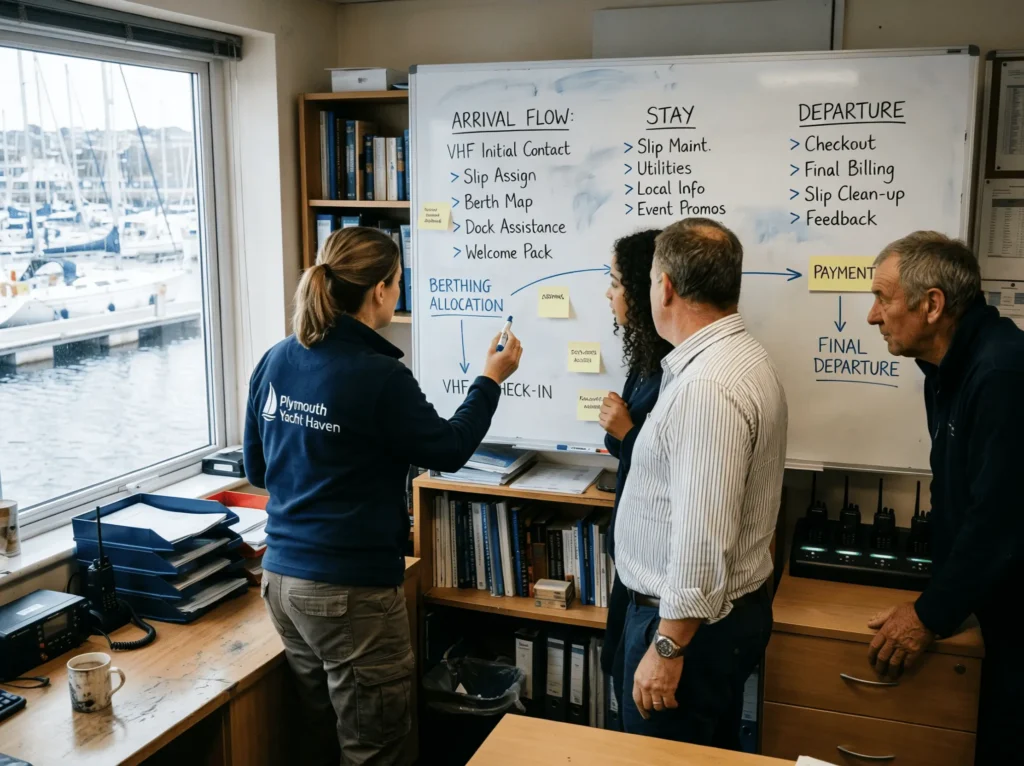
An effective automated sequence does not rely on generic “monthly newsletters.” It relies on behavioral triggers. The communication must feel personalized, timely, and operationally helpful to the captain or owner.
The Pre-Arrival Welcome and Revenue Expansion
The automation sequence begins the moment the reservation is confirmed. A pre-arrival campaign serves dual purposes: it enhances the guest experience by providing vital navigational and facility information, and it acts as an immediate upsell mechanism.
- Trigger: 48 hours prior to the scheduled arrival date.
- Content: Approach coordinates, VHF channel monitoring, slip assignment, and gate codes.
- The Upsell: Include direct links to pre-order provisions, schedule a pump-out upon arrival, or request a washdown service. This shifts revenue from reactive to proactive, increasing the average transaction value before the vessel even crosses the breakwater.
[Internal Link: Enhancing the Marina Guest Experience Through Digital Touchpoints]
The Mid-Stay Service Integration
While the vessel is moored at your facility, it represents a captive audience for your service department.
- Trigger: 24 hours after check-in (for stays of 3 nights or longer).
- Content: A brief, text-based email from the Service Manager (not a generic marketing address).
- The Pitch: “Welcome to the marina. While you are here, our certified technicians are available for any immediate needs. We also offer a complimentary visual running gear inspection for our transient guests. Let the dockmaster know if you’d like us to take a look.”
This low-pressure, high-value offer bridges the gap between the dock and the service yard, initiating conversations that routinely lead to substantial repair orders.
The Post-Departure “Digital Mooring” Campaign
The most critical phase of converting transient boaters occurs after they leave. The goal is to anchor your facility in their minds for future route planning and off-season storage.
- Trigger: 48 hours post-departure.
- Content: A genuine thank you, a request for a Google Review (crucial for local SEO), and a soft invitation to book their return voyage with an exclusive “return guest” incentive.
- Trigger: 90 days post-departure (or timed to late summer).
- Content: A strategic pivot to long-term revenue. “As you plan your off-season, we want to remind you of our indoor heated storage and refit capabilities. Based on your vessel’s LOA, we have three spots remaining.” By maintaining this automated, contextually relevant cadence, you ensure that when the boater requires high-margin services, your facility is the first one they contact.
Advanced Segmentation and AI Personalization
To achieve executive-level ROI on email marketing, operators must move beyond linear sequences and utilize advanced segmentation. Treating a 30-foot center console owner the same as a 120-foot superyacht captain will result in massive unsubscribe rates.
Segmenting by Vessel Size and Route Behavior
Using the data captured during check-in, the CRM must automatically route guests into distinct communication tracks.
If a transient guest lists a home port in New York but stays at your Florida facility in December, the CRM should tag them as a “Snowbird/Migratory” boater. Your automated campaigns for this segment should focus on transient slip availability for their spring migration north, or hurricane-rated summer storage in the south. Conversely, a guest whose home port is 20 miles away should be placed in an “Annual Slip Prospect” campaign, highlighting the benefits of making your marina their permanent base of operations.
Leveraging AI for Send-Time Optimization and Copywriting
Modern CRMs utilize AI to optimize boat slip revenue optimization efforts. Rather than blasting an email to all past transients at 9:00 AM on a Tuesday, AI send-time optimization analyzes the historical open behaviors of each specific user and delivers the email at the exact moment they are most likely to engage.
Furthermore, AI can assist in dynamic content block generation. An automated email can dynamically insert images of sailboats for sailing vessel owners, and images of sportfish yachts for sportfish owners, creating a hyper-personalized aesthetic that significantly increases click-through rates and commercial conversion.
Frequently Asked Questions (FAQ)
What is the expected ROI of implementing a transient email automation sequence? The ROI of an automated sequence is measured by the reduction in Customer Acquisition Cost (CAC) for your high-margin departments (service, storage, and annual slips). Because the transient guest is already a proprietary lead in your database, the marketing cost to reach them via email is virtually zero. If an automated sequence costs $5,000 to architect and configure, and it converts just two transient guests into $15,000 winter storage and service contracts, the system has achieved a 600% return on investment in its first season, while continuing to run in perpetuity.
How do we integrate legacy dockmaster software that does not have a native CRM API? Many older marina management systems lack direct integrations with modern platforms like HubSpot or Salesforce. In these instances, operators must utilize middleware (such as Zapier or Make) to bridge the gap, parsing automated daily export reports from the dockmaster software into the CRM. If the legacy system is entirely closed, executives must strongly consider migrating to modern, cloud-based reservation management software; the opportunity cost of siloed data far outweighs the friction of a software migration.
How frequently should we email past transient guests without causing unsubscribes? Email frequency must be dictated by relevance, not a calendar. A pre-arrival and immediate post-departure cadence is expected and appreciated. After departure, communication should drop to a strategic, spaced interval—typically no more than once a month, shifting to twice a month only during critical seasonal booking windows (e.g., late summer for winter storage, or early spring for slip contracts). If the content provides genuine utility (navigation updates, early-bird pricing), unsubscribe rates will remain below the industry benchmark of 0.5%.
Should automated emails target the vessel owner or the captain? This depends entirely on the vessel’s Size (LOA) and operational structure, which is why data capture at check-in is vital. For vessels under 60 feet, the owner is typically the operator, and marketing should focus on lifestyle, convenience, and facility amenities. For vessels over 70 feet, you are communicating with a professional captain or fleet manager. Automation for this segment must strip away the marketing fluff and focus strictly on operational efficiency, draft restrictions, shore power reliability, and crew logistics.
Can AI improve the conversion rates of our automated marina emails? Yes. AI significantly improves conversion rates through dynamic personalization and predictive analytics. AI algorithms can analyze a transient boater’s interaction with your website and emails to predict their likelihood of booking winter storage. Furthermore, Generative AI within modern CRMs can dynamically adjust subject lines and email copy based on the recipient’s past engagement data, ensuring the tone and offer resonate perfectly with their specific buying stage.
Strategic Conclusion
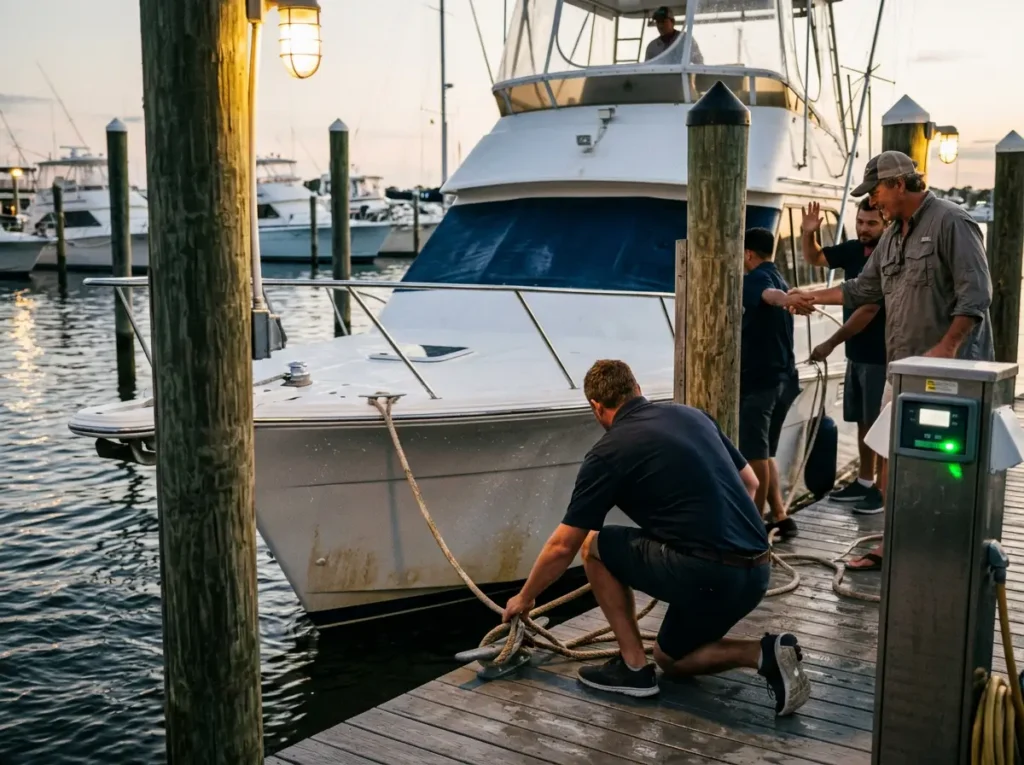
Transient dockage is the ultimate top-of-funnel acquisition channel for the marine service industry. However, without a systematic mechanism to capture, nurture, and convert these short-term visitors, marinas are effectively operating a high-churn hospitality business rather than a highly profitable, recurring-revenue marine facility.
By implementing a rigorous marina email automation strategy, executive operators can stop the hemorrhage of lost opportunities. Integrating reservation data with a modern CRM, architecting behavior-based lifecycle sequences, and utilizing advanced segmentation transforms anonymous transients into a predictable pipeline of long-term slip holders and lucrative service clients. In an increasingly competitive coastal real estate market, the marinas that master their digital data will systematically absorb the market share of those who merely tie the lines and wave goodbye.