For marine facility operators, winter storage is not merely a seasonal necessity; it is a critical driver of annual profitability and capacity utilization. Securing a vessel for the off-season practically guarantees the associated winterization, spring commissioning, and preventative maintenance revenue. It is the anchor product for the service department’s Q4 and Q1 balance sheets.
Yet, as the third quarter approaches, a quiet, high-stakes battle occurs in search engine results pages (SERPs). Legacy shipyards and established marinas often find themselves losing market share and high-value customers to newer, aggressively marketed facilities. The differentiator is rarely the quality of the travel lift or the thickness of the shrink wrap. The differentiator is digital visibility.
Executive decision-makers must recognize that the modern boat owner does not rely exclusively on dockside word-of-mouth to secure off-season accommodations. They utilize high-intent digital searches, increasingly powered by AI overviews and localized algorithms, to find facilities that meet their precise specifications. If your digital infrastructure is not optimized to capture these queries, your competitors will gladly absorb your potential recurring revenue.
This article dissects the mechanics of marine winter storage SEO, providing a strategic framework to ensure your facility dominates local search and maximizes yard capacity before the first freeze.
The Economics of Digital Visibility in Off-Season Operations
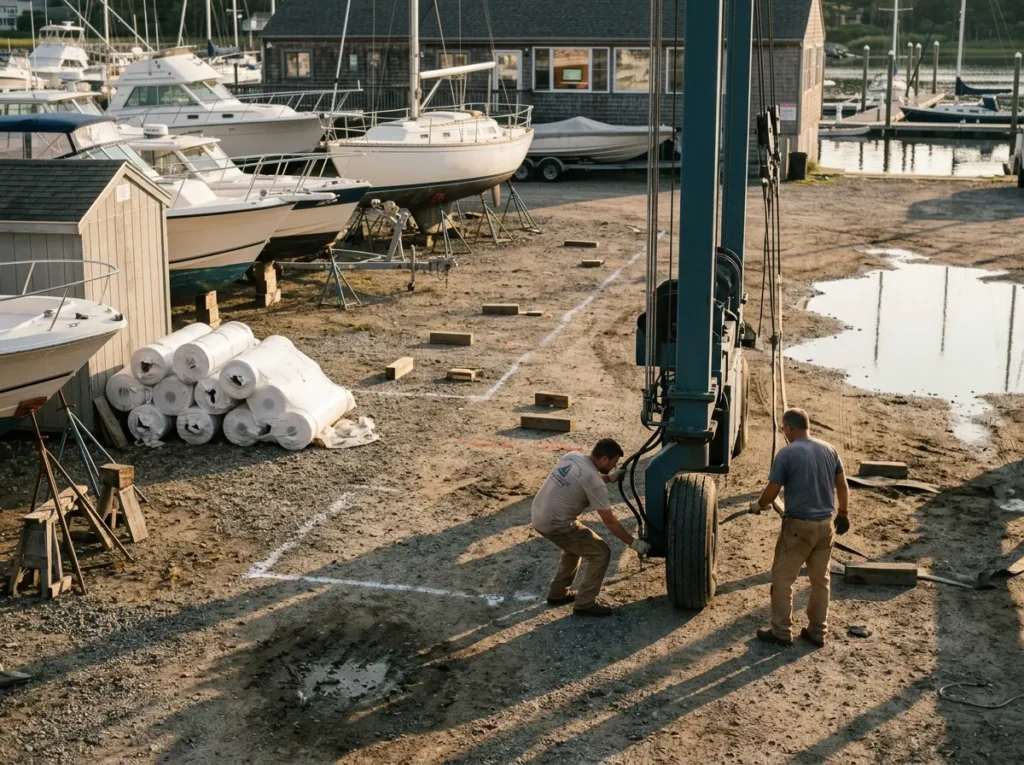
Winter storage operates on a model of finite inventory. Once a yard or climate-controlled facility reaches maximum capacity, revenue generation shifts entirely to the service department. Therefore, the strategic objective is not just to fill the yard, but to fill it with the right assets—high-value vessels that require extensive winterization, refit work, and premium storage conditions.
The Cost of Invisibility During Q3 Acquisition
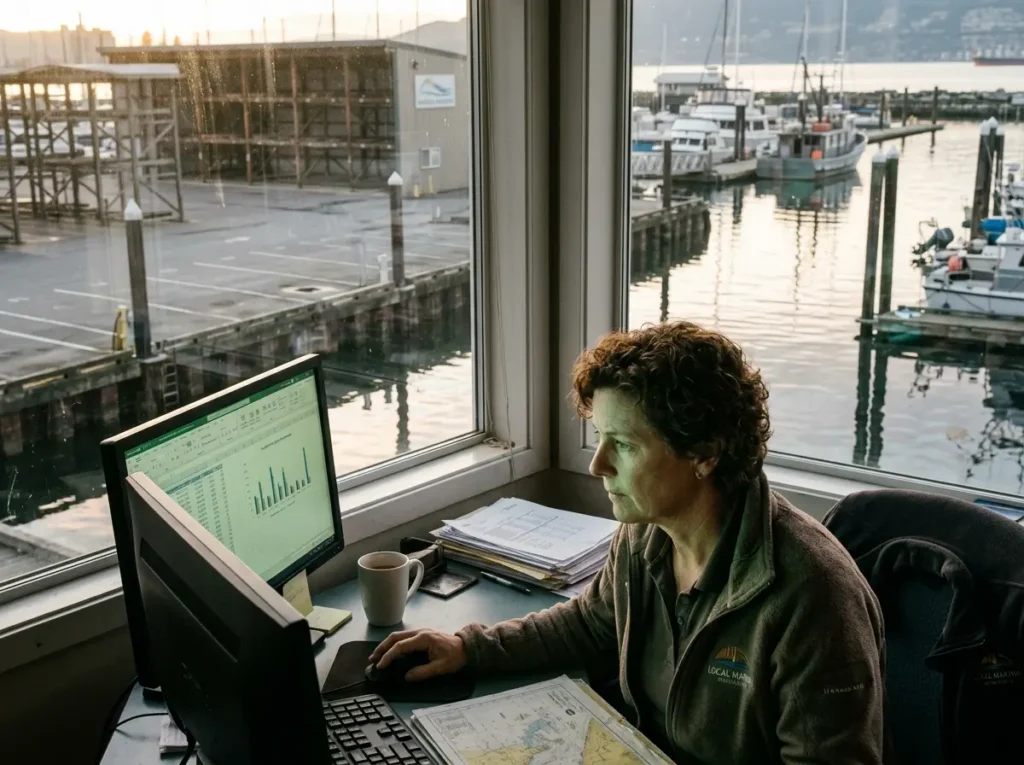
The buying cycle for winter storage begins long before the temperature drops. Sophisticated boat owners, particularly those with vessels exceeding 40 feet (LOA), begin securing their haul-out dates and storage contracts in late July and August.
If a marina’s website lacks dedicated, optimized infrastructure for winter boat storage marketing, it becomes invisible during this critical acquisition window. Relying on a single line of text on a generic “Services” page ensures that search engines—and, by extension, prospective clients—bypass your facility in favor of competitors who have built comprehensive digital assets detailing their storage capabilities. Every slipped contract represents not just lost storage fees, but thousands of dollars in forfeited service work.
Shifting Consumer Search Behavior and AI Integration
Historically, finding a winter yard was a localized, relationship-based process. Today, it is driven by complex search queries. Vessel owners are searching for exact specifications: “indoor heated boat storage near [City],” “70-ton travel lift haul out and winterization,” or “hurricane-rated dry stack storage.”
Furthermore, the integration of Large Language Models (LLMs) into search engines means that AI is synthesizing answers based on the depth and clarity of the information on your website. If a competitor explicitly lists their maximum draft limits, security protocols, and climate-control specifications, the AI will confidently recommend them. If your site is vague, you are excluded from the modern digital conversation.
Anatomy of a High-Converting Boat Storage Asset

To capture high-intent boat storage lead generation, your digital presence must move beyond brochure-ware. Search engines reward topical authority and semantic depth. This requires building dedicated, structured landing pages that answer every technical and logistical question a boat owner might have.
Semantic Depth and Technical Specifications
Executive operators must ensure their marketing teams are not writing generic marketing copy. Search algorithms and AI retrieval systems parse text for specific entities and technical marine terminology. A dedicated winter storage page must include granular details:
- Haul-Out Capabilities: Specify the tonnage of your travel lifts, maximum beam widths, and draft restrictions.
- Storage Types: Clearly delineate between indoor heated, indoor cold, outdoor shrink wrap, and deep-water wet winter storage.
- Facility Security: Highlight fencing, 24/7 surveillance, fire suppression systems, and on-site personnel.
- Insurance and Compliance: Address liability and insurance requirements, which signals trust to both the consumer and the search engine.
By embedding these technical specifications into structured H2 and H3 tags, you signal to Google that your page is the definitive resource for commercial boat storage SEO in your geographic radius.
Capturing Commercial Intent Over Informational Queries
Not all traffic is created equal. A blog post titled “How to Winterize Your Boat” attracts DIYers seeking informational content—users with zero commercial intent to hire your yard.
Conversely, optimizing for terms like “full-service winter boat storage pricing” or “secure yacht storage [Region]” captures users at the bottom of the funnel who have credit cards in hand. Your SEO strategy must heavily bias toward these commercial-intent queries, ensuring that the traffic you acquire actually translates into signed storage contracts and yard capacity utilization.
Local SEO: Building the Geographic Moat
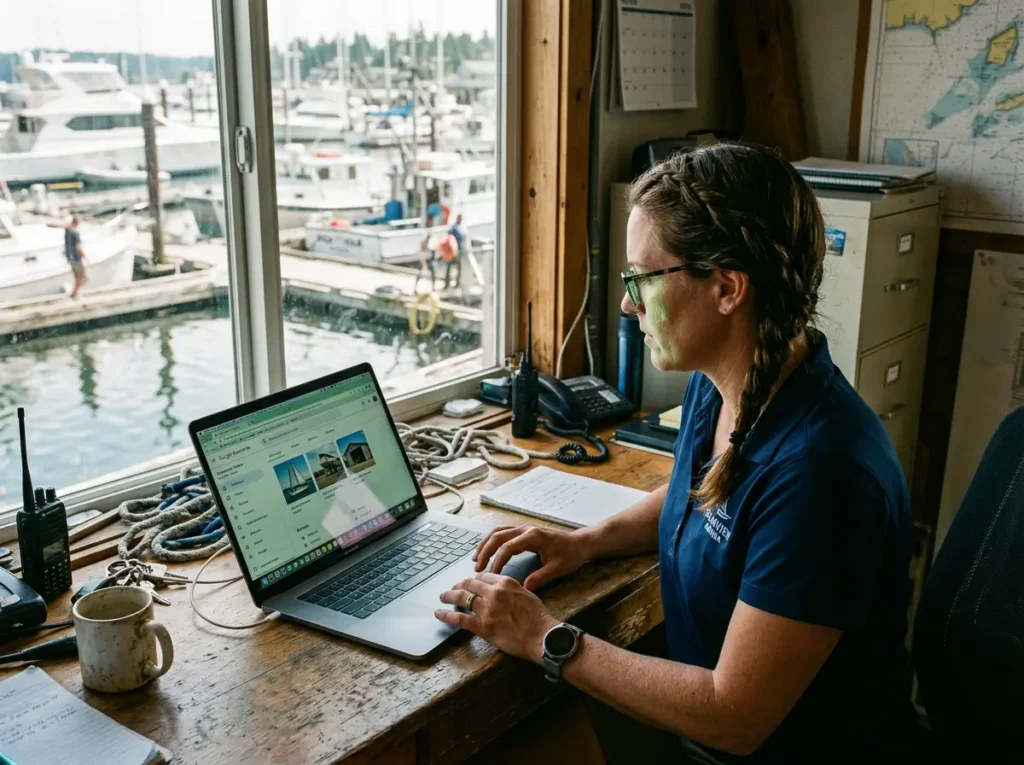
For marinas and shipyards, geography is destiny. A boat owner is only willing to navigate a certain distance for winter storage. Therefore, dominating the local search ecosystem is paramount.
Optimizing the Google Business Profile for Seasonal Peaks
Your Google Business Profile (GBP) is often the first touchpoint for a prospective customer. It is a critical component of search intent for marinas. Many operators fail to update their GBP to reflect seasonal shifts.
As Q3 approaches, your GBP should be aggressively updated. Add “Boat Storage Facility” as a secondary category if applicable. Update the profile with high-quality images of vessels being hauled out, shrink-wrapped, and stored securely. Utilize GBP posts to announce early-bird storage contract availability and clearly state the deadlines for securing a spot.
Proximity and Logistics as Ranking Factors
Google’s local algorithm weighs proximity heavily, but it also looks for contextual relevance. By building location-specific landing pages and integrating hyper-local keywords (e.g., mentioning nearby bays, inlets, or major waterways), you strengthen your geographic relevance.
Additionally, embedding structured data (Schema markup) on your website that explicitly defines your business type, operating hours, and precise geographic coordinates helps search engines confidently serve your facility in local “near me” map packs.
Defending Your Turf Against Aggregators
One of the most frustrating challenges for marine operators is losing search visibility to third-party directories or aggregator websites (e.g., Yelp, generic storage finders). These platforms invest heavily in SEO and often outrank the actual service providers.
Content Silos for Winterization and Storage Services
To combat aggregators, shipyards must build robust “content silos.” This involves creating a cluster of interlinked pages centered around the core topic of winter operations.
Your main Winter Storage page should act as the hub. From there, link to dedicated sub-pages detailing specific associated services: Engine Winterization, Fiberglass Repair and Bottom Painting, Shrink Wrapping Services, and Spring Commissioning. This interconnected web of highly relevant, technically accurate content builds unparalleled topical authority. Aggregators possess broad, shallow information; your facility can dominate by providing deep, expert-level specificity that search algorithms increasingly prioritize.
Frequently Asked Questions (FAQ)
How far in advance should a shipyard begin optimizing for winter storage search traffic? SEO is not instantaneous. To capture the surge of search volume that occurs in August and September, shipyards should begin updating their storage pages, publishing new content, and optimizing their local listings by late Q2 (May/June). This allows search engine crawlers ample time to index the updated information, process semantic changes, and adjust rankings before peak commercial intent hits the market.
Why is my marina outranked by third-party boat storage directories? Third-party directories often outrank individual marinas because they have massive domain authority and extensive internal linking structures. To combat this, you must compete on depth and local relevance rather than sheer size. Directories offer generic listings; you must provide comprehensive technical details—such as travel lift capacities, specific winterization packages, and high-resolution facility photos. Google’s algorithm is increasingly shifting to favor actual service creators over aggregators when the local business provides a superior, more informative user experience.
What specific details do AI search engines look for when recommending winter boat storage? AI search engines (like Google’s SGE or ChatGPT) synthesize answers by extracting factual, structured data. They look for explicit answers to user constraints. You must clearly state your maximum Length Overall (LOA), beam width, travel lift tonnage, types of storage offered (heated vs. cold), and specific security measures. If your website relies on vague marketing fluff (“We treat your boat like our own”), AI models will bypass you for a competitor who lists exact specifications and pricing structures.
How does winter storage SEO impact overall service department revenue? Winter storage is a captive acquisition channel for the service department. When an owner searches for storage and signs a contract, they almost universally default to that facility for winterization, shrink wrap, and spring commissioning. Furthermore, capturing a high-value vessel for storage opens the door for off-season refit work, electronics upgrades, and repowers. Losing the initial storage search query effectively means losing the entirety of that vessel’s annual maintenance revenue.
Should we create separate landing pages for indoor heated storage versus outdoor shrink wrap? Yes. Creating dedicated landing pages for distinct storage types is a highly effective SEO strategy. A user searching for “indoor heated yacht storage” has a very different intent and price elasticity than someone searching for “outdoor boat shrink wrap.” By separating these services into distinct pages, you can target specific long-tail keywords, directly address the unique benefits of each option, and provide a highly relevant user experience that converts at a much higher rate.
Strategic Conclusion
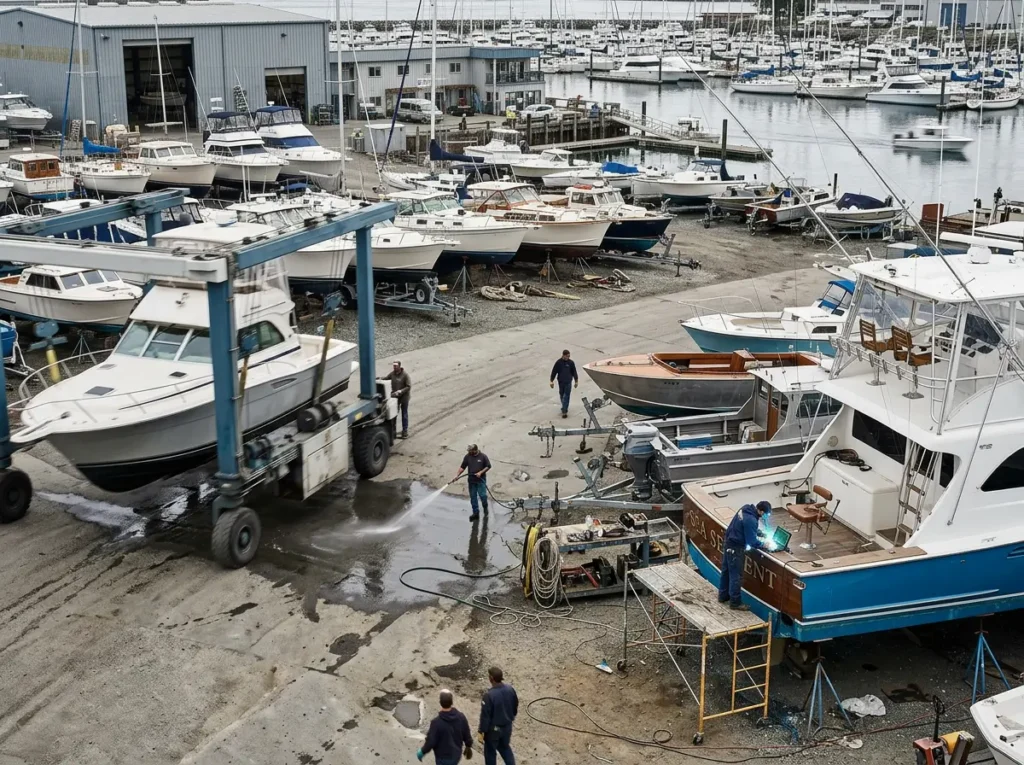
In the competitive landscape of marine facility management, relying on legacy reputation to fill the winter yard is a depreciating strategy. The battle for high-margin, off-season revenue is increasingly won and lost in the digital margins. Shipyards and marinas that treat marine winter storage SEO as a core operational imperative will secure the most lucrative vessels, guarantee service department backlog, and maximize their facility’s capacity utilization.
By migrating away from generic marketing copy and building semantically rich, technically specific digital assets, executive operators can capture high-intent search traffic. The implementation of dedicated storage pages, aggressive local SEO tactics, and content optimized for AI retrieval creates a defensible digital moat. The winter season may represent a dormant period for the boater, but for the proactive marine operator, it is the most critical revenue acquisition period of the year.