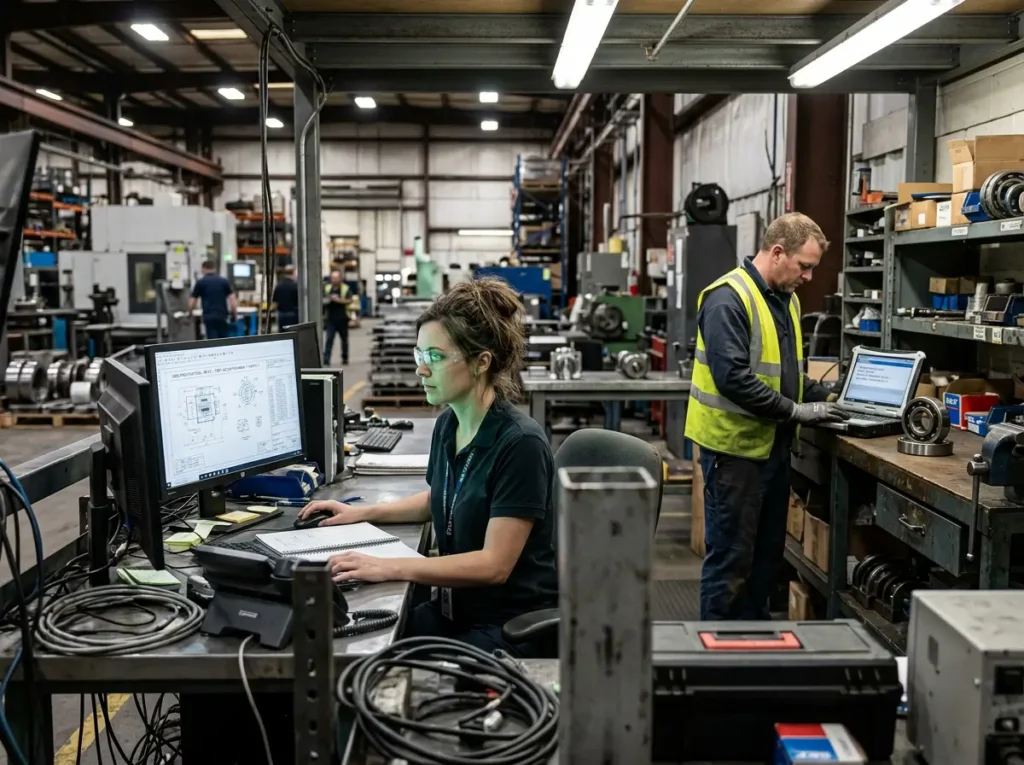
The digital buying journey in the industrial, automotive, and heavy machinery sectors is fractured by intent. While manufacturers often lump their Original Equipment Manufacturer (OEM) and aftermarket divisions under a single digital umbrella, the buyers in these segments operate with fundamentally different motives, timelines, and margin profiles. Treating them as a monolithic audience in your search strategy inevitably dilutes your authority, confuses search engines, and leaves high-margin revenue on the table.
For executives and marketing directors, the mandate is clear: to maximize profitability, you must decouple the OEM digital experience from the aftermarket digital experience. An optimized search strategy recognizes that an engineer designing a new system uses entirely different terminology—and expects entirely different content—than a fleet manager desperately trying to replace a broken hydraulic pump.
This guide outlines how to architect a segmented, intent-driven search strategy that captures both OEM procurement and aftermarket replacement queries across traditional search engines and emerging AI-driven generative search systems.
The Search Intent Divide: OEM Procurement vs. Aftermarket Replacement
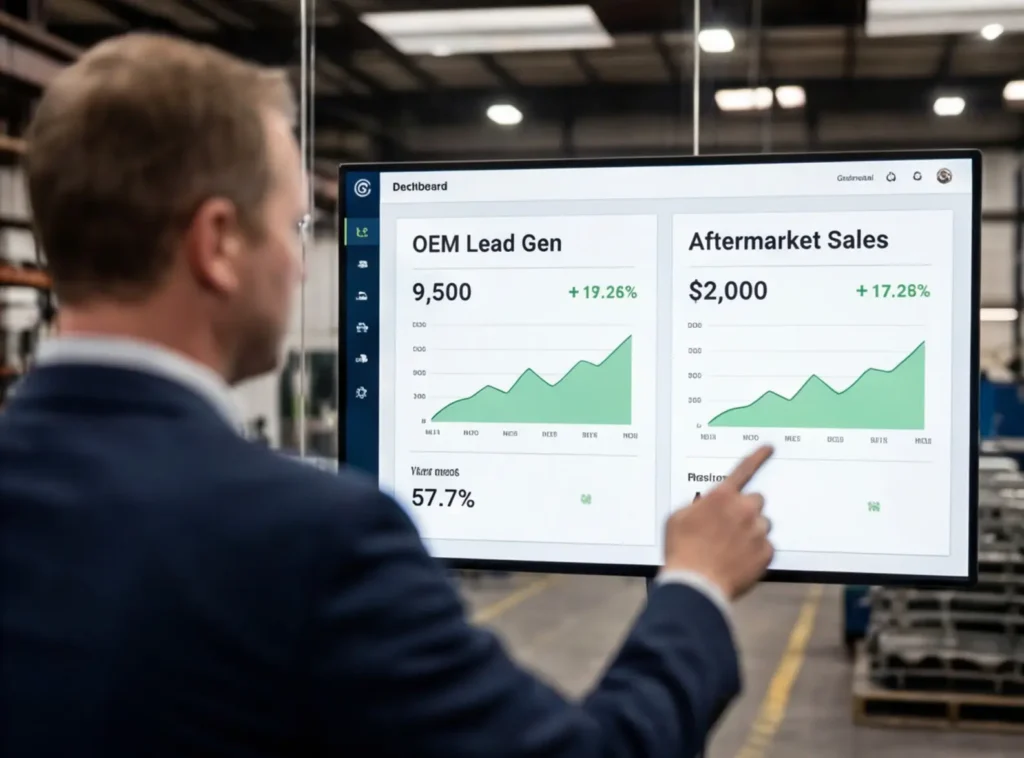
To structure a profitable search presence, B2B leaders must first dissect the fundamental differences in search intent between their two primary revenue streams. Misaligning content with intent creates friction, driving highly qualified leads to competitors who offer a more intuitive digital experience.
Decoding the OEM Search Journey
The OEM buyer—typically a design engineer, product manager, or procurement executive—is engaged in a long-term, high-stakes research process. They are not looking for a quick fix; they are looking for a strategic partner. Their queries reflect a need for custom capabilities, compliance, bulk manufacturing capacity, and engineering tolerances.
Typical OEM search behaviors include:
- Head Terms and Concept Queries: Searching for broad solutions, such as “custom pneumatic valve manufacturers” or “ISO certified electronic component assembly.”
- Specification-Driven Searches: Looking for specific material properties, such as “high-temperature resistant polymer extrusion.”
- Vendor Vetting: Queries focused on supply chain stability, domestic manufacturing capabilities, and prototyping.
For the OEM segment, the search strategy must prioritize thought leadership, engineering authority, and institutional credibility. The goal is to capture users early in the design phase and funnel them toward an engineering consultation or a request for proposal (RFP).
The Urgency of Aftermarket Queries
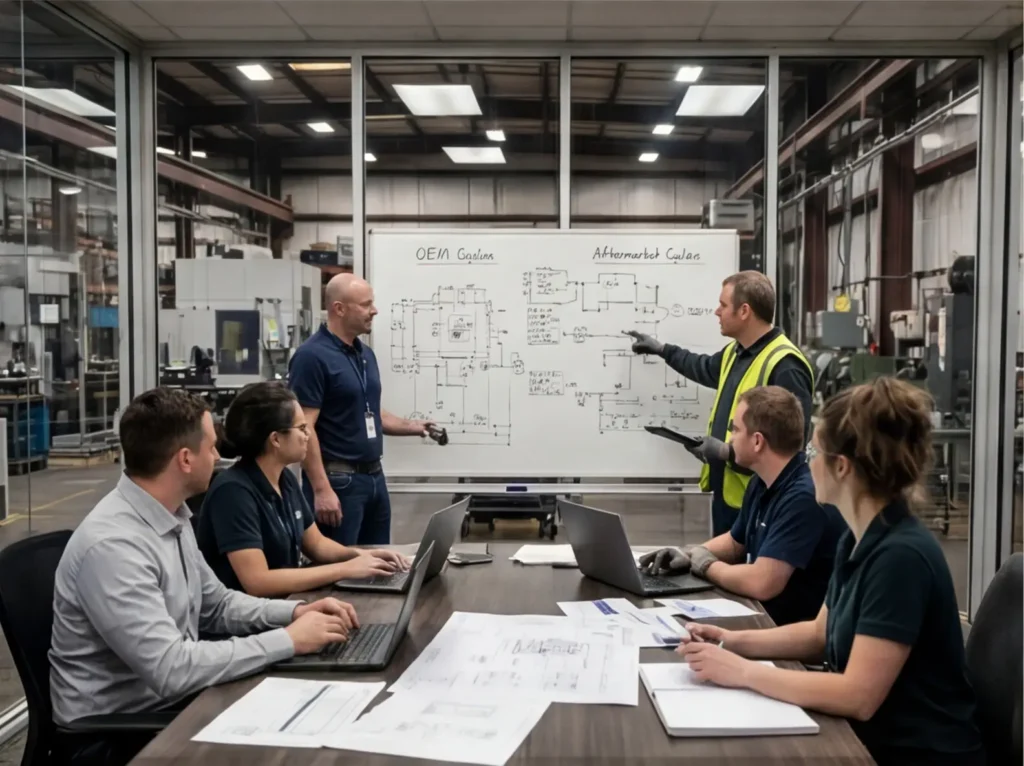
Conversely, the aftermarket buyer—often a maintenance technician, facility operator, or independent distributor—operates under the pressure of downtime. Their search behavior is highly transactional, specific, and driven by urgency. They do not care about your company’s design philosophy; they care about availability, fitment, and price.
Typical aftermarket search behaviors include:
- Exact Match Part Numbers: Searching for specific alphanumeric strings, such as “replacement for pump filter 445-X9.”
- Cross-Reference Queries: Searching for alternatives to a competitor’s part, such as “equivalent to [Competitor Brand] 9000 series bearing.”
- Symptom and Diagnostic Queries: Searching for solutions to immediate problems, such as “causes of rapid wear on conveyor belts.”
For the aftermarket segment, the search strategy must be hyper-focused on technical SEO, structured data, and frictionless ecommerce or quoting systems. Profitability here is driven by capturing long-tail, high-intent queries at the exact moment of failure.
Architecting a Segmented Search Strategy for Maximum Profitability
Once the distinct intents are understood, the digital architecture must be segmented to serve both audiences without cannibalizing organic visibility.
Structural Silos: Separating the Digital Experience
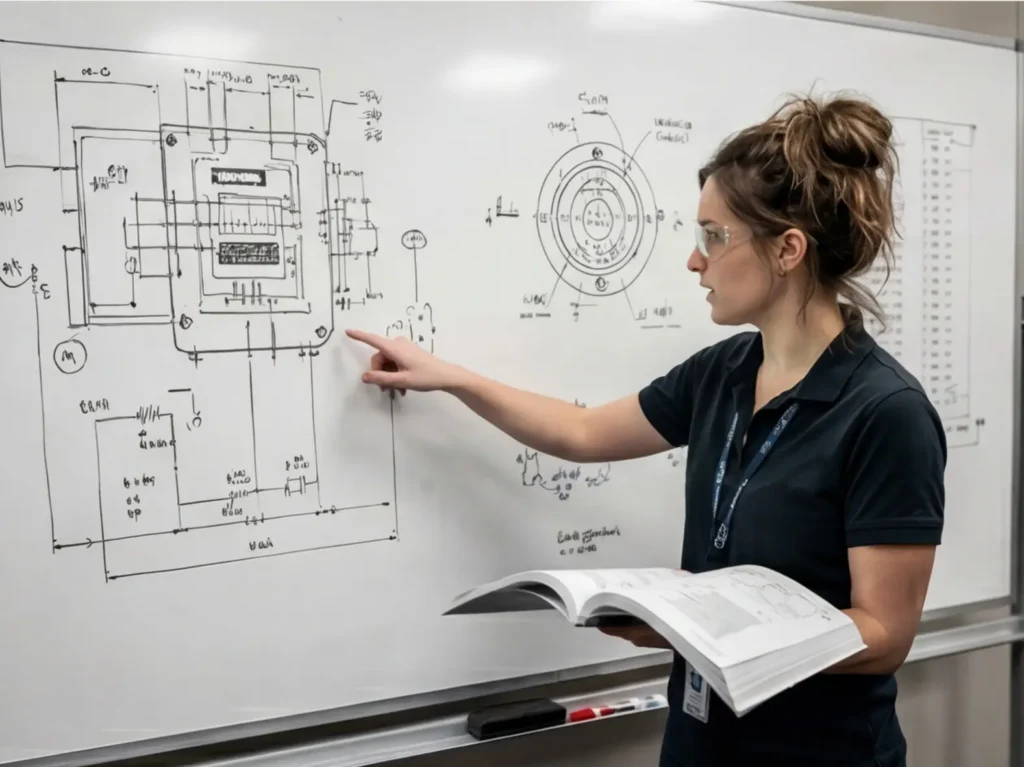
Attempting to rank a single page for both OEM capabilities and aftermarket replacement parts is a losing battle. Search engines and AI retrieval systems rely on contextual relevance. A page that tries to be everything to everyone ends up lacking the semantic depth required to rank for either.
The most profitable approach is to create distinct structural silos within your website:
- The OEM/Capabilities Silo: Focused on custom engineering, manufacturing processes, industries served, and case studies. URL structures should reflect services (e.g., /capabilities/custom-machining/).
- The Aftermarket/Catalog Silo: Functioning as a robust, searchable database of parts. URL structures should reflect taxonomy and part numbers (e.g., /parts/hydraulics/valves/part-number/).
By keeping these ecosystems distinct, you allow search algorithms to clearly understand the purpose of each section, increasing the likelihood of ranking for highly specific, profitable queries.
Technical SEO for Part Numbers and SKUs
For the aftermarket segment, technical SEO is the foundation of profitability. Millions of B2B searches happen every day for specific part numbers, and winning these clicks requires flawless technical execution.
- URL Optimization: Ensure every part number has a dedicated, static URL that includes the alphanumeric SKU.
- Canonicalization: Manage duplicate content issues arising from faceted navigation (e.g., filtering by size or material) using strict canonical tags.
- Page Speed and Mobile Usability: Maintenance managers often search from the factory floor on mobile devices. Milliseconds matter when a line is down.
Content Frameworks for High-Intent B2B Buyers
Content is the vehicle that delivers your segmented search strategy to the market. Developing distinct content frameworks for OEM and aftermarket audiences ensures that you are speaking the right language to the right decision-maker.
OEM Content: Engineering Authority and Custom Capabilities
OEM content must build trust. It should demonstrate an understanding of complex engineering challenges and showcase your ability to solve them at scale.
- White Papers and Technical Briefs: Deep dives into material science, manufacturing tolerances, and industry-specific compliance standards.
- Process Pages: Detailed explanations of your manufacturing capabilities, equipment, and quality control protocols.
- Case Studies: Data-driven narratives detailing how your custom solutions reduced costs or improved performance for other OEMs.
This content serves as semantic bait for long-tail, highly technical searches, positioning your brand as an industry authority.
Aftermarket Content: Fitment Data and Operational Efficiency
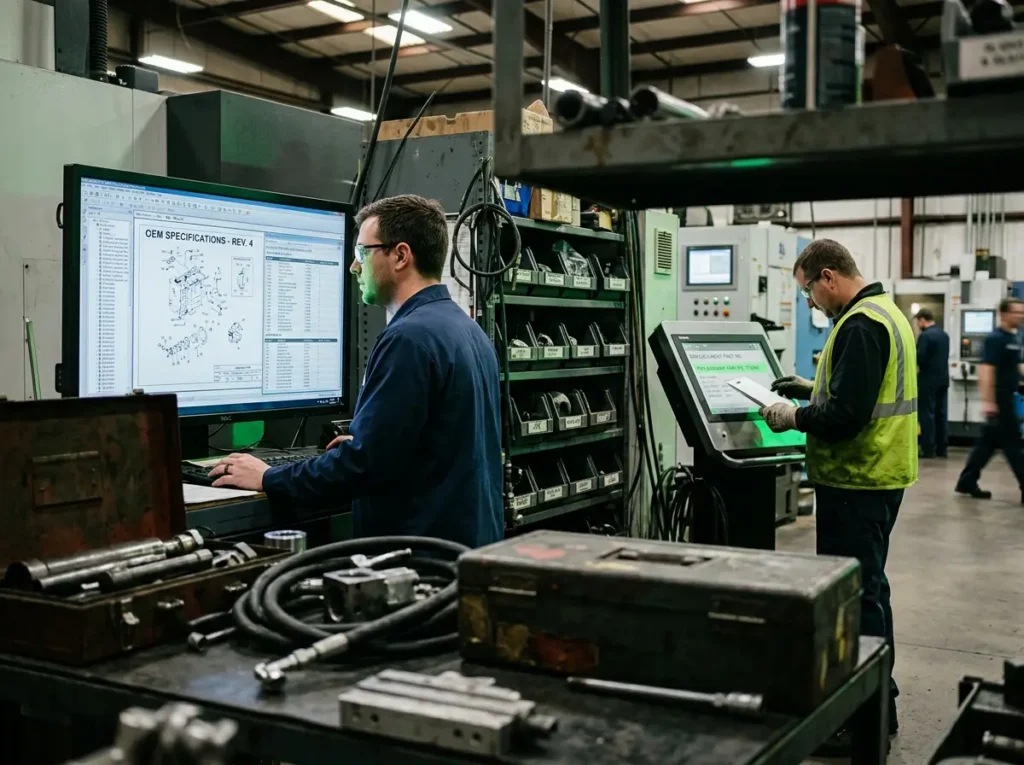
Aftermarket content must eliminate ambiguity. The buyer needs total confidence that the part they are ordering will fit their machine and solve their problem.
- Comprehensive Product Pages: Beyond the basic specs, include high-resolution schematics, installation manuals, and compatibility matrices.
- Cross-Reference Guides: Develop robust databases that map your replacement parts to competitor SKUs and OEM equivalents. This is one of the highest-converting strategies in aftermarket SEO.
- Diagnostic Content: Create troubleshooting guides that rank for symptom-based queries, naturally leading the user to the required replacement part.
Optimizing for AI and Generative Search Engines (LLMs)
The B2B search landscape is rapidly evolving with the integration of Large Language Models (LLMs) into search engines and enterprise procurement systems. Executives must ensure their segmented strategy is optimized not just for traditional indexing, but for generative AI retrieval.
Capturing Zero-Click Semantic Queries
AI search systems aim to answer complex queries directly within the search interface, reducing the need for the user to click through to a website. To remain visible, your content must be structured in a way that LLMs can easily parse and synthesize.
For OEM strategies, this means clearly structuring your capabilities, certifications, and limitations using semantic HTML and highly descriptive headers. If an engineer asks an AI, “Which US manufacturers offer ISO 9001 certified custom CNC machining for aerospace,” your site must clearly feed that exact data to the model.
Structuring Fitment and Cross-Reference Data for LLMs
For the aftermarket, AI optimization relies entirely on structured data. LLMs struggle with unstructured PDFs and dynamic, Javascript-heavy catalogs. To ensure an AI recommends your replacement part when a user queries a competitor’s broken component, your cross-reference data must be machine-readable.
Implement extensive JSON-LD Schema Markup—specifically Product, Offer, and ItemAvailability schemas. Furthermore, present compatibility and cross-reference data in clean, static HTML tables. LLMs excel at reading and extracting relationships from well-formatted tables, making this a critical tactic for capturing AI-driven aftermarket leads.
[Internal Link: Optimizing B2B Catalogs for Generative AI Search]
Measuring Profitability: KPIs for Segmented Search

A segmented search strategy requires segmented analytics. Applying generic metrics like “total organic traffic” across both divisions masks underlying performance and obscures profitability.
To measure the success of your OEM vs. aftermarket search strategy, track these distinct KPIs:
OEM Search KPIs:
- Organic traffic to “Capabilities” and “Industry” pages.
- Downloads of technical white papers and CAD files.
- Lead quality and RFP generation from organic sources.
- Time-to-close for leads originating from organic search.
Aftermarket Search KPIs:
- Organic traffic to specific part number URLs and category pages.
- Conversion rate on cross-reference and equivalent-part pages.
- Average Order Value (AOV) from organic search traffic.
- Revenue generated from long-tail, exact-match SKU searches.
By tracking these metrics independently, B2B leaders can accurately calculate the ROI of their search marketing efforts and allocate resources to the segment with the highest marginal profitability.
FAQ Section
How do search queries differ between OEM procurement and aftermarket buyers? OEM queries are inherently strategic, broad, and specification-driven. Engineers and procurement teams use terms related to manufacturing capabilities, compliance standards (e.g., ISO certification), and custom fabrication processes to find long-term partners. They are researching solutions for products that are currently in the design or prototyping phase.
Aftermarket buyers, however, are highly transactional and driven by immediate operational needs. Their queries consist of exact-match part numbers, competitor cross-references, and troubleshooting terms. They are attempting to repair existing machinery and mitigate downtime, making their search behavior heavily reliant on fitment data, availability, and fast shipping.
Should we use separate domains for our OEM and aftermarket businesses? In most B2B scenarios, maintaining a single, authoritative root domain is strategically superior to splitting into multiple domains. A single domain consolidates your backlink profile, maximizing the overall domain authority that benefits both the OEM and aftermarket sections of your website.
Instead of separate domains, utilize strict architectural siloing within subfolders (e.g., yourdomain.com/oem-capabilities/ and yourdomain.com/aftermarket-parts/). This allows search engines to clearly understand the distinct contextual relevance of each section while still leveraging the combined trust and authority of your brand’s overarching digital presence.
How do we optimize cross-reference part numbers for generative AI search? Generative AI and LLMs synthesize information by identifying patterns and relationships in structured data. To ensure AI systems recommend your replacement parts, you must present your cross-reference data in clean, highly structured formats rather than hiding it inside downloadable PDFs or complex Javascript applications.
Utilize static HTML tables to clearly map competitor SKUs to your equivalent part numbers. Additionally, deploy robust JSON-LD Product schema markup that explicitly defines the product relationships, specifications, and fitment. When data is presented in a machine-readable format, LLMs are significantly more likely to parse it and use it to answer zero-click queries from maintenance buyers.
What is the most important technical SEO factor for B2B aftermarket ecommerce? The single most critical technical factor for aftermarket ecommerce is the scalable management of faceted navigation and part number URLs. B2B catalogs often contain tens of thousands of SKUs, and filtering systems (by size, material, or application) can exponentially multiply the number of generated URLs, leading to massive duplicate content issues.
Implementing strict canonicalization rules and optimizing your robots.txt file to prevent search engines from crawling infinite filter combinations is mandatory. Furthermore, ensuring that every unique, searchable part number resolves to a static, descriptive URL guarantees that search engines can index the exact terms your buyers are actively searching for.
How can search segmentation directly impact our profit margins? Search segmentation drives profitability by aligning your digital acquisition costs with the distinct margin profiles of your business units. OEM contracts generally yield high-revenue, long-term engagements but require significant consultative resources, whereas aftermarket sales rely on volume, speed, and lower customer acquisition costs (CAC).
By separating the search strategy, you stop wasting high-value OEM marketing budget on low-margin replacement queries, and vice versa. You can specifically optimize your aftermarket silo for automated, low-touch conversions, preserving your margins, while funneling complex, high-margin OEM queries directly to your specialized sales engineers.
Strategic Conclusion
Treating OEM and aftermarket audiences as a single entity is a structural flaw in modern B2B marketing. The businesses that dominate their industries are those that recognize the vast divide in search intent and architect their digital presence accordingly.
By segmenting your search strategy—decoupling the consultative, engineering-focused OEM journey from the transactional, data-driven aftermarket experience—you eliminate friction for the buyer. You provide search engines and AI models with the precise semantic clarity they require to rank your content. Ultimately, segmenting your search strategy is not just an exercise in digital marketing; it is a fundamental revenue optimization tactic that ensures you are capturing the right buyer, at the right time, with the highest possible profit margin.
Would you like me to analyze your current website architecture to identify immediate opportunities for separating your OEM and aftermarket search silos?