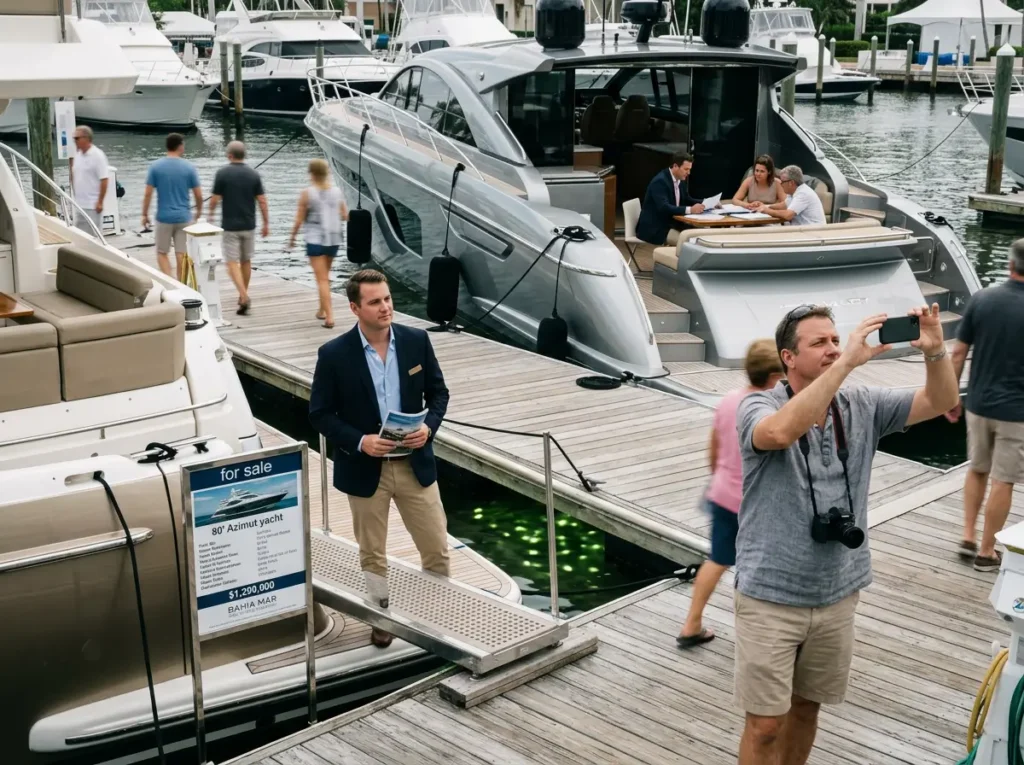
Introduction: The “Pretty Picture” Paradox in Marine Marketing
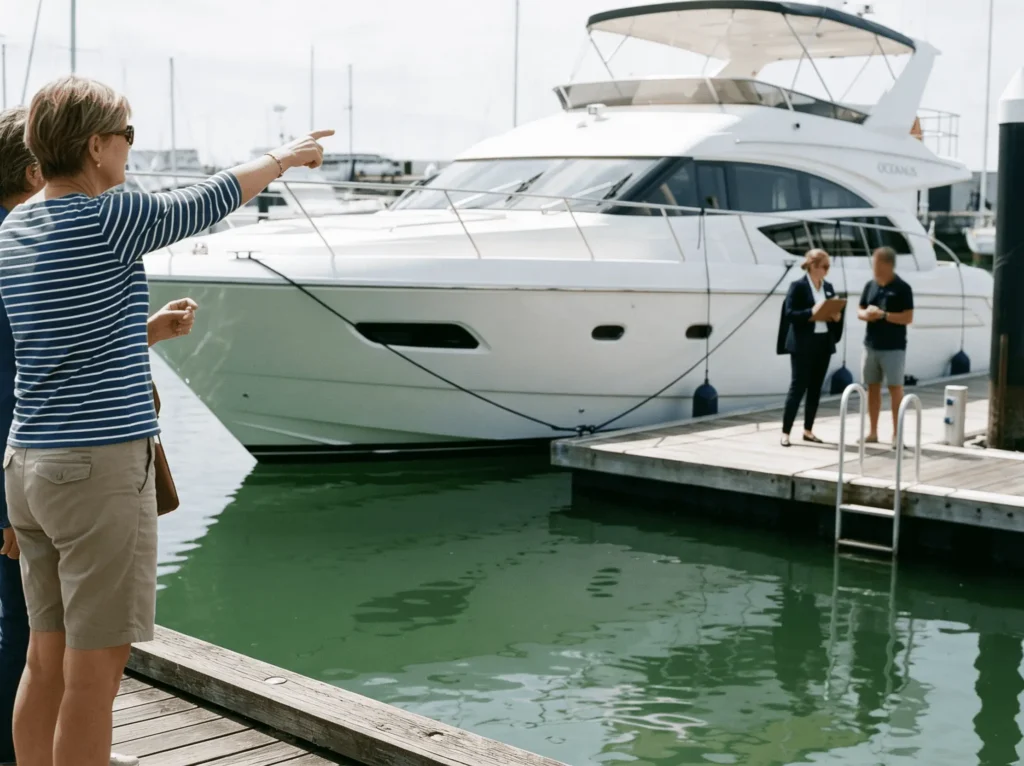
The marine industry possesses a unique, built-in advantage in digital marketing: highly visual, aspirational products. A high-definition drone shot of a center console cutting through the Gulf Stream or a cinematic tour of a luxury superyacht will invariably generate thousands of likes, shares, and comments across Facebook and Instagram.
For many marine brands, boat dealerships, and yacht brokerages, this engagement is mistakenly equated with marketing success. However, executive-level decision-makers are increasingly confronting a harsh reality: social media engagement does not pay dealership overhead, nor does it guarantee pipeline velocity. A campaign generating high engagement but zero trackable revenue is a misallocation of capital.
To survive and scale in a competitive economic landscape, marine executives must demand a transition from vanity metrics to verifiable revenue. Meta Ads (Facebook and Instagram) remain one of the most powerful platforms for reaching high-net-worth individuals (HNWIs) and boating enthusiasts, but only when architected as a full-funnel, data-driven revenue engine.
This article outlines the strategic framework required to align Meta Ads with actual commercial outcomes, utilizing advanced tracking architectures, sophisticated audience segmentation, and seamless CRM integrations to prove—and improve—Return on Ad Spend (ROAS).
The Trap of “Vanity Metrics” in Marine Advertising
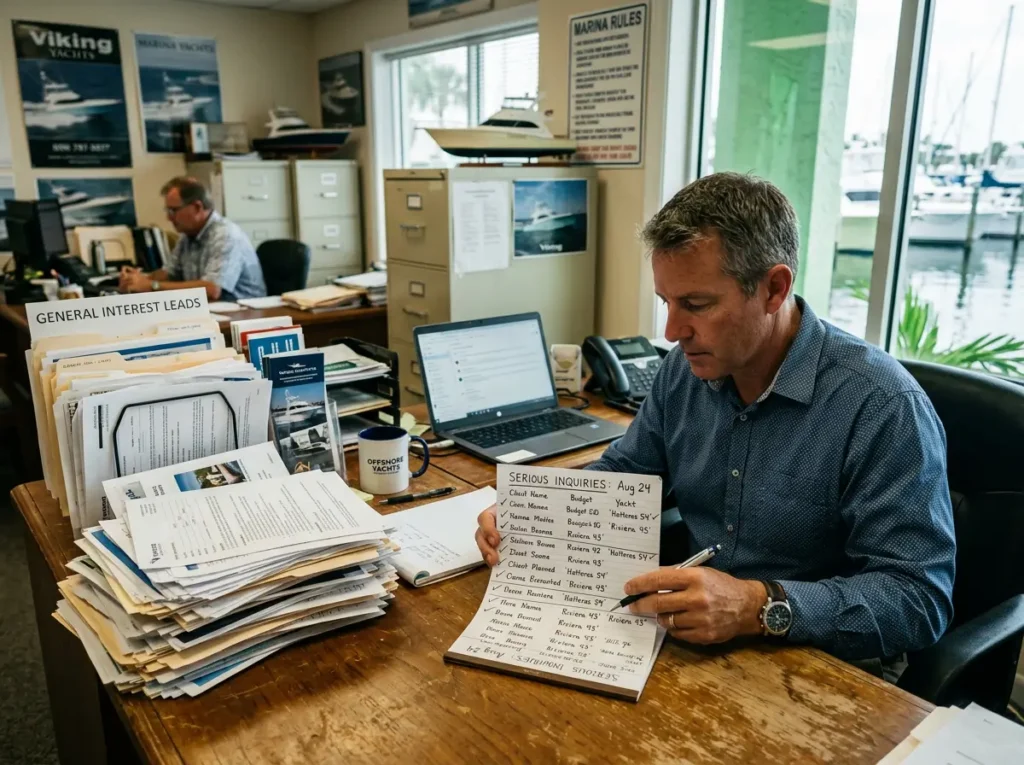
In the context of high-ticket retail, vanity metrics are data points that appear impressive on a surface level but offer no correlation to revenue generation or strategic business growth. For marine brands, these typically include:
- Cost Per Click (CPC) and Click-Through Rate (CTR): While indicative of ad relevance, a low CPC is meaningless if the traffic consists of aspirational dreamers rather than qualified buyers.
- Post Engagement (Likes, Comments, Shares): High engagement on a multi-million dollar yacht post often comes from non-buyers appreciating the aesthetic, skewing the algorithmic delivery toward non-qualified audiences.
- Follower Growth: A growing audience is beneficial for brand equity, but it does not equate to an active sales pipeline.
When agencies or internal marketing teams optimize campaigns for these metrics, they train the Meta algorithm to find users who click and like, rather than users who inquire and purchase. The strategic pivot requires redefining the primary objective of the Meta Ads account: from generating digital applause to generating highly qualified sales conversations.
Architecting a Revenue-First Meta Ads Strategy
To track actual revenue from Meta Ads, marine brands must deploy a robust technical infrastructure. The buying cycle for a vessel—whether a $150,000 wakeboat or a $5,000,000 motor yacht—can span months or even years. Standard pixel tracking is insufficient for this reality.
Implementing Advanced Conversion API (CAPI) Architecture

The reliance on browser-based cookies is rapidly becoming obsolete due to privacy regulations (like iOS 14.5) and the rise of ad blockers. Relying solely on the standard Meta Pixel results in significant data loss, meaning campaigns are optimized blindly.
Marine brands must implement the Meta Conversions API (CAPI). CAPI establishes a direct, server-to-server connection between your dealership’s website (or CRM) and Meta’s servers. This ensures that when a user submits a lead form to schedule a sea trial, downloads a pricing sheet, or makes an inquiry, that data is securely and accurately passed back to Meta.
This server-side tracking is non-negotiable for high-ticket items. It feeds the algorithm high-quality signals, allowing Meta to model the behavior of actual buyers and target similar profiles, ultimately driving down the Customer Acquisition Cost (CAC) over time.
Audience Segmentation for High-Net-Worth Individuals (HNWIs)

Targeting “boating” or “yachting” as interests on Meta is fundamentally flawed for high-end marine brands. These interests capture millions of aspirational fans who do not possess the capital to execute a purchase. To drive revenue, the targeting strategy must shift from broad interests to data-backed behavioral and financial indicators.
A revenue-driven audience strategy includes:
- First-Party Data Lookalike Audiences: Upload your CRM data of past buyers (segmented by vessel type or purchase price) and instruct Meta to find the top 1% of users who most closely match their digital footprint.
- Intent-Based Retargeting: Segment website visitors by intent. A user who spent 45 seconds on a homepage is low intent; a user who spent five minutes configuring a boat or viewing specific inventory pages multiple times is high intent. Retargeting dollars should be disproportionately allocated to the latter.
- Cross-Referencing High-Value Indicators: While Meta has removed direct income targeting, advertisers can layer interests that correlate with wealth, such as specific financial publications, high-end real estate investments, or luxury travel behaviors, intersecting them with marine interests.
Full-Funnel Attribution and Offline Conversions
Because boat sales are rarely completed via a digital checkout cart, marine brands face an attribution gap. A user may click an ad on a Tuesday, submit a lead form on a Friday, visit the dealership three weeks later, and close the deal after a two-month financing process.
To track this revenue, marine marketers must utilize Meta’s Offline Conversion Tracking. By periodically uploading closed-won deal data from your CRM back into Meta—matching names, emails, and phone numbers—you can definitively attribute a closed sale (and its exact revenue value) back to the specific campaign, ad set, and creative that initiated the journey. This closes the loop, allowing executives to see exact ROAS rather than guessing the impact of their ad spend.
Creative Frameworks That Drive Action, Not Just Applause
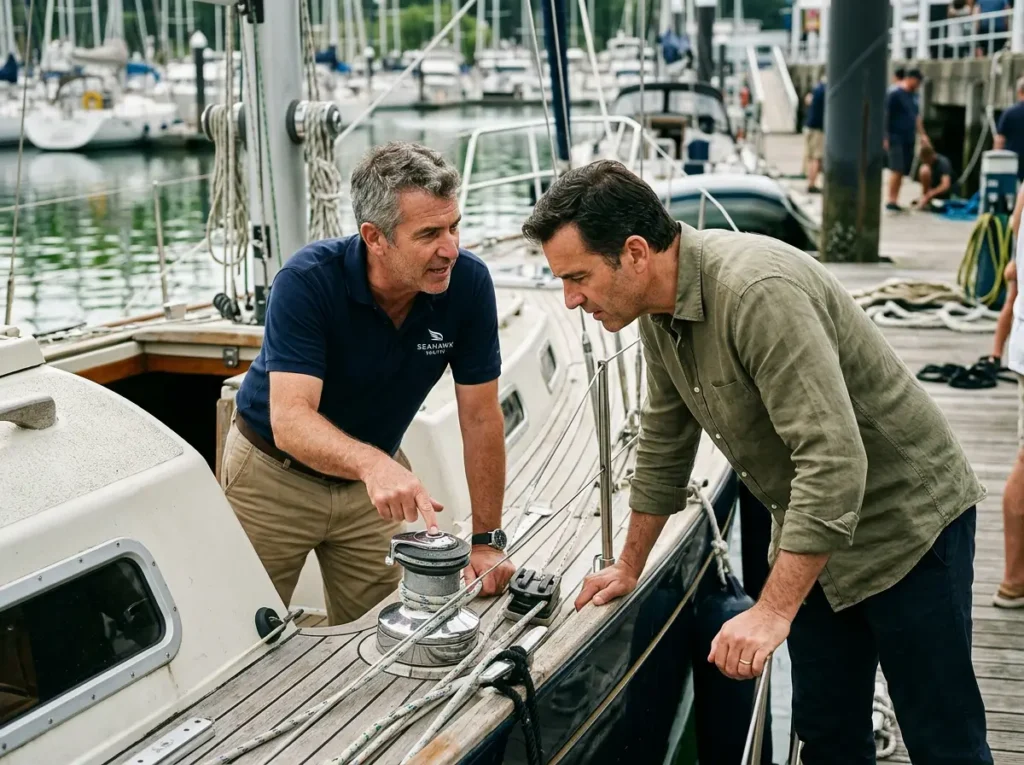
Moving beyond “pretty pictures” does not mean abandoning high-quality visual assets; it means demanding those assets perform a commercial function. Creative must be engineered to initiate a micro-conversion.
1. The “Information Gap” Strategy
Instead of giving away all the information in the ad, create an information gap. Show the stunning visual of the vessel, but require the user to submit their information to access the full technical spec sheet, a 3D virtual tour, or transparent pricing matrices.
2. Frictionless Lead Magnets
Offer immediate, tangible value in exchange for contact information. For marine dealerships, this could look like:
- “Download the 2026 Center Console Buyer’s Guide”
- “Access VIP Boat Show Inventory Before the Public”
- “Request a Private Sea Trial Appointment”
3. Direct Response Video Frameworks
While cinematic drone footage is excellent for the top of the funnel, middle and bottom-of-funnel ads require direct response elements. A walk-through video featuring a broker explaining the unique selling propositions (USPs) of a vessel, the financing options available, and ending with a clear, urgent call-to-action (CTA) will consistently outperform a music-only montage when it comes to generating pipeline.
Integrating Meta Ads with Dealership CRM Systems
A primary reason marine brands struggle to track revenue from Meta Ads is a fractured handoff between marketing and sales. If a lead is generated on Facebook and sits in a CSV file for 24 hours before a broker calls them, the conversion rate will plummet.
Revenue-optimized Meta campaigns must be directly integrated with the dealership’s CRM (e.g., Salesforce, HubSpot, or marine-specific platforms like Dealership Advantage or IDS).
- Real-Time Lead Routing: Utilizing integration tools (like Zapier or native API connections), Meta Lead Generation forms should instantly populate as new contacts in the CRM.
- Automated Speed-to-Lead: The integration should trigger an immediate automated email or SMS response to the prospect, while simultaneously pinging the assigned broker to initiate contact while the prospect is still active on their device.
- Pipeline Stage Syncing: As the broker moves the lead through the CRM stages (e.g., “Contacted,” “Sea Trial Scheduled,” “Financing Approved,” “Closed Won”), this data should seamlessly feed back into marketing dashboards to evaluate campaign quality.
By unifying the Meta Ads platform with the sales floor’s CRM, executives gain real-time visibility into cost-per-lead, cost-per-appointment, and cost-per-acquisition.
Frequently Asked Questions (FAQ)
What is a realistic cost per lead (CPL) for yacht and boat sales on Meta?
Cost per lead in the marine industry varies significantly based on the vessel’s price point, the targeting parameters, and the offer. For mid-tier recreational boats ($50k–$150k), a qualified CPL typically ranges from $40 to $85. For high-ticket yacht brokerages ($1M+), generating highly qualified, vetted leads can cost between $250 and $600+. The focus should remain on Cost Per Acquisition (CPA) rather than CPL; a $500 lead that converts into a $2 million sale yields an exceptional ROI, whereas fifty $10 leads that never convert represent wasted spend.
How do we track closed sales back to Meta Ads when the sales cycle takes months?
The solution is Offline Conversion Tracking combined with a rigorous CRM protocol. When a prospect enters your system via a Meta Ad, the CRM captures their attribution data (UTM parameters or Meta Lead ID). Even if the sales cycle takes six to twelve months, once the deal is marked “Closed Won” in your CRM, that final sales data (including transaction value) is securely pushed back to Meta via an API or manual CSV upload. Meta then matches the buyer’s profile to the original ad interaction, attributing the revenue directly to the campaign.
Are high-net-worth buyers actually active on Facebook and Instagram?
Yes. It is a common misconception that ultra-high-net-worth individuals (UHNWIs) do not use social media. While they may not be highly active in commenting or posting public content, data consistently shows they consume content on both platforms—particularly Instagram—at high rates. The key difference is how they interact; they are more likely to save a post, direct message a brand privately, or click through to a website to conduct independent research. Campaigns must be optimized for these quieter, high-intent actions rather than public engagement.
Should marine brands use Meta lead generation forms or drive traffic to a landing page?
Both have distinct strategic roles. Native Meta Lead Forms (Instant Forms) generally produce a lower Cost Per Lead because they offer a frictionless experience—the user’s information auto-populates, and they never leave the app. However, these leads can sometimes be lower intent. Driving traffic to a dedicated, conversion-optimized landing page creates friction, which naturally filters out casual browsers. If your sales team is overwhelmed with low-quality inquiries, shift to landing pages. If your CRM automation and vetting processes are highly efficient, native lead forms can generate high volume at a lower cost.
How does Meta’s Conversion API differ from the standard Facebook Pixel for marine marketers?
The standard Meta Pixel is a piece of code placed on a website that relies on the user’s web browser to send data back to Meta. Due to modern privacy updates, ad blockers, and cookie restrictions, browser-based tracking frequently fails to capture data. The Conversions API (CAPI) bypasses the browser entirely, sending data directly from the dealership’s server to Meta’s server. For marine marketers dealing with high-ticket, low-volume sales, missing even one or two conversion signals can ruin campaign optimization. CAPI ensures data accuracy, allowing the algorithm to optimize effectively.
Strategic Conclusion
Transitioning a marine brand’s Meta Ads strategy from a repository of vanity metrics to a verifiable revenue engine requires a fundamental shift in operational mindset. It demands that executives stop asking their marketing teams, “How many people saw our post?” and start asking, “What is the verifiable return on our advertising spend, and how is it impacting our pipeline velocity?”
By implementing server-side tracking, executing rigorous audience segmentation based on first-party data, demanding performance-driven creative, and seamlessly integrating ad platforms with dealership CRM systems, marine brands can finally close the attribution loop.
In an industry where a single digital conversion can result in a multi-million dollar transaction, the precision of your digital infrastructure is not just a marketing concern—it is a core business asset. Stop paying for digital applause, and start investing in measurable, revenue-generating architecture.