Marine Service Page Optimization: Turning Traffic into Quotes
Attracting vessel owners to a boat service website is only half the battle. If high-intent search traffic arrives at a generic, confusing service page, those boat owners quickly leave to find a competitor who presents a clearer solution.
Service pages act as the primary conversion engine for marine repair facilities, yards, and technicians. Converting visitors into qualified marine quote requests requires structuring these pages to solve specific owner problems, demonstrate technical capability, and eliminate friction at the moment of inquiry.
Effective marine service page optimization bridges the gap between organic search visibility and booked work, ensuring qualified traffic converts into steady job leads.
What Makes a Marine Service Page Convert?
A high-converting marine service page combines clear capability messaging, immediate trust indicators, transparent service expectations, and low-friction contact options. It reassures vessel owners within seconds that your facility possesses the exact expertise, machinery, and berth capacity required to handle their boat.
To turn high-intent visitors into active inquiries, every successful service page relies on four core elements:
- Explicit Headline Clarity: Immediately states the exact marine service, vessel size range, and geographic coverage area.
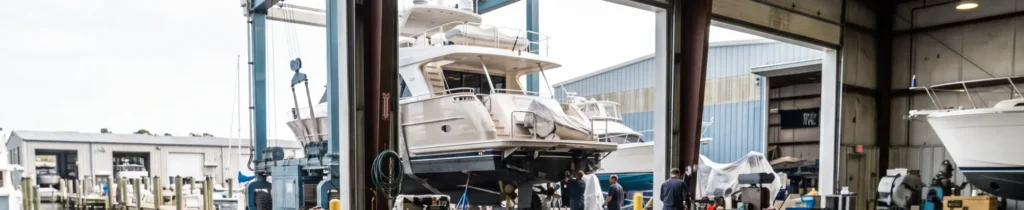
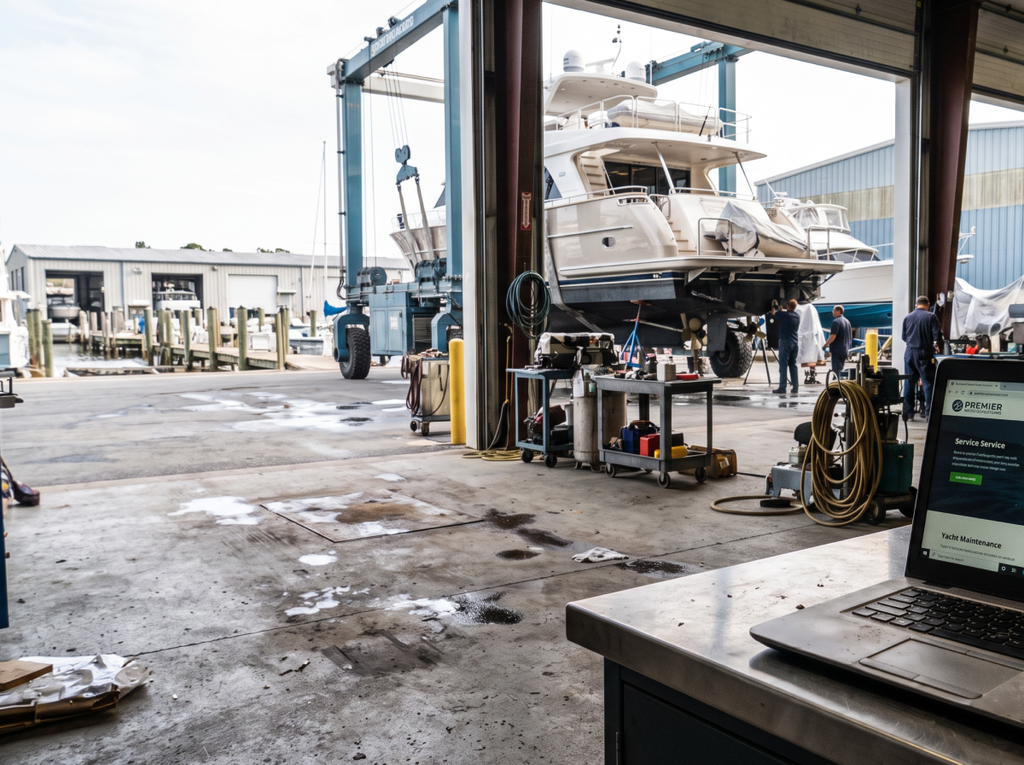
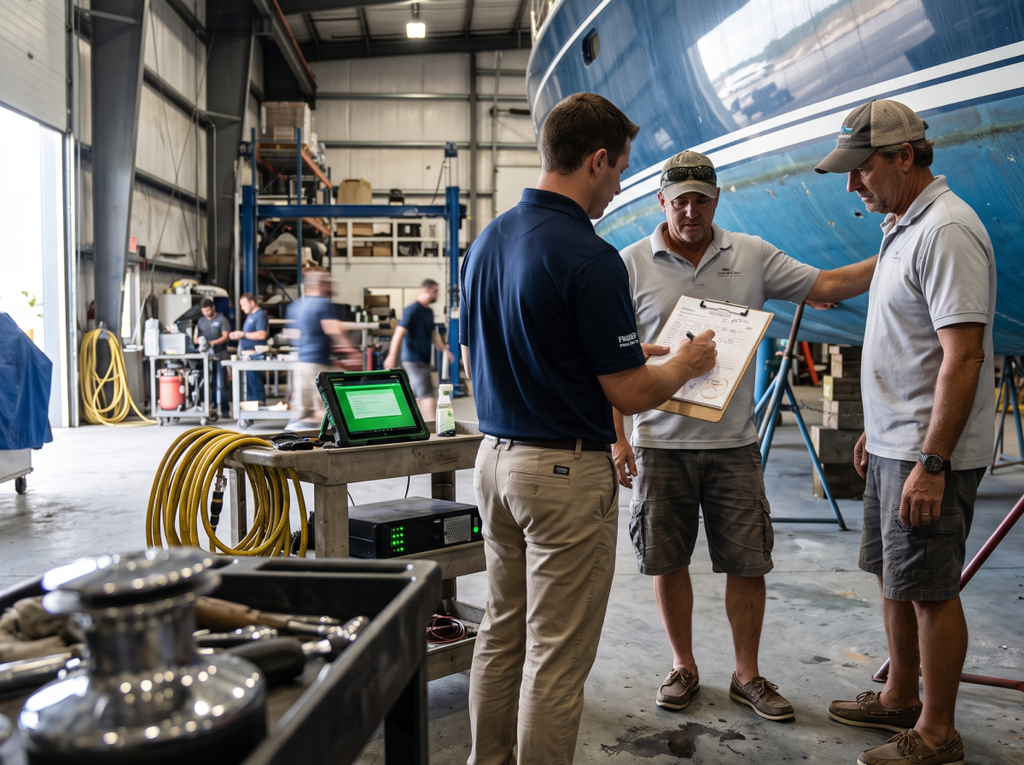
- Visual Proof of Capability: Displays real photos of your yard equipment, travelifts, diagnostic bays, and active repair projects rather than stock images.
- Structured Technical Details: Outlines scope of work, supported engine or hull manufacturers, and standard turnarounds clearly.
- Prominent Quote Pathways: Offers immediate, visible options to request an estimate or speak with a service writer.
When these elements align, visitors quickly verify that your business is qualified, available, and easy to contact.
Why Search Intent Should Shape Every Service Page
Search intent dictates whether a visitor requires a high-level overview or granular technical specifications before submitting an inquiry. Designing marine service pages around commercial and transactional search intent ensures your content directly answers the specific questions boat owners ask when they are ready to hire a professional.
Boaters searching for specific terms like “yacht diesel engine overhaul” or “50-ton haul-out service” are not looking for general boating advice. They have an immediate operational need, a timeline, and a budget.
Aligning page structure with search intent prevents bounce rate spikes caused by misplaced content. Informational background should be kept brief, while practical details—such as lift dimensions, service turnarounds, technician certifications, and mobile response radii—take priority to encourage immediate action.
How to Match Service Page Copy to Buyer Needs
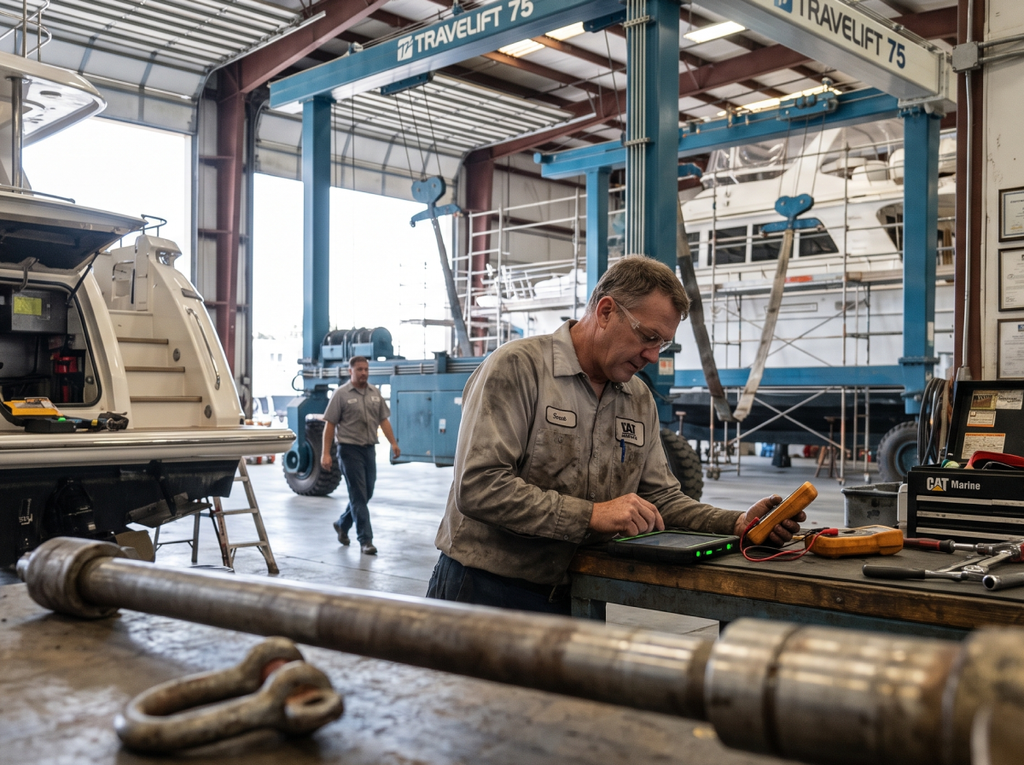
Matching service page copy to buyer needs requires shifting focus from internal company background to addressing owner risks, timeline constraints, and quality requirements. Vessel owners prioritize minimizing downtime, preserving asset value, and ensuring safety on the water.
Your copy must speak directly to these priorities by addressing critical decision factors:
- Vessel Compatibility: Specify the draft, beam, tonnage, or engine brands your shop specializes in servicing.
- Turnaround Expectations: Detail standard response times for mobile calls, hauled repairs, or scheduled maintenance.
- Risk Mitigation: Highlight insured haul-out operations, OEM-compliant procedures, and service warranties.
- Clear Scope Breakdown: Outline what is included in standard service packages versus custom refits.
Clear, benefit-driven messaging helps captains and boat owners quickly confirm that your facility can handle their vessel safely and efficiently.
Which Trust Signals Help Marine Buyers Take Action?

Marine buyers rely heavily on visible trust signals, including industry certifications, yard capability specs, authentic project case photos, and client reviews. Because marine repairs involve high asset values and strict safety standards, trust signals significantly reduce perceived risk for prospective clients.
Integrating authority markers directly into your marine service pages helps build immediate credibility:
- Industry Certifications: Feature logos for ABYC, NMEA, or manufacturer-specific credentials (e.g., Yamaha, Volvo Penta, Caterpillar).
- Facility Specs: Display lift capacities, secure indoor storage bays, draft limits, and dockage availability.
- Real Project Visuals: Showcase high-resolution photos or short videos of recent haul-outs, repowers, or fiberglass repairs.
- Authentic Testimonials: Include short quotes from satisfied boat owners detailing project scope, vessel type, and outcome.
Placing these trust indicators near your primary quote forms reassures visitors at the exact moment they decide whether to reach out.
How CTAs and Quote Forms Affect Conversion
Strategic calls-to-action (CTAs) and simplified quote forms directly increase conversion rates by making it easy for visitors to get in touch. Complex menus or long, confusing contact forms create friction that causes potential leads to abandon the page.
To maximize marine website conversion optimization, position low-barrier CTAs at multiple key points on the page. Place a primary quote request form or button above the fold, and repeat a contextually relevant CTA following technical breakdowns or client testimonials.
Keep lead generation forms concise. Request only essential project details:
- Owner name and contact details (email and phone).
- Vessel make, model, length, and current location.
- Primary service needed and preferred timeframe.
Reducing required form fields reduces effort while capturing enough information for your service writers to respond with an accurate preliminary estimate.
“A service page should make the next step feel obvious. When someone arrives with a specific repair or maintenance need, every extra field, unclear CTA, or unnecessary step creates another opportunity to lose that lead. The goal is to collect enough information to qualify the inquiry without making the customer work for it.”
Jonas Leopoldo – Website Specialist
Why Technical Information Can Help or Hurt Conversions
Technical information helps conversions when it proves capability and authority, but harms conversions when it overwhelms readers with dense jargon or obscures the next action step. Balancing detailed technical specifications with clear practical benefits keeps both experienced captains and newer boat owners engaged.
- When Technical Data Helps: Listing diagnostic software, haul-out tonnage limits, specific tooling, and manufacturer compliance codes reassures professional captains and knowledgeable owners that your facility operates to high standards.
- When Technical Data Hurts: Walls of unformatted text detailing complex mechanical processes can create confusion and distract visitors from requesting a quote.
Use formatted bullet lists, comparison tables, or expandable accordion sections to keep technical details organized. This layout allows detail-oriented buyers to inspect your technical capabilities without cluttering the page for visitors seeking a quick service estimate.
How to Measure Service Page Performance
Measuring marine service page performance requires tracking revenue-focused metrics beyond basic page views, specifically focusing on conversion rates, quote submissions, phone calls, and lead quality. Tracking these indicators highlights which service pages generate profitable inquiries and which require layout or content updates.
Track these core metrics to evaluate your service pages effectively:
| Performance Metric | What It Measures | Strategic Value |
| Service Page Conversion Rate | Percentage of page visitors submitting a quote form or calling | Reveals how effectively page content turns traffic into inquiries |
| Quote Form Completion Rate | Ratio of started quote forms to completed submissions | Identifies potential technical friction or unnecessary form fields |
| Click-to-Call Events | Direct phone calls initiated from mobile service pages | Measures immediate, high-intent contact from active boaters |
| Organic Lead Quality | Percentage of submitted quotes matching target vessel sizes and services | Evaluates whether messaging attracts qualified, profitable jobs |
Regularly auditing these performance metrics allows marine businesses to refine page elements, improve user experience, and drive higher return on investment from web traffic.
“Traffic alone doesn’t tell us whether a service page is working. We want to know which pages generate calls and quote requests, but also whether those inquiries actually match the services, vessel types, and job values the business wants. Conversion rate without lead quality can give you the wrong picture.”
Jonas Leopoldo – Website Specialist
When Should a Marine Service Page Be Optimized?
A marine service page should be optimized whenever bounce rates rise, organic traffic fails to generate inquiries, facility capabilities upgrade, or strategic planning begins for peak boating seasons. Waiting for a complete website overhaul often leads to missed seasonal opportunities.
Key triggers for updating marine service pages include:
- Pre-Season Prep: Updating messaging before spring commissioning or fall lay-up periods when service searches spike.
- Low Conversion Performance: Redesigning pages that receive steady search traffic but generate zero quote requests.
- Equipment or Facility Upgrades: Adding new travelifts, expanded bay capacity, or new OEM technician certifications.
- New Service Expansion: Launching dedicated landing pages for newly offered specialized work, such as gyro-stabilizer installation or lithium battery conversions.
Proactively updating service pages ensures your online presence keeps pace with facility growth and changing customer expectations.
Frequently Asked Questions
What is marine service page optimization?
Marine service page optimization is the process of improving a boat service website’s individual service pages through clear copywriting, strong trust signals, intuitive layouts, and low-friction forms to convert search traffic into direct quote requests and phone inquiries.
How many form fields should a marine quote request form have?
A high-converting marine quote request form should generally include four to six basic fields: name, contact info, vessel make/length, location, service required, and ideal timeline. Keeping form fields brief minimizes friction while providing enough context for your team to follow up.
What is a good conversion rate for a marine service page?
A typical conversion rate for high-intent marine service pages ranges between 3% and 8%, depending on service complexity, local competition, and traffic quality. Optimizing trust signals and simplifying quote forms can push conversion rates even higher.
Should marine service pages include exact pricing?
While exact pricing can be difficult due to varying vessel conditions, offering price ranges, starting rates, or standard labor fees helps qualify leads and build pricing transparency without committing your shop to an inaccurate estimate upfront.
Ready to Turn Website Traffic into Booked Jobs?
Optimizing your marine service pages is the fastest way to turn existing search traffic into qualified quote requests and steady service work.
Audit your current page layouts, strengthen your technical trust signals, and streamline your quote forms to capture high-value jobs year-round. Contact our specialized marine marketing team today to start converting high-intent visitors into revenue for your yard or shop.