
The Shift from Rented Attention to Owned Infrastructure
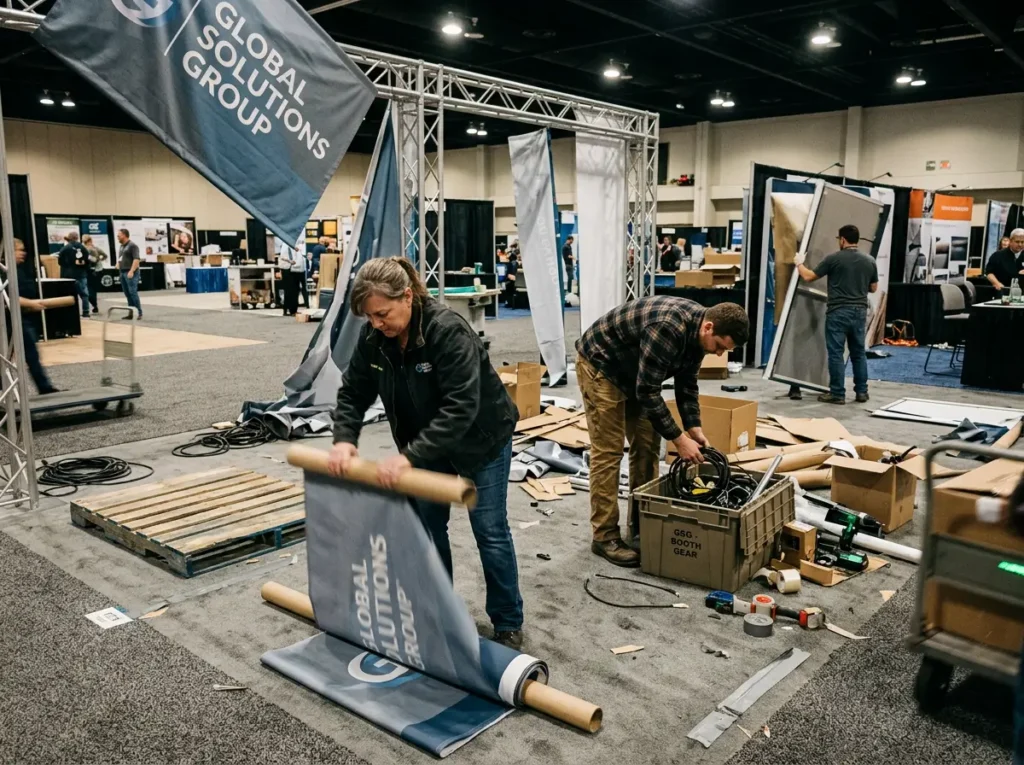
For decades, the physical trade show has served as the undisputed cornerstone of B2B lead generation. Companies have routinely allocated hundreds of thousands of dollars to booth design, drayage, travel and entertainment (T&E), and floor space, accepting the massive capital expenditure as a necessary cost of doing business. However, the economic reality of B2B procurement has fundamentally shifted.
Executive buyers and procurement committees no longer wait for an annual expo in Las Vegas or Frankfurt to discover new vendors, evaluate industrial solutions, or execute enterprise contracts. Today, the B2B buying journey is overwhelmingly digital, continuous, and autonomous. Relying on a three-day physical event to generate your pipeline for the next twelve months is a high-risk strategy heavily dependent on foot traffic and geographical proximity.
Progressive B2B organizations are reallocating their event budgets toward building “always-on” digital infrastructures. By treating SEO, account-based marketing (ABM), and Large Language Model (LLM) optimization as capital investments rather than operational expenses, companies can capture expo-level lead volume at a fraction of the customer acquisition cost (CAC). This article outlines the exact blueprint for replacing the physical trade show with a scalable, high-intent digital acquisition engine.
The Structural Flaws of Traditional Trade Show ROI

To understand why the digital transition is necessary, executives must first audit the true financial and operational inefficiencies of the traditional expo model. The physical trade show suffers from structural flaws that severely limit pipeline velocity and ROI.
High Customer Acquisition Cost (CAC) and Sunk Capital

Trade show budgets are notoriously inefficient. When factoring in booth fabrication, union labor, shipping logistics, sponsorships, and the travel expenses of an entire sales team, the cost per qualified lead (CPL) generated on the floor is often astronomical. More critically, this investment is a sunk cost. Once the show floor closes, the capital is exhausted.
Conversely, an investment in digital architecture—such as an optimized content hub, proprietary research reports, or advanced technical SEO—is a compounding asset. A highly ranked landing page capturing bottom-of-the-funnel commercial queries continues to generate leads 24/7, year after year, effectively driving the long-term CAC down to zero. [Internal Link: Calculating B2B Customer Acquisition Cost in Digital Channels]
Ephemeral Lead Lifespan and Post-Show Attrition
The leads generated at physical events are highly perishable. An attendee scanning a badge at your booth might be evaluating ten other competitors on the same floor. Post-show follow-ups are notoriously difficult, as prospects return to overloaded inboxes and immediate operational fires. The context of the conversation is quickly lost, resulting in massive pipeline attrition.
Digital lead generation, heavily driven by high-intent organic search, captures prospects exactly when they are actively experiencing a problem and seeking a solution. An executive downloading a technical whitepaper on a Tuesday afternoon is demonstrating immediate, actionable intent, resulting in significantly higher conversion rates than a passive badge scan at an open bar.
Architecting the Digital Trade Show Equivalent
Transitioning away from physical events does not mean abandoning the core functions of a trade show: product demonstration, networking, and thought leadership. It requires translating these functions into a structured digital format optimized for search engines and generative AI.
The “Always-On” Booth: High-Intent Content Hubs

Your website must transition from a static digital brochure into an interactive, high-value destination. The digital equivalent of a premier expo booth is a heavily optimized content hub that aggressively targets commercial intent queries.
If you manufacture industrial robotics or enterprise SaaS, your buyers are searching for complex solutions. Structure your site architecture with dedicated, in-depth pillar pages that answer industry-specific challenges. Include high-resolution 3D product configurators, detailed technical specifications wrapped in structured JSON-LD Schema, and transparent pricing or ROI calculators. When an engineer or procurement officer searches for a specific operational capability, your site must rank first and provide a frictionless, self-guided product demonstration.
Virtual Summits and Executive Webinars (The Keynote Alternative)
The thought leadership and industry authority traditionally built on trade show keynote stages must be replicated through proprietary digital events. However, the standard “talking head” webinar is insufficient.
Organizations must produce highly polished, executive-level virtual summits. Focus on proprietary data, original research, and actionable strategic frameworks rather than product pitches. Gate these events strategically to capture high-value contact information. Furthermore, transcribe and semantically optimize the video content post-event. By breaking a one-hour virtual summit into dozens of indexed, SEO-optimized articles and video snippets, you create a massive footprint that captures long-tail search traffic long after the live event concludes. [Internal Link: Structuring B2B Video Content for Organic Search]
LLM Optimization: Dominating the New Vendor Discovery Process

The most disruptive change in B2B procurement is the rapid adoption of Large Language Models (LLMs) and generative search engines (like Google’s AI Overviews) by enterprise buyers. Procurement teams are no longer just typing keywords into a search bar; they are prompting AI to “compare the top three enterprise resource planning platforms for mid-market logistics companies.”
Capturing the “Research Phase” via AI Search
To generate expo-level volume, your brand must be consistently recommended by AI systems during the initial vendor discovery phase. LLMs synthesize their answers based on the semantic richness, authoritative backlinks, and structured data of the source material.
If your technical specifications, customer success stories, and unique value propositions are locked inside unformatted PDFs or hidden behind poorly structured website navigation, AI systems cannot parse them. You must explicitly state your market positioning, compare your solutions objectively to industry alternatives, and format technical data in clear HTML tables. This ensures that when a CTO asks an LLM for vendor recommendations, your company is positioned as the authoritative default.
Technical SEO and Digital Architecture for B2B Lead Gen
Technical SEO is the digital equivalent of premium floor placement at an expo. If your website suffers from slow server response times, broken internal links, or poor mobile responsiveness, search engines will demote your content, rendering your digital booth invisible.
Implement strict canonical tagging, optimize your crawl budget by eliminating duplicate parameters, and ensure your site architecture is a logical hierarchy. A fast, technically flawless website not only ranks higher in traditional search but also provides the seamless, professional user experience that executive buyers demand when evaluating high-ticket B2B solutions.
Account-Based Marketing (ABM) as the VIP Suite
At a physical trade show, sales teams often try to lure target accounts into private VIP suites for high-level discussions. The digital equivalent of this highly targeted approach is Account-Based Marketing (ABM).
Precision Targeting Over Spray-and-Pray

Instead of relying on random organic traffic, ABM allows your revenue operations team to identify the exact 100 or 500 enterprise accounts that fit your ideal customer profile (ICP). By leveraging intent data providers and reverse-IP lookup tools, you can identify when a target account is researching your competitors or industry keywords.
Once intent is detected, you deploy highly personalized digital assets—customized landing pages, tailored email outreach from executives, and targeted LinkedIn advertising—directly to the buying committee of that specific organization. This precision targeting replicates the intimacy and focus of a private expo meeting, but with data-backed timing that ensures you engage the prospect precisely when they are in an active buying cycle.
Frequently Asked Questions
How long does it take to replace trade show lead volume with digital inbound channels? Replacing the lead volume of an annual trade show through organic digital channels typically requires a 6 to 12-month runway. This timeline accounts for the technical auditing of your existing website, the creation of semantically deep content hubs, and the time required for search engines to crawl, index, and rank your new assets for highly competitive commercial queries.
Unlike the immediate, albeit brief, spike of a physical event, digital inbound marketing is a compounding asset. While the initial setup phase requires patience, the volume of leads generated by month 12 will generally surpass the volume of a three-day expo, operating continuously with a customer acquisition cost that decreases over time.
What is the most effective digital replacement for face-to-face B2B networking? The most effective digital alternative to physical networking is the implementation of targeted, executive-level peer groups and highly interactive, niche virtual roundtables. Rather than hosting massive, impersonal webinars, B2B organizations should facilitate invite-only digital events capped at 10 to 15 industry executives.
By curating the guest list via Account-Based Marketing (ABM) parameters and focusing the discussion on shared strategic challenges (rather than your product), you position your organization as a facilitator of high-value industry relationships. This builds the same tier of trust and rapport historically reserved for expensive trade show dinners.
How do we calculate the ROI of a digital B2B lead generation strategy versus an in-person expo? Calculating the ROI of digital lead generation requires a closed-loop attribution model integrated within your CRM. For trade shows, ROI is typically calculated by dividing the total pipeline revenue generated from badge scans by the total event cost (booth, travel, sponsorships). This often ignores the hidden costs of sales team downtime.
For digital channels, you must track the first-touch and last-touch attribution of high-intent organic traffic, webinar registrations, and downloaded whitepapers. You measure the total capital invested in SEO, content production, and digital infrastructure against the lifetime value (LTV) of the closed-won contracts originating from those channels. Because digital assets operate 24/7 without recurring travel or drayage fees, the ROI margin for digital strategy consistently outperforms physical events over a multi-year horizon.
How does AI search (LLMs) change how B2B buyers find alternatives to our competitors? Generative AI fundamentally alters vendor discovery by acting as an autonomous procurement assistant. In the past, buyers searching for “alternatives to Competitor X” would read through multiple vendor websites and third-party review platforms. Today, buyers prompt LLMs to “generate a comparison matrix of alternatives to Competitor X, focusing on enterprise security and API integrations.”
To ensure your organization is recommended as the premier alternative, your digital strategy must prioritize semantic SEO. You must publish objective comparison pages, clearly define your unique differentiators, and utilize rich structured data (Schema markup) to ensure LLMs can easily extract, comprehend, and cite your specific advantages over the competition.
Can inbound marketing generate the same enterprise-level deal sizes as premier trade shows? Yes, and frequently, digital inbound marketing generates larger, more qualified enterprise deals. The misconception that massive contracts only close via face-to-face handshakes ignores modern procurement behavior. Enterprise buying committees conduct exhaustive, rigorous digital research before shortlisting vendors.
When an executive team discovers your brand through a comprehensive, highly technical pillar page that accurately diagnoses their exact operational bottleneck, you enter the conversation positioned as a strategic consultant rather than a salesperson on a loud expo floor. This established authority accelerates the sales cycle, increases trust, and directly supports the closing of seven-figure, enterprise-level agreements without a single flight being booked.
Strategic Conclusion
Clinging to physical trade shows as the primary engine for B2B growth is an increasingly fragile strategy. The capital requirements are immense, the attribution is murky, and the buyer behavior that once supported the model has permanently moved online.
By pivoting your capital expenditure from rented booth space to owned digital infrastructure, you build an unstoppable lead generation engine. Optimizing for high-intent commercial search, structuring your technical data for LLM synthesis, and executing precise Account-Based Marketing allows your organization to capture buyers at the exact moment of intent. The future of B2B procurement belongs to the organizations that are seamlessly discoverable, authoritative, and technically optimized every single day of the year.
Would you like me to map out a 12-month digital transition plan detailing the exact SEO pillar pages and virtual event assets required to replace the lead volume of your largest annual trade show?