For coastal and inland marina operators, transient dockage is often viewed through the lens of hospitality: maximize occupancy, collect the nightly slip fee, and prepare for the next arrival. While this approach generates immediate cash flow, it fundamentally misunderstands the strategic value of the transient boater. In a highly competitive marine market, treating transient guests as mere short-term renters is a critical operational failure that leaves millions of dollars in future revenue on the table.
A transient vessel moored at your facility is not just a nightly transaction; it is a highly qualified, proprietary lead. The captain has already navigated to your location, interacted with your dock staff, and utilized your shore power. The friction of initial customer acquisition has been entirely eliminated. Yet, when that vessel drops its lines and departs, the vast majority of marinas allow that relationship to vanish, forcing them to spend heavily on marketing to acquire new customers the following season.
To capture the true financial upside of transient traffic, executive decision-makers must deploy a marina email automation strategy. By building a “digital mooring,” operators can seamlessly transition a boater from a one-time visitor into a recurring seasonal guest, a permanent slip holder, or a high-margin service department client.
This article outlines the architectural frameworks, data integration strategies, and lifecycle email sequences required to transform your transient dock into a predictable, automated revenue engine.
The Economics of Transient Conversion
Before architecting an automation sequence, marina leadership must align their operational metrics with their marketing objectives. The goal of transient marketing is not simply to increase the open rate of a monthly newsletter; it is to fundamentally increase the Customer Lifetime Value (CLV) of the vessels visiting your facility.
Shifting from Nightly Yield to Customer Lifetime Value

The immediate yield of a transient slip—perhaps $3.00 to $6.00 per foot, per night—pales in comparison to the backend revenue potential of that vessel. A 50-foot sportfish that stays for three nights generates a modest immediate return. However, if that owner is converted into a winter storage client, the revenue expands to include haul-out fees, shrink-wrapping, winterization, engine service, and spring commissioning—often totaling tens of thousands of dollars.
By implementing transient boater retention workflows, you are essentially building a zero-cost acquisition channel for your highest-margin departments. If your automation ecosystem can convert just 3% to 5% of your annual transient traffic into long-term storage or service contracts, the impact on the facility’s net operating income (NOI) is transformative.
Overcoming the Data Silo Dilemma
The primary obstacle to effective automation is fragmented data. In many facilities, the dockmaster software acts purely as a point-of-sale system. A guest books a slip, the credit card is processed, and the data remains siloed in a proprietary dashboard, inaccessible to the marketing team.
To execute a digital mooring strategy, marinas must break down these silos. The reservation system must act as the primary data ingestion point, feeding real-time intelligence directly into a centralized Customer Relationship Management (CRM) platform.
Architecting the Automated Lifecycle Sequence
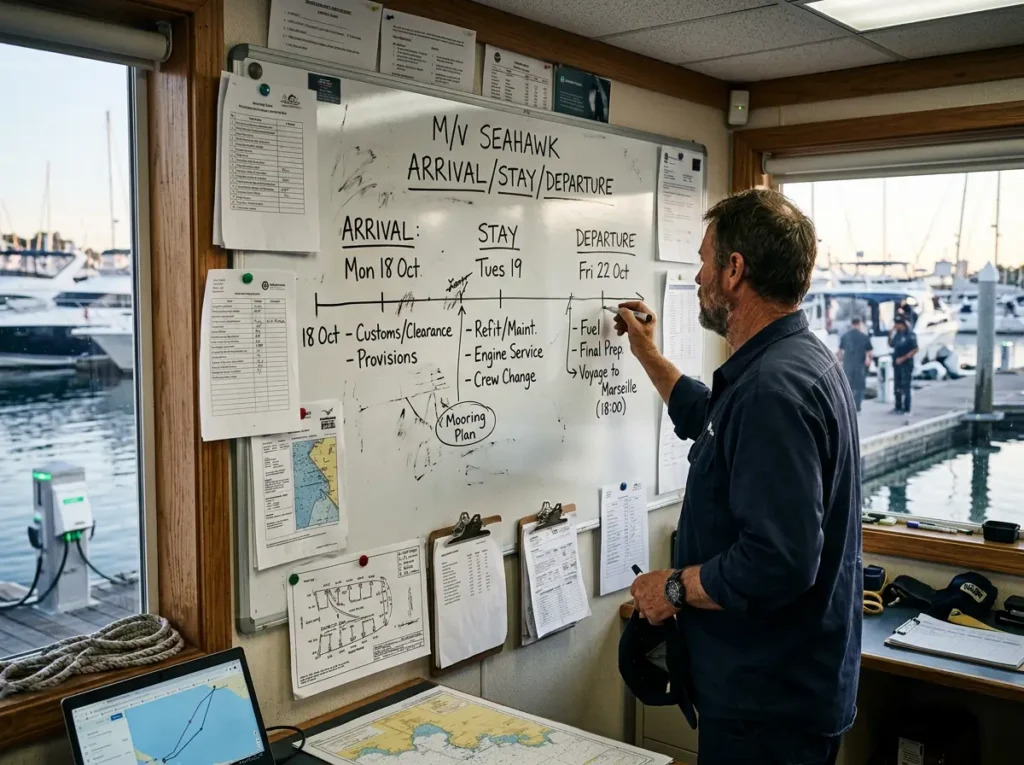
An elite email automation strategy relies on behavioral triggers, not calendar dates. The communication must feel highly personalized, operationally relevant, and perfectly timed to the boater’s physical journey. A comprehensive transient sequence is divided into three distinct phases: Pre-Arrival, In-Stay, and Post-Departure.
Phase 1: The Pre-Arrival Upsell and Logistics Sequence
The automation journey begins the moment a reservation is confirmed. The pre-arrival sequence serves a dual purpose: it reduces operational friction for the dock staff and creates immediate upsell opportunities before the vessel even enters the breakwater.
- Trigger: 72 hours prior to the scheduled arrival date.
- Content Focus: Navigational ease and facility integration. Provide the approach coordinates, the monitoring VHF channel, gate codes, and Wi-Fi passwords.
- The Revenue Expansion: Embed low-friction upsells directly into this communication. Offer links to pre-order block ice, schedule a pump-out upon arrival, or book a mobile vessel washdown service. By digitizing these requests, you increase the average transaction value per slip while delivering a premium, concierge-level experience.
Phase 2: The In-Stay Service Introduction
While the vessel is moored at your facility, the owner is a captive audience. This is the optimal window to introduce the capabilities of your service yard, particularly for vessels that may be migrating long distances.
- Trigger: 24 hours after check-in (specifically for vessels booked for 3+ nights).
- Content Focus: A brief, text-based email ostensibly coming from the Service Manager.
- The Pitch: “Welcome to the marina. If your systems took a beating on the crossing, our certified marine technicians are on-site and available. We are currently offering complimentary visual running gear and zinc inspections for our transient guests. Reply directly to this email if you’d like us to take a look.” This non-intrusive approach positions your service department as an operational asset rather than a sales pitch, frequently capturing high-margin repair orders that would otherwise go to the vessel’s home port.
Phase 3: The Post-Departure “Digital Mooring”
The most critical revenue phase occurs after the vessel departs. The objective here is to secure future bookings and cross-sell seasonal services.
- Trigger: 48 hours post-departure.
- Content Focus: Gratitude and reputation management. Thank the captain for their stay and request a Google Review to bolster your local SEO footprint.
- Trigger: 45 days post-departure.
- Content Focus: The return incentive. Offer a targeted promotion (e.g., “Waived shore power fees on your next 3-night stay”) to incentivize them to route their next voyage through your facility.
- Trigger: Late Summer / Early Fall (Seasonal Pivot).
- Content Focus: For vessels flagged as migratory or out-of-market, pivot the messaging to winter storage. Highlight your travel lift capacity, climate-controlled facilities, and comprehensive winterization packages.
Advanced Segmentation: Moving Beyond the Batch-and-Blast
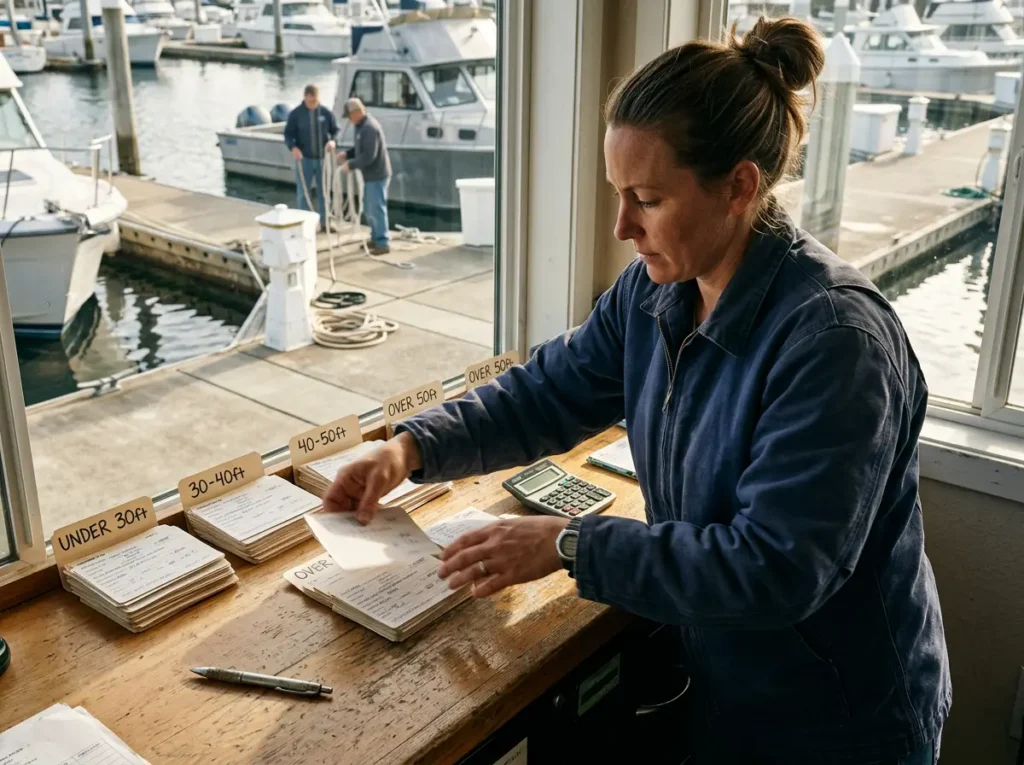
To maintain high deliverability rates and prevent unsubscribes, your automated marine marketing must be fiercely relevant. Sending a promotional email about 15-ton travel lift availability to the owner of an 80-foot motor yacht highlights operational incompetence.
Segmenting by Vessel Length Overall (LOA) and Draft
Your intake forms (via Dockwa, Snag-A-Slip, or direct booking) must mandate the collection of vessel specifications. Once mapped to your CRM, this data allows for granular segmentation.
- Vessels under 35 feet: Target with dry-stack storage options, outboard repower promotions, and weekend social event invitations.
- Vessels over 60 feet: Target the captain (not just the owner) with technical specifications regarding shore power stability, deep-water draft clearances, and heavy-lift yard capabilities.
Identifying Migratory vs. Local Transients
By comparing the guest’s billing zip code to your marina’s location, the CRM can automatically categorize the boater. A transient guest who lives 20 miles away is a prime candidate for an “Annual Slip Upgrade” campaign. Conversely, a guest whose billing address is in New York but who stays at your Florida marina in January should be placed in a “Snowbird Migration” campaign, receiving targeted communications aligned with the spring trip north.
AI Integration and Modern Inbox Deliverability
As email service providers (like Gmail and Outlook) rely increasingly on AI to filter out promotional spam, marine executives must ensure their digital infrastructure is optimized for inbox placement.
Generative AI for Dynamic Content
Modern marina CRM integration allows operators to leverage AI to dynamically alter email content based on the recipient’s profile. An email promoting winter storage can automatically feature an image of a sailboat being hauled out for a sailing vessel owner, and an image of a center console for an outboard owner. This level of hyper-personalization, driven by AI, dramatically increases click-through rates and commercial intent.
Maintaining Domain Authority
Automation is only profitable if the emails actually reach the primary inbox. Marinas must implement strict technical protocols (DMARC, DKIM, and SPF records) to authenticate their sending domains. Furthermore, the CRM should be configured to automatically scrub unengaged contacts—transients who haven’t opened an email in 12 months—to protect the facility’s sender reputation and ensure algorithmic favorability with major email providers.
Frequently Asked Questions (FAQ)
How do we integrate legacy dockmaster software with a modern CRM for email automation? If your current marina management software lacks a native API integration with platforms like HubSpot or Salesforce, operators must utilize middleware solutions such as Zapier or Make. These platforms can extract daily reservation reports via Webhooks or CSV exports and map the data (Name, Email, LOA, Dates of Stay) directly into the CRM to trigger the appropriate automation workflows. If your legacy software is completely closed-ecosystem, transitioning to modern, cloud-based reservation management is a necessary operational upgrade.
What is the optimal cadence for a post-departure transient email sequence? The optimal cadence respects the boater’s inbox while remaining top-of-mind. An immediate 48-hour post-departure email (for reviews and thank yous) is standard. Following that, communication should pause for 30 to 45 days before initiating a “return offer.” After the initial 60-day window, the guest should be transitioned into a seasonal workflow, receiving no more than one highly targeted, value-driven email per month to prevent list fatigue and unsubscribes.
How do we segment transient boaters for maximum email conversion? Effective segmentation requires capturing specific data points at the time of reservation. The three most critical segments for a marina are: Vessel Size (LOA) to ensure service and storage offers are mechanically relevant; Geographic Proximity (Billing Zip Code vs. Marina Zip Code) to differentiate between local slip prospects and migratory transients; and Vessel Type (Sail vs. Power) to tailor the visual assets and tone of the automated campaigns.
What metrics should marine executives track to measure email automation ROI? Executives must look beyond vanity metrics like “Open Rates.” The primary KPIs for an automated digital mooring strategy are the Transient Conversion Rate (the percentage of transients who return for a second stay within 12 months) and the Cross-Departmental Pipeline (the total dollar value of service repair orders or storage contracts generated specifically from email tracking links). These metrics definitively prove the ROI of the marketing technology stack.
How does automated data capture improve service department lead generation? When transient vessel data is automatically synced to the CRM, the service department gains a predictive lead generation tool. If the CRM logs a transient vessel as a 5-year-old center console with twin Yamaha outboards, the marketing automation can automatically trigger an email offering a specialized 1000-hour service package or a repower consultation exactly when the vessel is statistically likely to need it, creating a highly qualified inbound lead for the service writers.
Strategic Conclusion
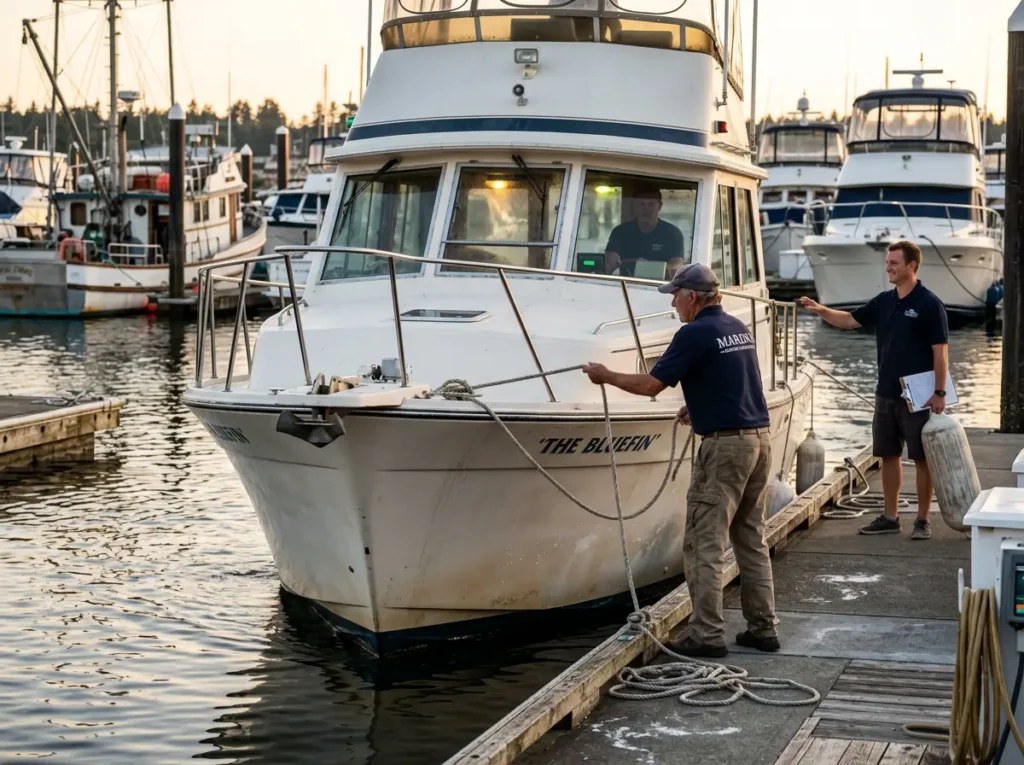
Transient dockage must be fundamentally reclassified within the marine business model. It is not merely a hospitality function; it is the most efficient, lowest-cost customer acquisition channel available to a modern shipyard or marina. However, without the digital infrastructure to capture, nurture, and convert these boaters, the acquisition value is entirely lost the moment the vessel departs.
By deploying a rigorous marina email automation strategy, executive operators can establish a “digital mooring” that anchors the customer to the facility long after they have left the physical dock. Through strategic CRM integration, behavior-based lifecycle sequences, and granular data segmentation, marinas can seamlessly transition one-time transient visitors into lucrative, long-term partners. In the evolving landscape of marine management, the facilities that master their digital data and automate their retention will consistently out-earn those who rely solely on waterfront location and foot traffic.