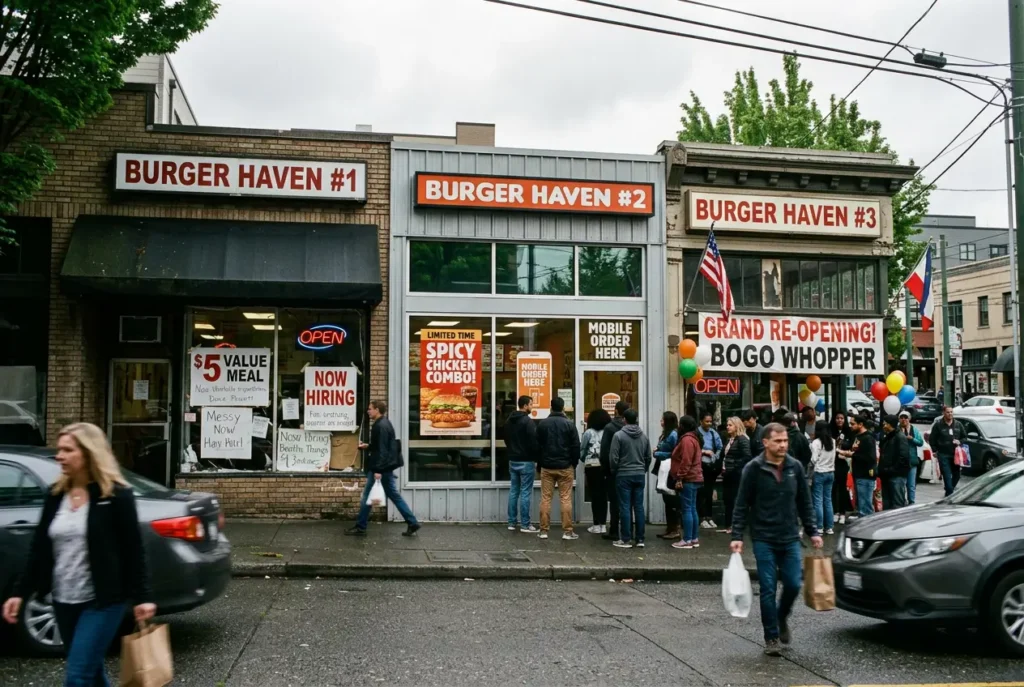
For enterprise franchise systems, regional dominance is rarely achieved through national brand campaigns alone. While national advertising establishes baseline awareness and brand equity, the actual battle for market share is fought at the Designated Market Area (DMA) level. However, a structural flaw exists in how many franchise networks allocate marketing capital within these critical battlegrounds: fragmentation.
When ten individual franchisees operate within the same geographic region, their local marketing budgets are often deployed in silos. This fragmentation leads to localized bidding wars, duplicated agency fees, and an inability to access premium media inventory. They bid against one another in paid search, cannibalizing the brand’s own traffic, while competitors with centralized regional budgets easily outspend them on high-impact channels.
The solution is the regional power-play: aggregating franchisee budgets into a unified cooperative (co-op) marketing fund. By pooling capital, franchise systems can execute a franchise co-op marketing strategy that transforms a collection of small, isolated budgets into a dominant, enterprise-grade media buying force. This approach eliminates internal friction, unlocks economies of scale, and allows regional franchise networks to capture a disproportionate share of voice (SOV) in highly competitive markets.
The Strategic Imperative of Franchise Budget Aggregation

To understand the necessity of budget aggregation, executives must evaluate the opportunity cost of decentralized spending. In modern advertising ecosystems, capital density directly correlates with media efficiency and market penetration.
Overcoming the Fragmentation Trap
The fragmentation trap occurs when local franchisees possess sufficient capital to run baseline digital campaigns but lack the budget density required to move the needle on broader market share. Operating independently, a franchisee might spend their local marketing requirement entirely on low-funnel paid search or localized social media.
While necessary for direct response, this localized approach entirely ignores mid-to-upper funnel channels required for market expansion. Furthermore, independent execution within a single DMA often results in structural inefficiencies:
- Self-Cannibalization: Franchisees driving up Cost-Per-Click (CPC) by bidding on identical localized brand terms.
- Vendor Bloat: Ten franchisees paying ten separate agency retainers, reducing the actual percentage of capital going toward working media.
- Inconsistent Messaging: Diluted brand equity caused by fragmented promotional offers and localized creative variations.
The Multiplier Effect on Media Buying Power
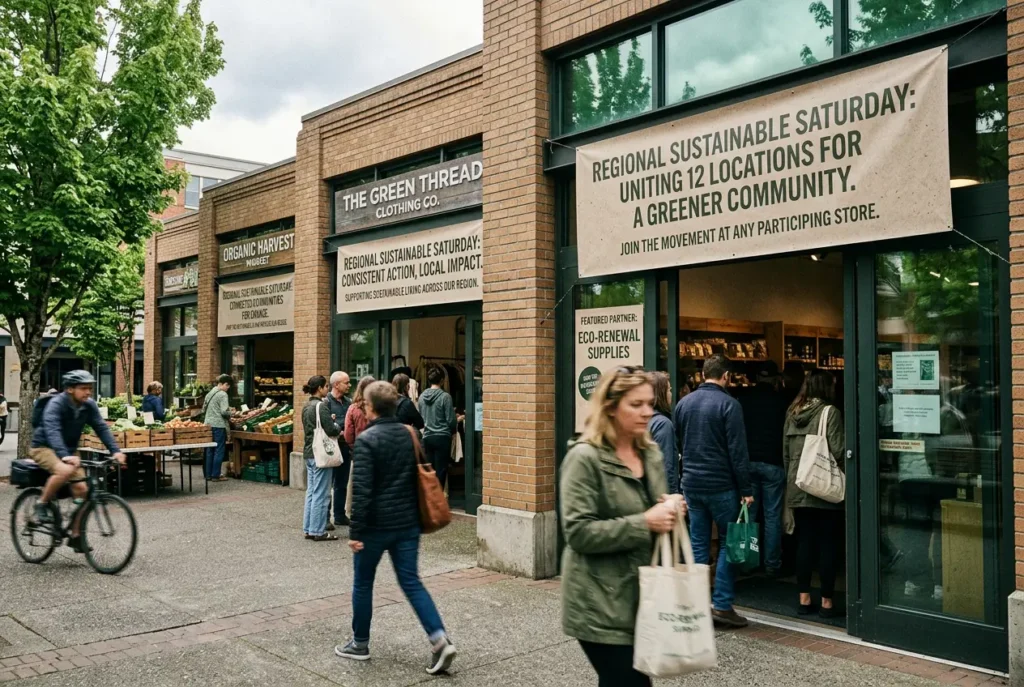
Aggregating these independent budgets creates a multiplier effect. A single franchisee with a $5,000 monthly budget is entirely priced out of Connected TV (CTV), premium Out-of-Home (OOH), or high-tier programmatic audio. However, ten franchisees contributing to a $50,000 regional fund can immediately access these enterprise-grade channels.
This density allows the region to transition from a defensive posture (capturing existing demand) to an offensive posture (generating net-new demand). It enables the franchise to negotiate better media rates, secure premium placements, and execute sophisticated omnichannel campaigns that saturate the market, effectively shutting out independent competitors who lack the same scale.
Architecting a High-Impact Regional Co-op Marketing Strategy
Deploying a regional power-play requires more than simply pooling funds; it requires rigorous operational architecture. Co-op marketing structures fail when governance is opaque or when data attribution cannot prove value at the local level.
Establishing Governance and Financial Transparency
The foundation of a successful franchise co-op marketing strategy is establishing strict governance. Franchisees are independent business owners; they will only surrender control of their local marketing dollars if the co-op operates with absolute transparency and clear operational rules.
A successful governance framework must define:
- Contribution Models: Whether contributions are a fixed percentage of gross revenue, a flat monthly fee, or tiered based on territory size.
- Voting and Approval Rights: How media plans are approved, often requiring an elected regional advisory board of franchisees to represent the collective interest.
- Fund Allocation Guardrails: Strict rules dictating the split between brand awareness (e.g., streaming video) and direct response (e.g., local service ads), ensuring all participants benefit from both long-term growth and immediate lead generation.
Aligning National Brand Standards with Regional Relevance
A regional co-op strategy sits precisely between national brand mandates and hyper-local execution. The messaging must leverage the high-production value of national creative assets while injecting regional specificity.
For example, a national QSR brand might promote a new menu item broadly, but the regional co-op will deploy that creative alongside localized pricing, market-specific promotions, and regional sports sponsorships. This alignment ensures the campaign benefits from national brand recognition while driving localized urgency and relevance.
Data Consolidation and Cross-Location Attribution
The most significant barrier to co-op participation is the fear of subsidizing another franchisee’s success. To mitigate this, executives must implement advanced data consolidation and attribution modeling.
Aggregating the budget on the front end requires aggregating data on the back end. By centralizing CRM data, point-of-sale (POS) systems, and web analytics, the regional marketing entity can deploy multi-touch attribution models. This infrastructure proves precisely how a regional CTV ad translated into foot traffic or lead volume for a specific unit, transforming the co-op from a mandated expense into a verifiable growth engine.
Executing the Regional Power-Play: Tactical Frameworks
Once the capital is aggregated and the governance is established, the co-op can deploy sophisticated tactics previously inaccessible to individual units.
Dominating Advanced TV (CTV/OTT) and Broadcast
Linear and Advanced TV require substantial capital upfront, making them the perfect playground for aggregated budgets. A regional co-op can blanket a DMA with targeted Connected TV (CTV) campaigns. Unlike national buys, which can result in wasted impressions in non-developed markets, a regional co-op restricts the broadcast footprint precisely to the zip codes serviced by the contributing franchisees. This ensures high-impact brand visibility with zero geographic waste, driving aggregate brand search volume across the region.
Saturating High-Value Digital Real Estate
Rather than bidding against each other, an aggregated digital strategy unifies paid search and paid social efforts.
- Unified Paid Search: A single, centralized Google Ads account manages all regional campaigns. This eliminates internal bidding wars, significantly lowering Cost-Per-Acquisition (CPA). Traffic is routed dynamically to the closest local franchisee landing page based on the user’s IP address or zip code.
- Paid Social Saturation: Aggregated funds allow for sophisticated sequencing on Meta and LinkedIn. The co-op can run broad regional awareness videos, retargeting engaged users with specific promotional offers tied to their nearest physical location.
Leveraging Geo-Fencing for Competitor Conquesting

With an enterprise budget, regional co-ops can execute aggressive competitor conquesting. Using advanced location-based targeting, the co-op can draw digital geo-fences around competitor locations across the entire DMA. When consumers enter these zones, they are served mobile display or video ads for the franchise brand. Because the budget is centralized, the co-op can sustain this pressure continuously, steadily eroding the competitor’s market share across the entire region.
Navigating Franchisee Buy-In and Compliance
The technical execution of budget aggregation is often less complex than the human element of securing franchisee buy-in. Transitioning an established network from decentralized spending to a unified co-op requires strategic change management.
Transitioning from Mandate to Value Proposition
While Franchisors often have the legal authority within the Franchise Disclosure Document (FDD) to mandate regional co-op participation, enforcing it aggressively can damage the franchisor-franchisee relationship. Leadership must frame the transition as a powerful value proposition rather than a corporate tax.
This requires pilot programs. Savvy franchisors will often identify a specific DMA, heavily subsidize the initial co-op fund with corporate dollars, and run a highly transparent, 90-day regional dominance campaign. By presenting the undeniable unit-level ROI generated from this pilot, the franchisor transitions the conversation from compliance to opportunity, driving voluntary adoption across other regions.
Reporting at the Unit Economics Level
The ultimate mechanism for sustaining a regional power-play is unit-level reporting. Executive dashboards must dissect the aggregated campaign performance and clearly articulate the impact on individual franchisee P&Ls. If a franchisee contributes $10,000 to the co-op, the reporting must unequivocally demonstrate how that investment generated $50,000 in localized revenue. When attribution is clear, precise, and financially verifiable, the co-op transitions from a strategic experiment into an indispensable operational asset.
FAQ: Franchise Co-op Marketing and Budget Aggregation
What is a franchise marketing co-op? A franchise marketing co-op is a structural agreement where multiple franchisees within a specific geographic region (like a DMA) pool a portion of their local marketing budgets into a centralized fund. This aggregated capital is used to execute large-scale, enterprise-level advertising campaigns—such as broadcast, CTV, and dominant digital placements—that benefit all contributing locations, effectively increasing their collective purchasing power and regional market share.
How do you prevent franchisees from cannibalizing each other’s search traffic? To prevent self-cannibalization in paid search, franchises must transition from decentralized, individual Google Ads accounts to a single, centrally managed regional account. By utilizing a unified strategy, the brand bids on keywords once per geographic area, eliminating internal competition that drives up CPCs. Traffic is then dynamically routed to specific local franchisee pages based on the searcher’s exact location, ensuring efficient lead distribution.
What is the optimal contribution percentage for a regional franchise marketing fund? While highly dependent on the industry and the overall franchise fee structure, regional co-op contributions typically range from 1% to 3% of a franchisee’s gross sales. This is usually allocated from the franchisee’s required local store marketing (LSM) spend. The optimal percentage must be large enough to secure premium regional media inventory, but balanced to leave the franchisee with sufficient funds for hyper-local community engagement.
How do you track ROI for regional franchise campaigns down to the local unit? Tracking localized ROI requires integrating the regional media platforms with the franchise’s localized CRM and point-of-sale systems. By utilizing dynamically generated local phone numbers, localized UTM parameters on routing landing pages, and offline conversion tracking (such as uploading localized sales data back into Google Ads or Meta), the central marketing team can map broad regional media exposure directly back to individual unit-level revenue generation.
Can regional ad funds be used for digital marketing, or just traditional media? Historically associated with traditional media like radio and billboards, modern regional ad funds are heavily deployed in digital marketing. Aggregated budgets are incredibly effective for advanced digital channels that require high minimum spends, such as programmatic display, Connected TV (CTV), and enterprise-level geo-conquesting campaigns, allowing the regional group to dominate the digital share of voice against fragmented competitors.
Conclusion

Securing dominant market share in highly competitive regional environments requires capital density and strategic alignment. The franchise systems that win are those that recognize the inherent inefficiencies of fragmented local spending and actively architect mechanisms to pool their resources.
Deploying a franchise co-op marketing strategy is not simply an exercise in cost-saving; it is a fundamental shift in competitive posturing. By aggregating franchisee budgets, leadership transitions the network from operating as a collection of disjointed small businesses into a unified, enterprise-grade powerhouse. This regional power-play unlocks premium media access, eliminates operational redundancies, and drives sustained, measurable growth at both the regional and unit economic levels.
Would you like me to develop a custom attribution framework to help your network track regional marketing spend down to the localized franchisee P&L?