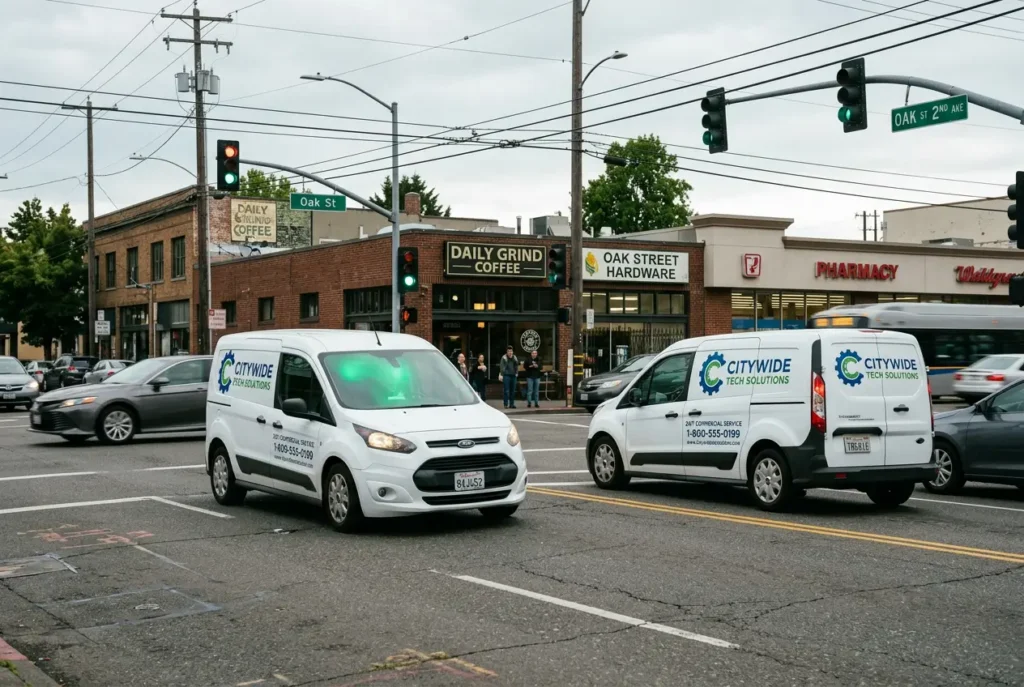
The Invisible Drain: Why Your Franchise Network is Bidding Against Itself
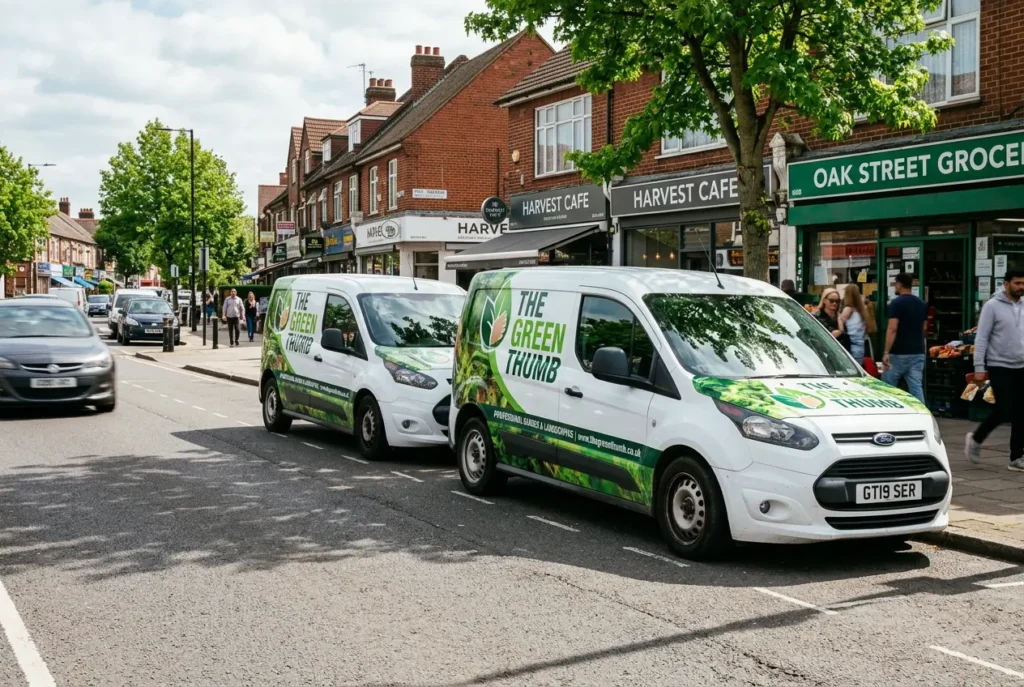
In the high-stakes environment of American service franchises—from restoration and HVAC to specialized B2B consulting—the greatest threat to your Customer Acquisition Cost (CAC) often isn’t the competitor down the street. It is the office three zip codes over.
Lead cannibalization occurs when multiple franchise units or the corporate entity target the same high-intent keywords within overlapping or adjacent territories. This internal friction triggers an artificial auction inflation, where your own marketing dollars are used to drive up the cost-per-click (CPC) for your fellow franchisees. For executive leadership, this represents a massive inefficiency in the marketing fund and a dilution of the brand’s total market share.
Addressing this requires moving beyond basic campaign management into Strategic Search Governance.
The Mechanics of Intra-Brand Auction Conflict
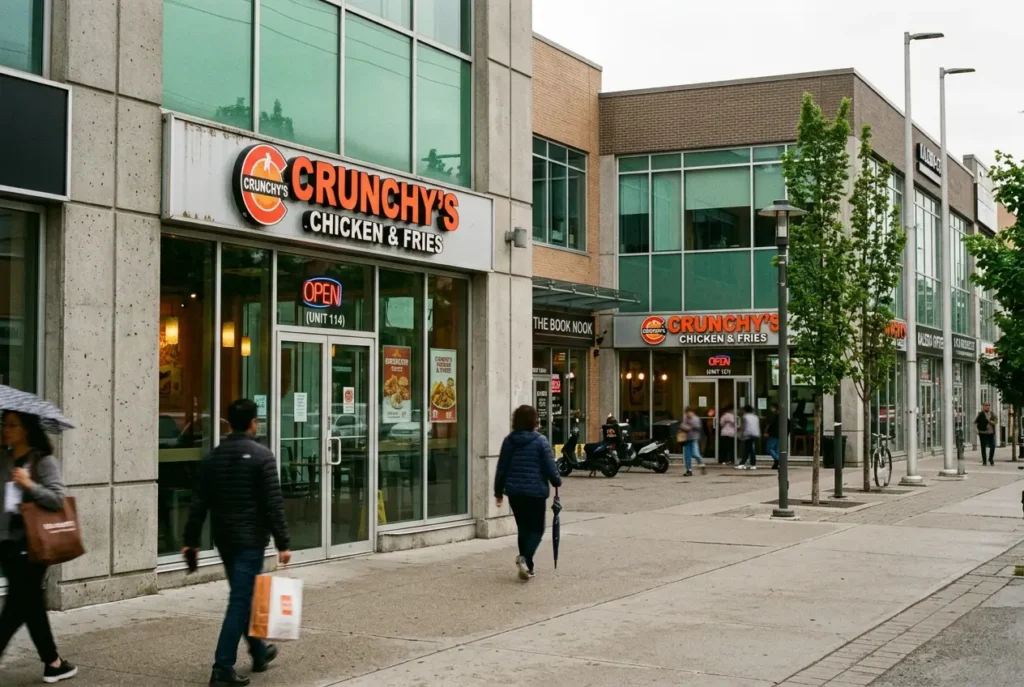
Google’s auction system is designed to reward the highest bidder with the most relevant ad. When two franchisees bid on the same term (e.g., “Commercial Roofing Los Angeles”), Google doesn’t necessarily see a unified brand; it sees two separate accounts competing for the same slot.
The Double-Whammy Effect
- CPC Inflation: You are effectively bidding against yourself, forcing both units to pay a premium to maintain “Top of Page” status.
- Ad Rank Suppression: Google may choose to show only one ad from a specific domain to preserve user experience. This means one franchisee’s budget remains unspent while the other’s is depleted prematurely, leaving gaps in total territory coverage.
A Framework for Eliminating Lead Cannibalization

To move from a chaotic “every unit for itself” model to a coordinated offensive, CMOs and Franchise Operators must implement a three-tiered structural strategy.
1. Hard Geo-Fencing and Exclusionary Radius
The most common cause of cannibalization is imprecise location targeting. “Radius targeting” often bleeds into neighboring territories, especially in densely populated metropolitan areas.
- Zip Code Precision: Abandon radius targeting in favor of specific Zip Code lists defined by the franchise agreement.
- Negative Location Targeting: Each franchise account must proactively exclude the zip codes belonging to neighboring units. This creates a “hard border” that prevents ads from appearing in a peer’s territory, even if Google’s proximity algorithm tries to expand the reach.
2. The Shared Negative Keyword Ecosystem
Franchise systems often suffer when one unit targets broad terms that capture leads meant for a specialized or neighboring unit.
- Global Negative Lists: Implement a master list at the MCC (Manager Account) level that excludes terms unrelated to specific territories or services.
- Cross-Unit Exclusions: If Unit A specializes in “Emergency Residential Repair” and Unit B handles “Commercial Retrofitting,” each should list the other’s core service as a negative keyword to ensure the lead is routed to the most qualified unit at the lowest possible cost.
3. Tiered Bidding and Script-Based Coordination
Advanced multi-unit systems use Google Ads Scripts to monitor “Double Serving” or “Internal Competition” metrics.
- The “Lead Routing” Logic: Instead of multiple units bidding on “Best [Brand Name] Near Me,” the corporate account should manage brand-heavy, high-intent terms and route leads via a CRM based on territory. This prevents franchisees from wasting budget on branded terms and allows them to focus on “Unbranded” high-intent service keywords.
Data Governance: The Role of Cross-Location Conversion Tracking

Without unified data, you cannot see the cannibalization happening. Many franchises make the mistake of siloed tracking. By the time the monthly report arrives, thousands of dollars have been lost to internal bidding wars.
Implementing a Unified Conversion Pixel
By using a global tag across all franchise sub-domains or landing pages, the brand can identify if a user clicked an ad for Unit A but converted on the page for Unit B. This data is critical for:
- Attributing the true value of spend.
- Rebalancing budgets between high-performing and underperforming territories.
- Proving the ROI of the national marketing fund.
Moving from Competition to Market Dominance
The goal is not just to stop fighting; it’s to surround the market. When franchise units are coordinated, the brand can dominate the “Search Engine Results Page” (SERP) without inflating its own costs.
- Strategic Gapping: If Unit A has exhausted its daily budget by 2:00 PM, a coordinated system can allow Unit B’s ads to “flex” into that territory (if logistically feasible) to ensure the brand doesn’t lose the lead to a third-party competitor.
- Aggregated Insights: Shared data allows the network to identify which ad copy and creative are converting best across the entire US, allowing for rapid scaling of winning tactics.
FAQ: Solving the Franchise PPC Conflict
How can I tell if my franchisees are outbidding each other?
The primary indicator is an Auction Insights Report in Google Ads. If you see other domains—or even different accounts under your own brand—appearing with a high “Overlap Rate” or “Outranking Share,” you have a cannibalization problem. Furthermore, if your CPCs are significantly higher than industry benchmarks in territories where multiple units are present, internal competition is likely the culprit.
Should the corporate brand bid on keywords that franchisees are already targeting?
Generally, no. This is the most common form of lead cannibalization. The most efficient model is a “Bifurcated Strategy”: Corporate handles Top-of-Funnel (ToFu) awareness and “Branded” search (to protect the brand from competitors), while franchisees bid on Bottom-of-Funnel (BoFu), localized service keywords. This ensures the brand owns the entire journey without self-competing at the auction level.
Does geo-fencing affect my lead volume?
While geo-fencing might slightly reduce total “impressions,” it significantly increases Lead Quality and Margin. By restricting ads to a specific territory, you ensure that every dollar spent is directed at a prospect that the franchisee can actually service. This eliminates the “dead-end lead” problem where a customer calls an office that is too far away to help.
How do we handle “Border Leads” in overlapping metro areas?
For zip codes that sit on the boundary between two units, we recommend a Rotational Bidding strategy or a “Lead Pool” approach. In this model, a single campaign covers the border area, and the resulting leads are distributed via a round-robin system or based on current unit capacity. This prevents the auction from being artificially inflated by two units fighting over a single zip code.
Can automated bidding help or hurt cannibalization?
Automated bidding (like Target CPA) can actually exacerbate cannibalization if not managed. The AI will aggressively chase conversions, and if it sees a “hot” zip code, it will bid higher and higher, regardless of whether another unit is also targeting that spot. You must provide the AI with strict location constraints and negative keyword lists to keep its “hunger” within the bounds of your territory agreements.
Conclusion: Strategic Harmony as a Competitive Advantage

In the American service sector, the franchise model is designed for scale. However, that scale becomes a liability when digital marketing efforts are fragmented. By implementing strict geo-fencing, shared negative keyword protocols, and unified data governance, franchise systems can transform internal friction into a unified market offensive.
The result is a lower CAC, a higher “Share of Voice,” and a marketing engine that builds wealth for the individual franchisee while strengthening the global brand.
Would you like me to develop a 12-month PPC Governance Roadmap for your franchise network?