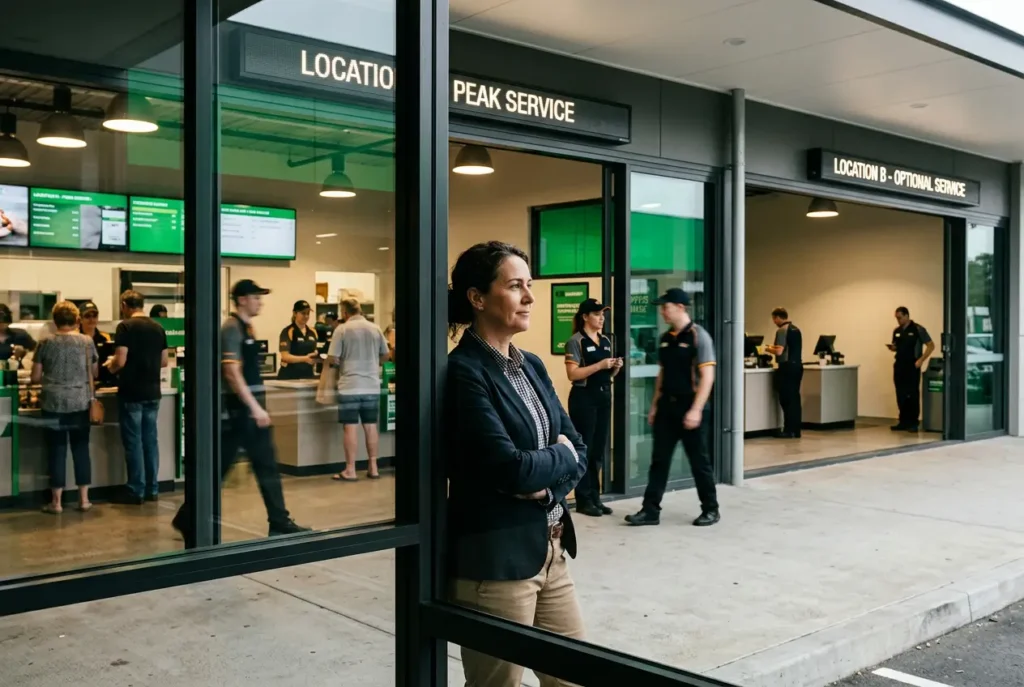
For decades, franchisors have managed national and regional marketing funds through two primary methodologies: spreading the budget evenly across all locations, or distributing it proportionately based on gross revenue. Both approaches are fundamentally flawed. They treat marketing as an administrative distribution exercise rather than an active investment designed to yield the highest possible marginal return.
In today’s landscape of rising customer acquisition costs (CAC) and fragmented digital channels, managing a franchise marketing fund requires precision. When franchisors allocate budget to operationally deficient units, marketing dollars are burned. Conversely, when budget is capped in high-performing, high-capacity markets simply to maintain artificial parity, enterprise growth is stifled.
The solution is the zero-waste franchise model—a strategic framework that abandons guesswork and legacy distributions in favor of dynamic, data-driven franchise ad spend allocation. By routing capital to the units demonstrating the highest performance metrics, operational readiness, and market capacity, franchisors can maximize network-wide profitability and justify the brand fund to their franchisee base.
The Flaw in Traditional Franchise Marketing Fund Allocation

To understand the necessity of a performance-based model, executives must first analyze the capital inefficiencies inherent in standard franchise marketing distribution strategies.
The “Peanut Butter” Approach
The most common strategy in emerging franchise systems is spreading the marketing budget evenly across all active territories. While politically safe and easy to communicate to franchisees, this approach ignores local market dynamics. An equal distribution model assumes that a $5,000 monthly ad spend will yield the same results in a highly saturated, expensive media market as it will in an emerging, low-competition territory. This leads to undercapitalized campaigns in competitive zones and wasted surplus in smaller markets.
The Revenue-Biased Approach
Mature franchise systems often pivot to a revenue-based model, allocating ad spend back to locations based on their contribution to the brand fund. While this seems meritocratic, it frequently results in diminishing marginal returns. A top-performing unit may already own the majority of its local market share; pouring additional ad dollars into that territory yields a progressively lower return on ad spend (ROAS). Meanwhile, a new location with massive growth potential is starved of the capital needed to capture market share.
Defining the Zero-Waste Franchise Ad Spend Model
The zero-waste franchise marketing model is defined as a dynamic budget allocation strategy where advertising capital is distributed based on real-time unit performance, operational capacity, and predictive ROI, rather than historical revenue or equal division.
In this framework, the franchisor acts as an internal private equity firm, constantly evaluating the portfolio of locations and directing capital to where the next dollar will generate the highest enterprise value. If a location demonstrates a high lead-to-close velocity and strong operational metrics, it receives increased funding. If a location exhibits poor sales execution or operational bottlenecks, ad spend is throttled down until the underlying operational issues are resolved.
This model aligns marketing expenditures tightly with operational reality, ensuring that lead generation efforts are only deployed where they can be effectively monetized.
Core Metrics for Performance-Based Spend Allocation
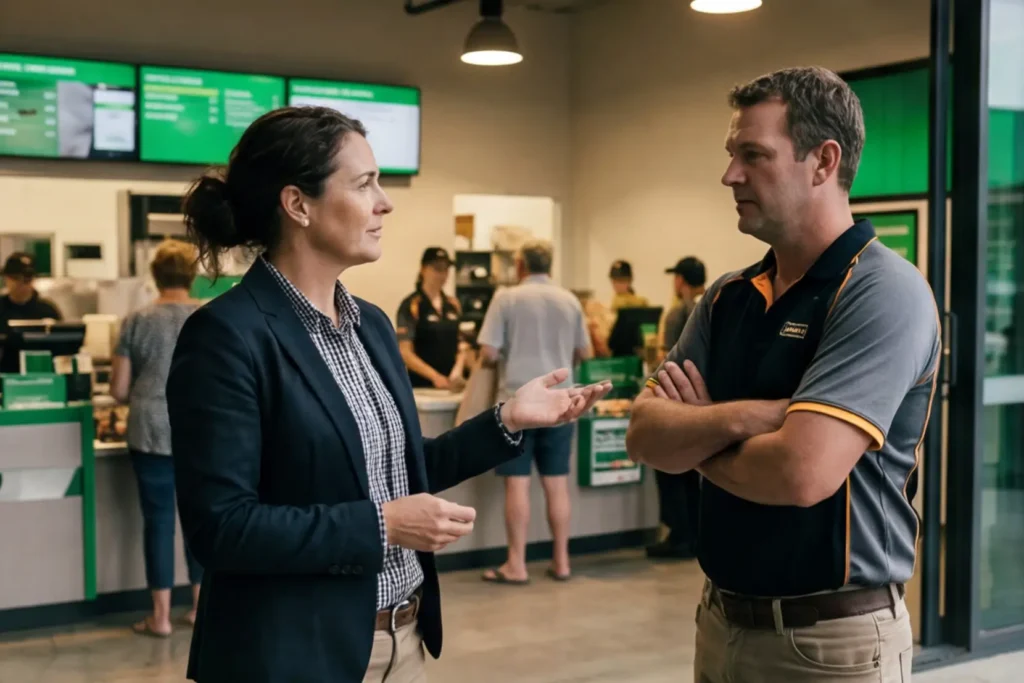
Transitioning to a zero-waste model requires integrating marketing data with point-of-sale (POS) and customer relationship management (CRM) systems. Franchisors must evaluate three core metrics before allocating local ad spend.
1. Unit-Level LTV to CAC Ratio
Cost Per Acquisition (CAC) is a localized metric. Acquiring a customer in San Francisco costs substantially more than acquiring one in Des Moines. However, the Lifetime Value (LTV) of that customer also varies by market due to local pricing tiers and retention rates.
Franchisors must measure the LTV:CAC ratio at the unit level. Locations demonstrating a ratio of 3:1 or higher indicate a highly efficient conversion engine. Ad spend should be aggressively routed to these units until the ratio begins to compress, signaling market saturation or capacity limits.
2. Operational Capacity and Lead Response Time
Marketing cannot solve operational failures. A critical metric for dynamic franchise ad spend allocation is the unit’s operational readiness—specifically, lead response time and sales conversion rates.
If a franchisor generates 100 leads for a location, but the local operator takes 48 hours to respond or fails to answer the phone, those marketing dollars are wasted. Under the zero-waste model, budget is automatically diverted away from units with high lead-abandonment rates. Funding is only restored once the franchisee undergoes corrective operational training and demonstrates improved sales execution.
3. Local Market Penetration vs. Saturation
Data-driven franchise marketing requires an understanding of Total Addressable Market (TAM) at the zip code level. Franchisors must track localized market penetration. If a legacy unit has already captured 40% of its local market, the cost to acquire the next marginal customer will be steep. Instead of forcing ad spend into a saturated territory, the central marketing team should shift those funds to a unit with only 5% penetration but identical demographic profiles, where the CAC will be significantly lower.
Executing a Data-Driven Franchise Marketing Strategy
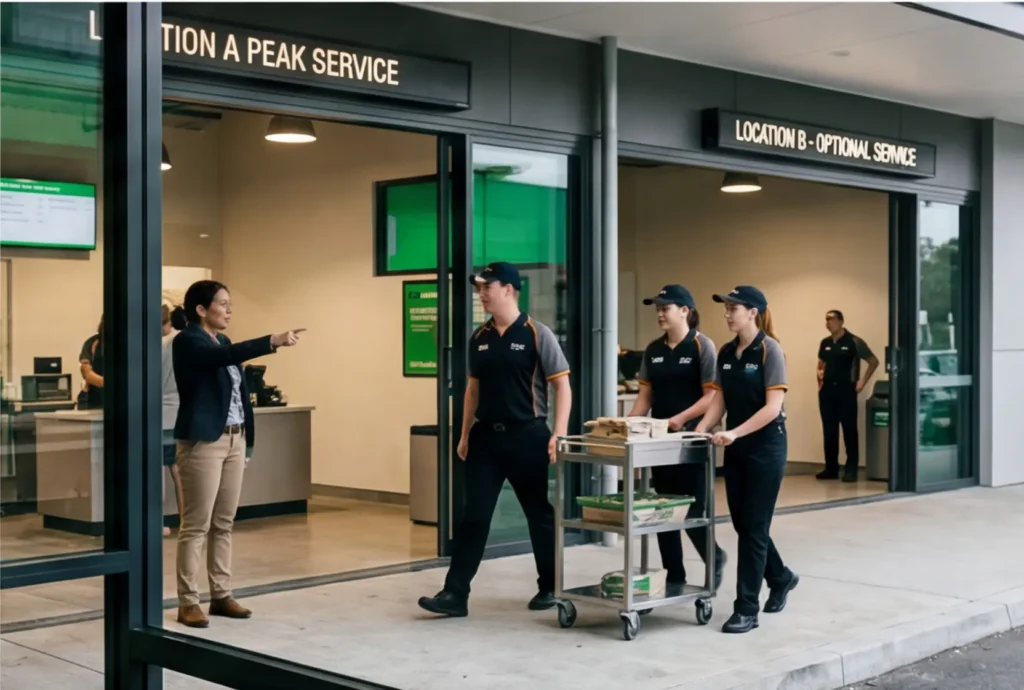
Implementing a zero-waste allocation model requires structural changes in how the central marketing team operates. Executive leadership should adopt the following three-step framework.
Step 1: Centralize Multi-Location Data Visibility
Siloed data is the enemy of efficient allocation. Franchisors must implement a centralized data warehouse that aggregates local ad platform data (Google Ads, Meta), website analytics, localized CRM activity, and POS revenue. This provides the corporate team with a unified dashboard to track the journey from an ad impression to localized revenue in real time. Without this closed-loop reporting, performance-based allocation is impossible.
Step 2: Establish Performance Tiers
Instead of treating all 50 or 500 locations as unique entities, group them into operational performance tiers to streamline budget allocation:
- Tier 1 (Scale): High conversion rates, fast lead response, ample operational capacity. Action: Maximize ad spend. Push volume until efficiency drops.
- Tier 2 (Maintain): Average conversion, steady revenue, high market saturation. Action: Optimize for brand awareness and customer retention. Maintain baseline lead generation spend.
- Tier 3 (Fix): Poor conversion rates, slow response times, operational bottlenecks. Action: Halt localized lead generation spend. Redirect resources to local marketing training and operational support.
Step 3: Implement Dynamic Budget Shifting
Ad spend allocation should not be an annual or quarterly event; it must be a dynamic, monthly process. By utilizing AI search systems and automated bidding scripts, franchisors can set rules that automatically adjust localized budgets based on real-time CRM data. If a Tier 1 location suddenly experiences a drop in close rates due to a change in local management, the system should automatically throttle the budget and flag the unit for corporate review.
Overcoming Franchisee Resistance to Dynamic Spend
The most significant barrier to the zero-waste model is not technological; it is political. Franchisees who pay a flat percentage of their gross sales into a national brand fund naturally expect a proportional localized return. When a franchisor begins shifting funds dynamically, lower-performing franchisees may feel penalized.
To successfully execute this transition, executive leadership must prioritize radical transparency. When budget is diverted from a failing unit, the corporate team must provide the franchisee with the exact data driving the decision (e.g., “We paused your localized search spend because your lead-to-close rate dropped to 2%, compared to the network average of 12%”).
Position the pause not as a punishment, but as a protective measure. Explain that sending leads to an operationally overwhelmed location damages the brand and wastes the franchisee’s fund contributions. Pair the budget reduction with immediate operational support, making it clear that the ad spend will be aggressively reinstated the moment operational KPIs return to baseline.
Frequently Asked Questions (FAQ)
How do we legally allocate the franchise marketing fund unevenly? The legality of uneven fund allocation depends entirely on the language within your Franchise Disclosure Document (FDD) and the Franchise Agreement. Most modern FDDs provide the franchisor with broad discretion over how the national or regional brand fund is utilized, stating that funds are designed to benefit the brand as a whole, not to guarantee localized, dollar-for-dollar returns. However, executive teams must consult with franchise counsel to ensure their specific agreements permit dynamic, performance-based allocation without triggering breach-of-contract claims from individual operators.
What is the best metric to determine local franchise ad spend? The ultimate metric for dynamic allocation is the Return on Ad Spend (ROAS) mapped against local operational capacity. However, because B2B and high-ticket B2C service franchises often have longer sales cycles, lead-to-appointment conversion rates and average lead response times serve as the best leading indicators. If a franchisee demonstrates a high appointment-setting rate and rapid response times, they are operationally ready to absorb and monetize higher volumes of local ad spend.
How does a zero-waste model impact underperforming franchise locations? In a zero-waste model, underperforming locations experience a reduction in direct, corporate-funded lead generation. This prevents the burning of enterprise capital on broken local processes. Crucially, this reduction in ad spend must be paired with an increase in operational support. The goal is not to abandon the underperformer, but to stop flooding a “leaky bucket” with expensive leads until the franchisee completes necessary sales, staffing, or operational training to fix the underlying conversion issues.
Which marketing channels are best suited for dynamic budget allocation? High-intent digital channels, specifically Paid Search (Google Ads) and localized paid social (Meta lead ads), are ideal for dynamic allocation. These channels allow corporate marketing teams to instantly adjust daily budgets, pause campaigns, or shift geographic targeting down to the zip-code level. Traditional media, such as linear television or regional out-of-home (OOH) advertising, requires long-term commitments and cannot be easily throttled based on weekly fluctuations in unit-level performance.
How can franchisors align dynamic ad spend with FDD requirements? Alignment requires proactive communication and clear documentation. Franchisors should establish a formal, internal “Brand Fund Allocation Policy” that outlines the exact performance metrics and operational KPIs required for a franchisee to receive localized ad spend. By standardizing the criteria—and applying it uniformly across the network—the franchisor protects itself against claims of favoritism or arbitrary fund mismanagement, ensuring that all decisions are defensible and rooted in objective data.
Strategic Conclusion

The era of managing franchise marketing funds as political slush funds or simple administrative pass-throughs is over. In a high-cost digital economy, franchisors must treat their marketing budgets with the exact same rigor as a corporate treasury.
Transitioning to a zero-waste franchise model—allocating ad spend strictly based on unit-level economics, operational readiness, and predictive ROI—transforms the marketing department from a cost center into an enterprise value creation engine. While shifting away from legacy allocation models requires navigating franchisee politics and investing in centralized data infrastructure, the result is a profound competitive advantage. Capital is deployed exclusively where it can yield the highest return, ensuring that both the franchisor and the operationally sound franchisees achieve sustainable, profitable scale.
Would you like me to help you audit your current franchise marketing fund distribution to identify areas of capital inefficiency?