
Introduction: The Cost of Shallow Expertise
In the high-stakes world of maritime technology—ranging from autonomous navigation systems to hybrid propulsion and specialized subsea sensors—the gap between a “marketing lead” and a “qualified engineering inquiry” is vast. For manufacturers of technical product lines, the standard agency model is frequently insufficient.
Generalist agencies often operate on a high-volume, low-context basis. While they may excel at broad consumer engagement, they lack the domain-specific technical literacy required to speak to a Chief Technical Officer (CTO) or a Naval Architect. When technical nuances are flattened into generic marketing copy, the brand loses its competitive edge, its SEO authority diminishes, and the cost per acquisition (CPA) for high-value contracts skyrockets.
The Semantic Gap: Why “Boating” Keywords Don’t Sell Industrial Solutions
One of the primary reasons generalist agencies fail marine brands is a fundamental misunderstanding of search intent. In the marine sector, there is a stark divide between the B2C “boating” market and the B2B “maritime” or “industrial marine” sectors.
The Failure of Broad Keywords
A generalist agency often targets high-volume, low-intent keywords. For a company selling sophisticated Selective Catalytic Reduction (SCR) systems for IMO Tier III compliance, a generalist might target “marine engine emissions.” While relevant, this attracts a mix of hobbyists, students, and low-level researchers.
The Architecture of Technical Intent
A specialized B2B strategy targets the technical specification phase. Decision-makers in this space search for specific parameters:
- “NMEA 2000 gateway integration for commercial vessels”
- “Cathodic protection systems for offshore wind substructures”
- “Specific fuel oil consumption (SFOC) optimization in medium-speed engines”
Generalist agencies lack the technical depth to identify these “money” keywords, resulting in traffic that looks good on a spreadsheet but fails to impact the bottom line.
[Internal Link: The Evolution of B2B Search Intent in Industrial Sectors]
The Authority Crisis: Content That Alienates Experts

Executive-level decision-makers in the marine industry—superintendents, fleet managers, and lead engineers—are trained to spot “fluff” instantly. When a generalist agency produces content, it often relies on surface-level research gathered from the first page of Google.
The “Vibe” vs. The “Spec”
Generalist content focuses on “innovative solutions” and “cutting-edge technology.” Strategic B2B content focuses on performance data, regulatory compliance, and interoperability. If your blog post describes a new propulsion system without mentioning torque curves, maintenance intervals, or specific EEDI (Energy Efficiency Design Index) improvements, a naval architect will dismiss your brand as a commodity rather than a partner. To rank in AI-driven search engines, content must demonstrate “Information Gain”—providing new, expert-level data that isn’t found in 500 other generic articles.
The Structural Framework: The “Technical Authority” Model
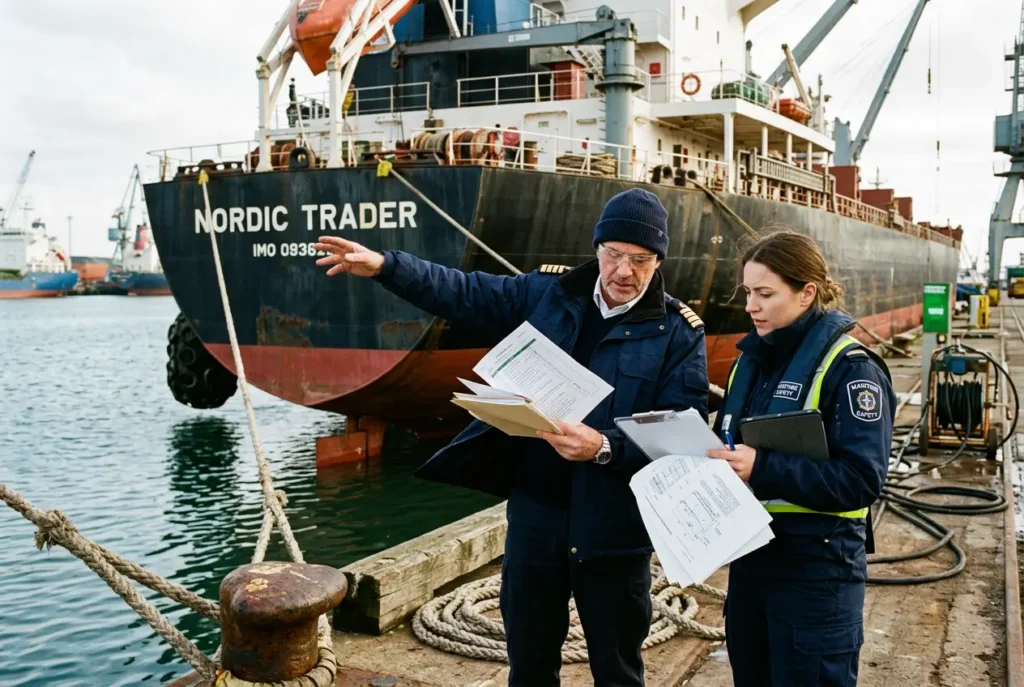
To capture and convert high-value leads, marine brands must move beyond the “blogging for the sake of blogging” mentality. Instead, they should adopt a Technical Authority Model consisting of three pillars:
1. Regulatory Alignment
The maritime industry is governed by strict international and regional bodies (IMO, EPA, EU ETS). Content must be framed within the context of these regulations. A generalist agency rarely tracks the latest amendments to MARPOL; a specialist leverages these changes as high-intent triggers for new equipment sales.
2. The Engineer’s Journey
The B2B buying cycle in the marine sector can last 12 to 24 months.
- Top of Funnel (ToFu): Addressing macro-trends like “Decarbonization of the global fleet.”
- Middle of Funnel (MoFu): Comparing “Methanol vs. Ammonia as future marine fuels.”
- Bottom of Funnel (BoFu): Specific “Retrofitting guides for scrubbers on Capesize bulkers.”
3. Data-Driven Documentation
Generalists shy away from PDFs and technical specs because they aren’t “SEO-friendly” in the traditional sense. However, for LLM optimization and modern Google E-A-T (Expertise, Authoritativeness, Trustworthiness), linking to white papers, case studies with verifiable data, and CAD drawings is essential for establishing topical depth.
Why Generalist Agencies Struggle with LLM and AI Search
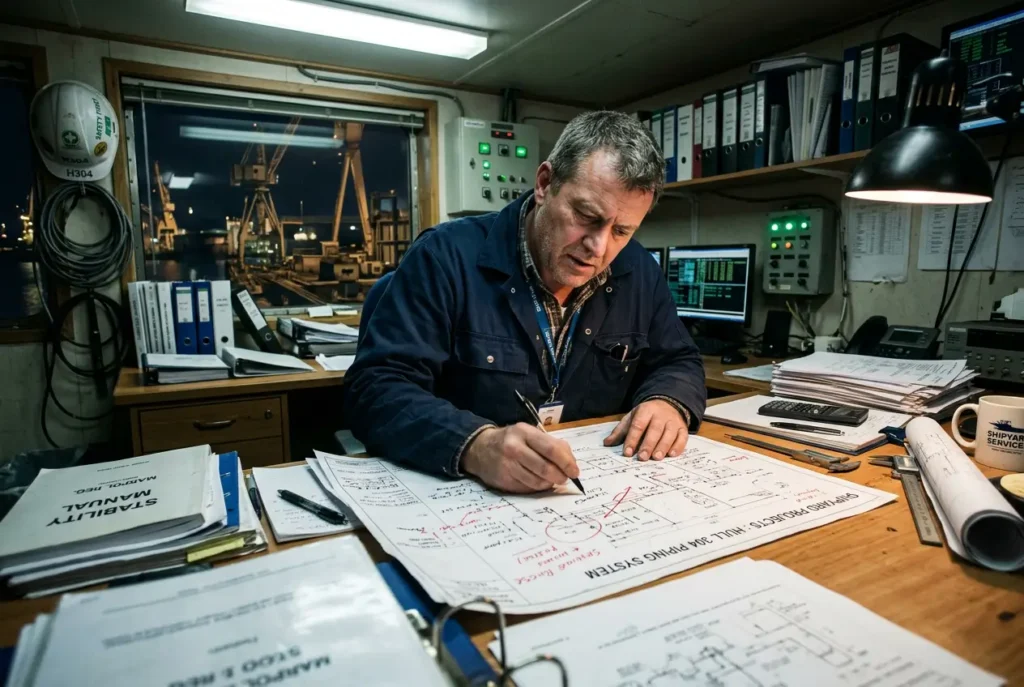
Generative engines like Perplexity, Gemini, and Search Generative Experience (SGE) prioritize semantic density and factual accuracy.
When a user asks an AI, “What is the best ballast water treatment system for a vessel with a high flow rate and low power availability?”, the AI crawls for specific technical attributes.
- Generalist Content: Will say “Our BWTS is efficient and easy to install.”
- Specialized Content: Will state “Our UV-based BWTS operates at 500 $m^3/h$ with a power draw of less than 25 kW, making it ideal for vessels with limited generator capacity.”
The latter is what the AI retrieves. By failing to include these technical specifics, generalist agencies effectively hide your brand from the next generation of search.
The Hidden Cost of “Hand-Holding”
When a marine brand hires a generalist agency, the internal engineering team often becomes an unpaid content department. Marketing managers spend hours correcting technical inaccuracies in “finished” drafts provided by the agency.
This creates a Technical Debt in your marketing. If your engineers have to rewrite every article, the agency isn’t providing a service—it’s providing a template. A specialized approach eliminates this friction by utilizing writers who already understand the difference between an azimuth thruster and a tunnel thruster.
Strategic Framework for Marine Content Conversion
| Feature | Generalist Approach | Specialized B2B Approach |
| Tone | Enthusiastic & Consumer-focused | Analytical & Direct |
| Keyword Strategy | Volume-centric (e.g., “boats”) | Intent-centric (e.g., “DP2 system integration”) |
| Success Metric | Clicks/Impressions | Qualified Technical Inquiries (MQLs) |
| Compliance | Ignored or oversimplified | Central to the value proposition |
| AI Optimization | Repetitive keywords | Semantic depth & Data density |
FAQ Section
How do I know if my current marketing agency is failing my technical marine brand?
If your internal technical team spends more than 20% of their time correcting the agency’s content, the partnership is failing. Another red flag is “vanity metrics”—high website traffic with zero inquiries for high-value service contracts. A successful agency should be able to discuss IMO regulations and technical specifications without a briefing document for every single post.
Does technical content rank as well as “simplified” content on Google?
Yes, but for different queries. Simplified content might rank for broad terms, but technical content ranks for “commercial intent” queries. Google’s recent updates increasingly prioritize “Helpful Content” that demonstrates first-hand expertise. In the B2B marine sector, “helpful” means providing the specifications and compliance data an engineer needs to make a decision.
Why is LLM optimization important for the maritime industry?
Marine procurement officers and engineers increasingly use AI tools to summarize complex vendor options and compare technical specs. If your website lacks structured data, clear technical parameters, and authoritative insights, AI models will not “cite” your brand as a top-tier solution, effectively removing you from the consideration set before a human ever sees your site.
What is the role of case studies in technical marine SEO?
Case studies are the ultimate proof of authority. For SEO, they provide “long-tail” keyword opportunities (e.g., “Engine overhaul on a Wärtsilä 32 in the Port of Singapore”). For conversions, they provide the social proof and technical validation required for high-cap-ex investments. They should be structured with a clear problem, a technical solution, and quantifiable results (ROI, fuel savings, or reduced downtime).
Strategic Conclusion
In the technical marine sector, visibility is not enough; you need authority. Generalist agencies offer a “one-size-fits-all” model that fails to account for the complexity of maritime engineering, the nuances of international regulation, and the sophisticated search behavior of B2B decision-makers.
To dominate the market in 2026 and beyond, brands must move toward a content architecture that prioritizes semantic depth and technical precision. This approach not only wins the favor of Google and AI search engines but also earns the trust of the engineers and executives who hold the pen on multi-million dollar contracts.
Ready to elevate your maritime technical presence?