
Introduction: The High-Stakes Nature of Maritime Digital Procurement
In the industrial marine sector, the “user” is rarely a casual browser. They are fleet managers, port engineers, or procurement officers tasked with high-cap contracts where the cost of downtime—often exceeding tens of thousands of dollars per hour—outweighs the cost of the service itself.
Traditional B2B landing pages often fail in this niche because they prioritize aesthetic “fluff” over technical validation. To convert a maritime executive, a landing page must function as a digital technical proposal. It must satisfy Google’s demand for E-E-A-T (Experience, Expertise, Authoritativeness, and Trustworthiness) while simultaneously providing the structured data points that AI-driven search engines use to recommend vendors for complex industrial queries.
1. Defining the Technical Value Proposition (TVP)
In industrial marine services, generic headlines like “We Offer The Best Marine Repairs” are conversion killers. Decision-makers look for specific capabilities, certifications, and geographic footprints.
Moving Beyond Benefits to Capabilities
Your H1 must anchor the page in a specific reality. Instead of “Premier Marine Engineering,” use “Turnkey Marine Propulsion Systems and Overhaul Services for Gulf Coast Fleets.” This targets the Primary Keyword while establishing immediate situational relevance.
The “Zero-Downtime” Narrative
The primary pain point in this industry is operational latency. Your landing page must lead with how your service minimizes “Time Out of Water.”
2. Structural Integrity: The Anatomy of the Page

A high-converting page for industrial services follows a logical progression of trust.
H3: Above-the-Fold Essentials
- Visual Proof: High-resolution imagery of dry docks, specialized tooling, or active offshore site work.
- Credential Bar: Immediate display of ISO certifications, ABS (American Bureau of Shipping) approvals, or Lloyd’s Register certifications.
- Primary CTA: For this industry, “Request a Quote” is often too broad. Use “Speak with a Project Engineer” or “Submit a RFQ for Technical Review.”
H2: Technical Specification Sections
Executives need to verify that your facility can handle their specific vessel class.
Service Breadth: Categorize services into distinct modules like Hull Structural Repair, Electrical Systems Integration, and Regulatory Compliance Audits.
Capacity Specs: Include lifting capacities, dock dimensions, and specialized equipment (e.g., CNC machining, 5-axis milling).
3. Optimizing for AI Search and LLM Retrieval

Modern SEO isn’t just about keywords; it’s about entities and relationships. AI engines like Perplexity or Google’s SGE look for structured data that defines your service’s role in the supply chain.
Semantic Depth and Latent Semantic Indexing (LSI)
To rank for industrial marine service landing pages, your content must include semantically related terms such as classification societies, preventative maintenance schedules, IMO regulations, and hydrostatic testing.
The Role of Structured Data
Use Schema.org markup to define your business as an IndustrialService. This allows LLMs to extract your location, service hours, and specific offerings into a structured format, making you a more likely candidate for “near me” or “specialized” AI recommendations.
4. The Trust Ecosystem: Case Studies and Compliance
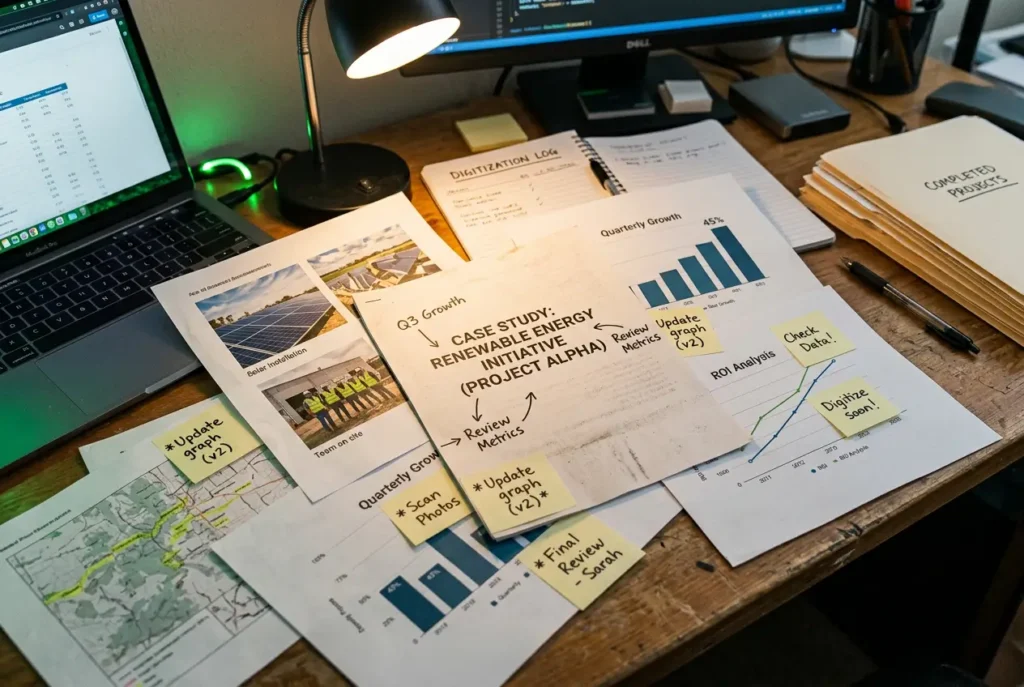
In a high-liability environment, social proof must be data-driven.
Data-Backed Case Studies
Replace testimonials like “They did a great job” with brief, impactful summaries:
“Restored propulsion for a 300ft OSV in 14 days, reducing projected downtime by 15% and meeting all ABS inspection standards on the first pass.”
Compliance as a Conversion Tool
Maritime procurement is heavily gated by safety and compliance. Dedicate a section to your HSE (Health, Safety, and Environment) record. Mentioning your Total Recordable Incident Rate (TRIR) is a powerful signal to corporate safety officers.
5. Strategic Conversion Points for Long-Cycle Sales
The maritime sales cycle can span months. Your landing page should offer “conversions” for different stages of the funnel.
H3: The Lead Magnet for Engineers
Instead of a newsletter, offer a Technical Spec Sheet or a Maintenance Checklist for Blue-Water Vessels. This captures the lead and positions your brand as an authority before the RFQ is even drafted.
Direct Access to Engineering
For high-intent users, provide a direct “Technical Hotline” or a “Consultation with a Naval Architect” option. This removes the friction of talking to a general salesperson.
FAQ Section
How do I optimize a marine service landing page for AI search engines?
Optimization for AI involves creating a high density of “entity” mentions—specific equipment brands, regulatory bodies (like USCG or IMO), and technical processes. Use structured Schema markup and ensure your H2s answer direct technical questions. AI engines prioritize content that follows a clear “Problem-Solution-Evidence” format, as it is easier to synthesize into a summary for the user.
What are the most important trust signals for maritime B2B decision-makers?
The most critical signals are third-party certifications (ABS, DNV, Lloyd’s), safety metrics (TRIR/EMR), and specific project history. In the marine industry, “time-in-business” and a demonstrable geographic presence near major ports or offshore blocks are also key drivers of credibility.
Should I include pricing on my industrial marine landing page?
While exact pricing is difficult for custom engineering, including “Pricing Models” or “Factors Influencing Project Cost” is highly effective. Discussing how you handle mobilization fees, labor rates, or parts procurement helps qualify leads and builds transparency, which is a significant differentiator in a sector known for opaque billing.
How long should a B2B marine service landing page be?
For high-value services, a length of 1,200 to 2,000 words is recommended. This allows enough space to cover technical specifications, safety protocols, and case studies. This depth is necessary to satisfy both the technical scrutiny of a port engineer and the semantic requirements of modern SEO algorithms.
Strategic Conclusion: From Visibility to Authority

An effective landing page for industrial marine services acts as a bridge between technical capability and commercial reliability. By structuring your content to satisfy the rigorous requirements of both human procurement officers and AI-driven search engines, you transition from being a mere “vendor” to a strategic partner.
The goal is not just to be found; it is to be the only logical choice for a high-stakes maritime operation. Focus on technical depth, clear data points, and an uncompromising commitment to demonstrating how you protect the client’s most valuable asset: their operational uptime.
Would you like me to develop a specific technical spec sheet template to use as a lead magnet for this landing page?