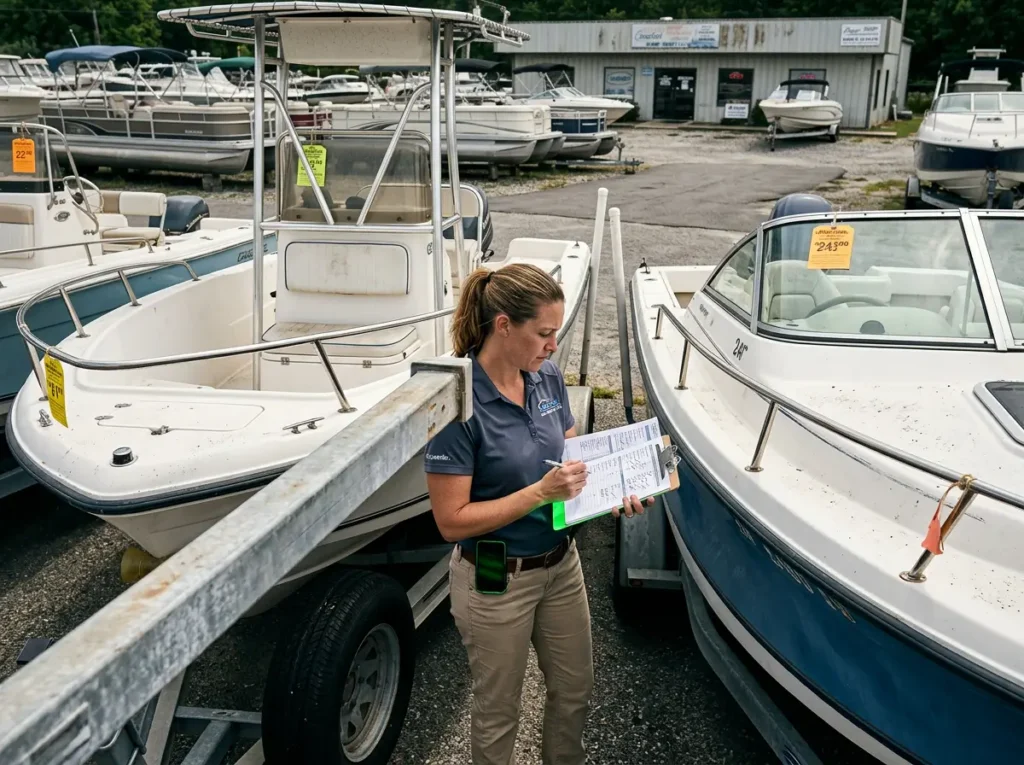
In the cyclical marine industry, inventory velocity is the ultimate metric of a dealership’s financial health. While new unit allocations often command the attention of the sales floor, the accumulation of used vessels represents a silent threat to dealership profitability. When trade-ins and brokerage vessels sit unsold past the 90-day mark, they cease to be assets; they become liabilities that consume capital, occupy valuable physical footprint, and rapidly depreciate.
For executive decision-makers and dealership principals, addressing stagnant inventory requires a shift from passive merchandising to aggressive, targeted digital distribution. Relying on organic foot traffic or passively listing a vessel on third-party aggregator sites (like BoatTrader or YachtWorld) is insufficient in a normalized or contracting market. When interest rates fluctuate and consumer discretion increases, moving a depreciating asset demands a sophisticated, multi-channel marketing infrastructure.
The financial gravity of aged inventory cannot be overstated. Floor plan curtailments—the mandatory principal payments required by lenders as inventory ages—directly erode operating cash flow. To preserve liquidity and protect margins, marine executives must deploy advanced stagnant marine inventory marketing strategies.
This article outlines the structural, digital, and algorithmic frameworks necessary to accelerate inventory turn, capture high-intent buyers, and clear aging vessels before their margins evaporate.
The Financial Gravity of Aged Marine Inventory
Before deploying digital tactics, it is critical to align the marketing department with the financial realities of the sales department. Marketing a used vessel is fundamentally different from marketing a new model year; it is a race against a mathematical depreciation curve.
Floor Plan Erosion and Opportunity Cost
Marine floor plan financing is designed to facilitate rapid turnover. As a used vessel crosses the 90, 120, and 180-day thresholds, lenders initiate curtailment schedules. These mandated payments drain cash reserves that could otherwise be deployed toward marketing high-margin service operations or acquiring fast-moving inventory.
Furthermore, stagnant inventory carries a massive opportunity cost. A dealership lot clogged with aged, overpriced trade-ins prevents the acquisition of highly desirable brokerage listings. The strategic objective of marketing used vessels is not necessarily to maximize the gross margin on a specific aged unit, but to recover capital quickly to redeploy it into higher-velocity assets.
The Depreciation Curve of Traded Vessels
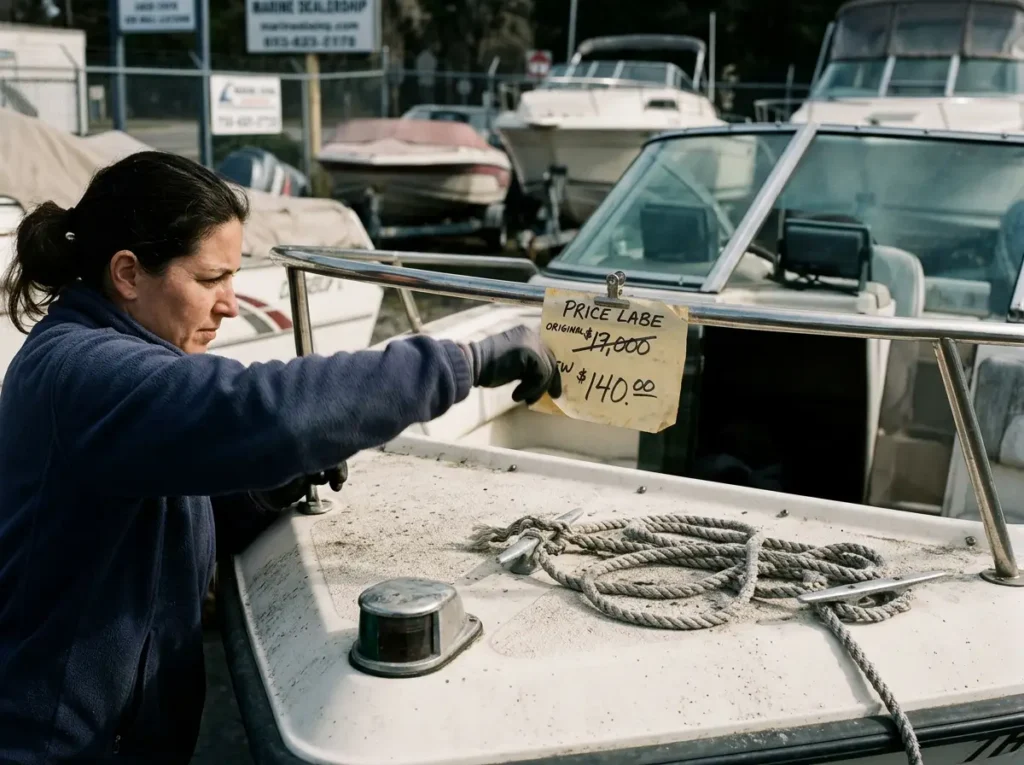
Unlike new vessels protected by MAP (Minimum Advertised Price) policies and factory warranties, used boats are subject to real-time market depreciation. Every month a vessel sits, the NADA or BUC value adjusts downward, while the dealer’s carrying cost adjusts upward. When the intersection of these two lines crosses the actual cash value (ACV) of the trade, the dealership faces a negative equity scenario.
Executive operators must mandate strict digital intervention triggers. For example, if a vessel reaches 60 days on the market without a qualified offer, an automated marketing sequence must initiate—escalating visibility, repositioning the listing, and capturing new buyer pools before the 90-day curtailment hits.
Algorithmic Merchandising: Beyond the Standard Listing
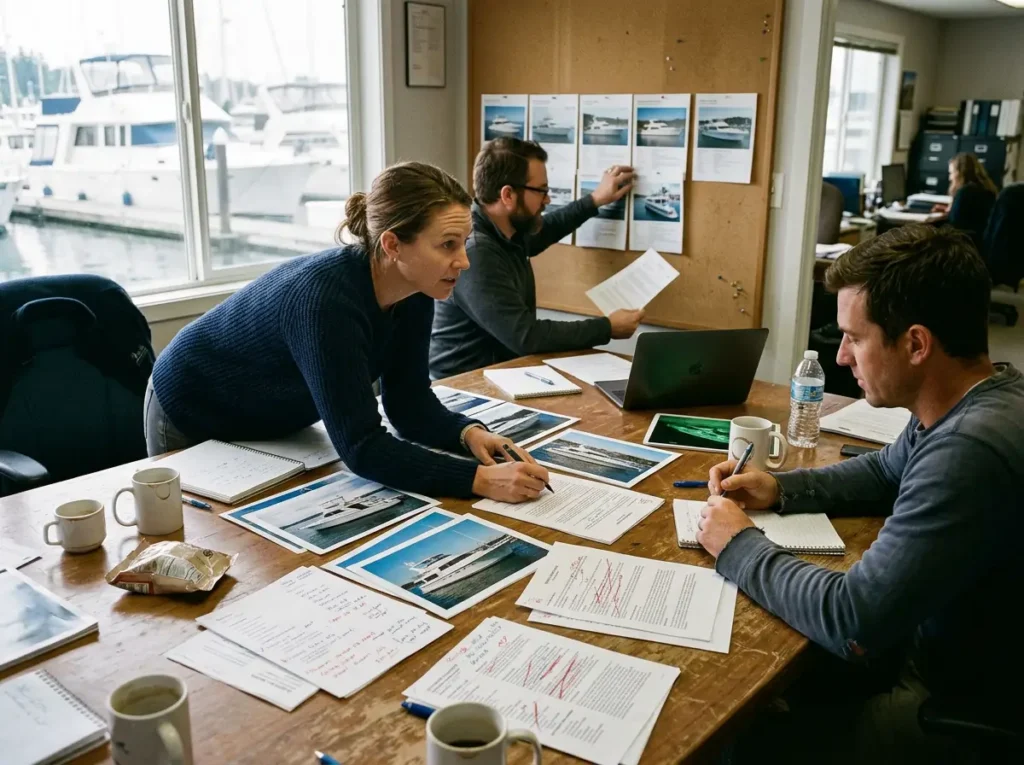
A vessel does not sell if the digital listing fails to answer the specific, technical questions of a high-intent buyer. Generic descriptions and smartphone photos are unacceptable for high-ticket assets. Overcoming stagnation requires “algorithmic merchandising”—structuring the listing to appease both search engine crawlers and sophisticated human buyers.
Semantic SEO for Specific Hull and Engine Configurations

When a buyer is in the market for a used $150,000 center console, they do not search for “used boats for sale.” They search for exact specifications: “2019 Sea Ray 320 Sundancer with Twin Mercruiser 350s” or “Used 28ft center console with dual Yamaha 300s under 500 hours.”
Your dealership’s website must be optimized to capture these long-tail, high-intent queries. Aged boat inventory SEO requires moving beyond default DMS (Dealer Management System) feed outputs. Marketing teams must optimize the structural elements of the listing page:
- H1 Tags: Must include Year, Make, Model, and specific Engine Package.
- Body Copy: Detail the service history. A vessel marketed with “Recent 300-hour service completed by our certified technicians” converts exponentially higher than a standard manufacturer description.
- Component Level Detail: Explicitly list the electronics suite (e.g., Dual Garmin 8616xsv, FLIR thermal), audio upgrades, and seating configurations. These specific entities act as powerful semantic keywords for Google’s algorithm.
Dynamic Repositioning Instead of Passive Price Drops
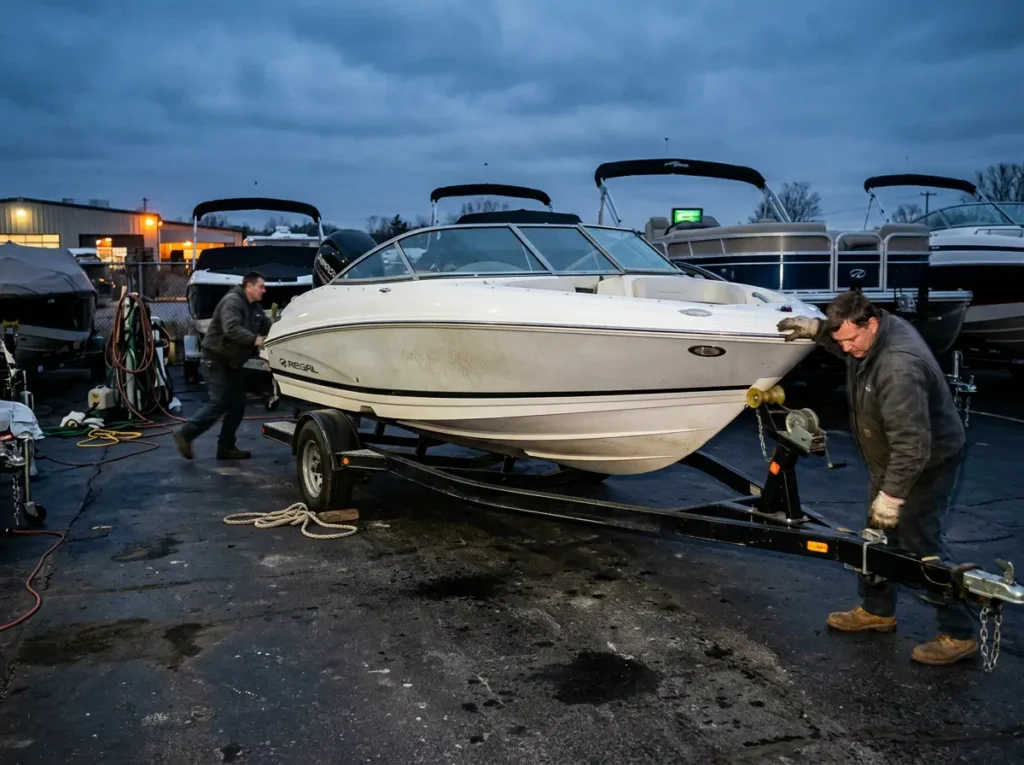
The default dealership response to stagnant inventory is a public price drop. However, strategically repositioning the vessel often yields better results without sacrificing margin.
If a 30-foot cruiser is not selling, the marketing team should reposition the digital asset. This involves changing the primary hero image, updating the headline to emphasize a newly added incentive (e.g., “Includes Free Winter Storage” or “Comes with 1-Year Extended Warranty”), and pushing the revised listing back to the top of email feeds. By increasing the perceived value of the asset, dealerships can often stimulate demand without racing to the bottom on price.
Omnichannel Targeted Distribution for Used Assets
To accelerate boat dealership inventory turn, you must actively push the asset to the market rather than waiting for the market to find the asset. This requires utilizing first-party data and aggressive retargeting infrastructures.
Mining the CRM for Lost Deals and Upgrade Candidates
The most efficient buyers for your stagnant inventory already exist within your CRM. Advanced marketing strategies involve querying the database for two specific cohorts:
- The “Lost Deal” Cohort: Buyers who inquired about a similar vessel 6 to 12 months ago but failed to purchase. An automated, personalized email from the sales director (“We just took in a trade that perfectly matches what you were looking for last summer”) yields exceptionally high open and response rates.
- The “Upgrade” Cohort: Current service customers who own a smaller, older version of the stagnant vessel. Targeting an owner of a 2015 21-foot bowrider with an aggressive trade-in offer toward your stagnant 2021 24-foot model creates a powerful, high-conversion pipeline.
High-Fidelity Video and Virtual Sea Trials
A primary reason out-of-state buyers hesitate on used vessels is a lack of trust regarding the boat’s actual condition. Bridging this gap requires high-fidelity video assets.
Every vessel sitting past 45 days should have a mandatory “Virtual Sea Trial” video recorded. This is not a polished, cinematic commercial; it is an authentic, raw walkthrough by a salesperson. The video must show the engines starting cold, demonstrate the electronics powering on, and highlight any minor cosmetic flaws transparently. Embedding these videos directly onto the listing page drastically increases “time on page” (a positive SEO signal) and provides the ultimate trust signal required to secure a remote deposit.
AI Search and Zero-Click Optimization for Boat Sales
The most significant shift in digital acquisition is the rise of Large Language Models (LLMs) and AI-assisted search (such as Google’s SGE). Buyers are increasingly asking AI to curate options for them: “Find me used fiberglass fishing boats under $80,000 within 200 miles of Miami with less than 300 engine hours.”
Structuring Listing Data for LLM Retrieval
If your website relies entirely on unstructured text or heavily integrated third-party iFrames, AI models cannot read your inventory. To ensure your used boat AI search optimization is effective, your development team must implement rigorous Schema Markup (specifically Product, Offer, and Vehicle schemas) on every individual boat listing.
This structured data explicitly feeds the AI the exact price, location, engine hours, and availability of the vessel in a language the machine natively understands. When your digital infrastructure speaks clearly to LLMs, your stagnant inventory is systematically served directly into the zero-click, conversational search results of highly qualified buyers, bypassing aggregator websites entirely.
Frequently Asked Questions (FAQ)
How do floor plan holding costs impact the ROI of marketing aged boat inventory? Floor plan holding costs directly erode the net profitability of a vessel. As a boat ages past 90 days, lenders require curtailment payments and continue to charge interest. The ROI of an aggressive marketing campaign (such as spending $500 on targeted paid social ads for a specific hull) is exceptionally high when it prevents a $2,000 monthly holding cost and a subsequent $5,000 wholesale loss. Executives must view marketing spend on aged inventory as loss mitigation rather than standard customer acquisition.
Why should a dealership invest in its own website SEO instead of relying solely on third-party marine classifieds? Third-party aggregators operate on a model of distraction. When you pay to list a vessel on an aggregator, your boat is displayed immediately adjacent to your competitors’ inventory, forcing a race to the bottom on price. By investing in your own dealership’s aged boat inventory SEO, you capture the buyer directly. A buyer on your website is captive; they are only viewing your inventory, absorbing your brand authority, and engaging with your internal sales team without third-party interference.
How does structured data (Schema markup) influence a boat listing’s visibility in AI search? AI models and modern search engines do not “read” web pages the way humans do; they parse code to extract facts. If a used boat listing lacks structured data, the AI has to guess the price, year, and specifications. Schema markup mathematically labels these elements (priceCurrency, itemCondition, mileageFromOdometer for engine hours). This allows LLMs to confidently extract your vessel’s data and recommend it instantly when a user inputs a highly specific conversational query.
What is the optimal digital cadence for reducing the price of a stagnant vessel? Price reductions should be strategic, not desperate. The optimal cadence involves a 30-60-90 day framework. At 30 days, reposition the digital listing (new photos, updated SEO copy). At 60 days, utilize CRM mining and direct targeted email campaigns with a “private” price reduction to past leads. Only at 90 days, when curtailments approach, should a public, aggressive price drop be broadcasted across all digital channels and syndications to force a liquidation event.
How can we leverage our existing CRM to move used inventory before adjusting the public price? Your CRM contains buyers who missed out on previous inventory or current owners primed for an upgrade. Before reducing the public price of a vessel—which devalues the asset in the open market—marketing should run an Account-Based retargeting play. Export lists of service customers who own older models of the stagnant vessel and send a highly personalized text and email offering an “aggressive trade-in valuation” toward the specific unit you need to move.
Strategic Conclusion
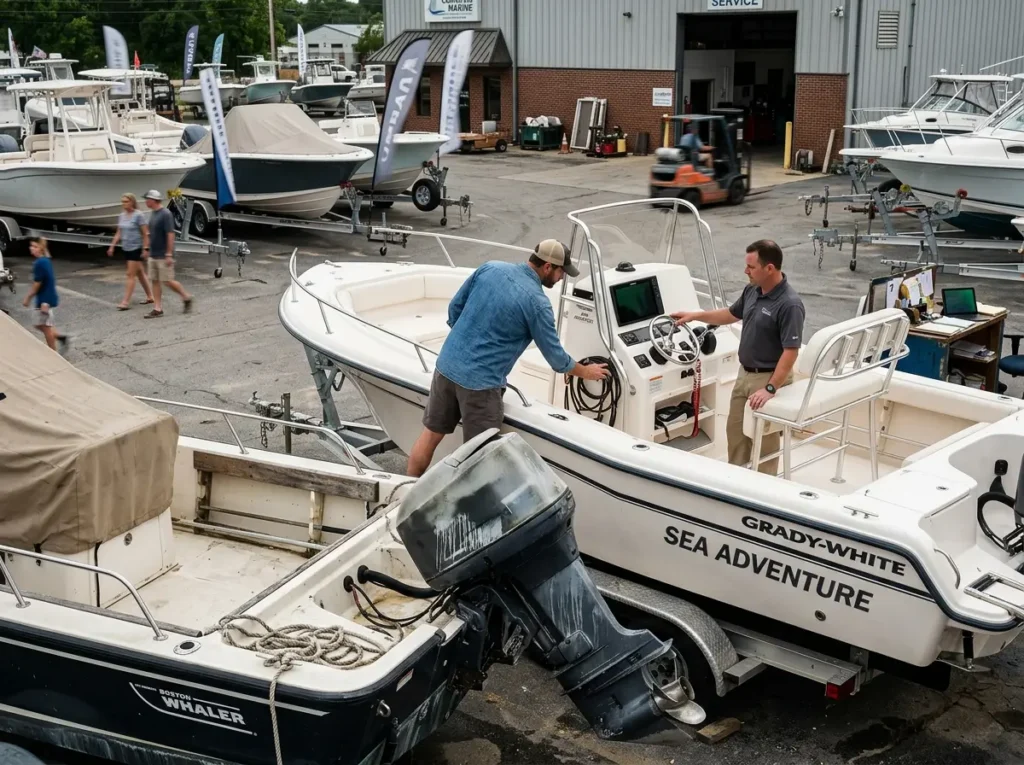
Moving stagnant marine inventory is not a matter of luck; it is a matter of mathematical discipline and digital architecture. The passive reliance on aggregator feeds and standard website listings is an obsolete strategy in an era of fluctuating interest rates and algorithmically driven consumer behavior. Dealerships that fail to proactively merchandise their aging assets will inevitably suffer from margin compression, capital constraint, and reduced inventory velocity.
By treating every used vessel as a unique digital campaign—leveraging deep semantic SEO, structured data for AI retrieval, transparent video assets, and aggressive CRM mining—dealership executives can intercept high-intent buyers before the depreciation curve erodes profitability. Mastering stagnant marine inventory marketing is a fundamental operational requirement that transforms a dealership from a passive holding lot into a high-velocity, highly liquid retail enterprise.