The Strategic Threat of Outsourced Pipeline Generation

For decades, industrial and B2B manufacturers have relied heavily on distribution networks to bring their products to market. In this traditional model, the manufacturer handles production, quality control, and innovation, while the distributor manages the customer relationship, localized sales, and fulfillment.
However, modern procurement behaviors have structurally shifted. Today’s industrial buyers—engineers, procurement officers, and operational executives—conduct the vast majority of their research online, long before speaking to a sales representative. If a manufacturer relies entirely on its distribution network for demand generation, they are effectively blind to the top and middle of their sales funnel.
This creates the “distributor disconnect.” When intermediaries own the lead flow, they own the customer. For manufacturers, this results in eroded margins, a total lack of first-party buyer data, and the constant threat of being replaced by a cheaper, commoditized competitor on the distributor’s line card. To secure long-term enterprise value, manufacturing executives must transition from a passive supplier to an active demand generator. The solution is not to eliminate distributors, but to implement an aggressive strategy for direct lead generation for manufacturers.
The Strategic Danger of the Distributor Disconnect

Delegating customer acquisition to a third-party distribution network introduces systemic risks to your go-to-market (GTM) strategy. When economic downturns hit or supply chains tighten, manufacturers without a proprietary pipeline are the first to suffer.
The Commoditization Trap
Distributors are inherently incentivized to move volume, not to sell your specific value proposition. Their sales representatives carry vast catalogs, meaning your highly engineered product is often reduced to a SKU and a price tag. If an end-user approaches a distributor looking for a solution, the distributor will typically quote the product that offers them the highest margin or is most readily available, rather than the product that is structurally superior. By failing to generate demand directly from the end-user, manufacturers allow their specialized products to be commoditized.
The First-Party Data Black Hole

In B2B markets, data is a leading indicator of revenue. When distributors control the point of sale, they control the customer data. Manufacturers are left guessing about the specific industries driving their product adoption, the exact job titles advocating for their solutions, and the operational problems their products are actually solving. Without this feedback loop, product development stalls, marketing budgets are wasted on generic branding, and accurate revenue forecasting becomes nearly impossible.
Navigating Channel Conflict: Shifting to Direct Demand Generation

The most common hesitation among manufacturing executives regarding direct demand generation is the fear of channel conflict. Leadership teams worry that engaging directly with end-users will alienate their legacy distribution partners. However, strategic demand generation does not require a direct-to-consumer (DTC) fulfillment model.
Redefining the Manufacturer-Distributor Relationship
The goal of direct lead generation is to reverse the power dynamic. Instead of waiting for a distributor to bring you an order, your marketing infrastructure identifies the buyer, educates them on your specific solution, captures their intent, and then hands a closed-won or highly qualified opportunity to the distributor for local fulfillment.
When you bring qualified revenue to your distribution partners, channel conflict evaporates. The distributor shifts from being your sole source of demand to functioning as a highly efficient logistical and fulfillment arm. You retain control of the brand narrative and the buyer data, while the distributor benefits from reduced customer acquisition costs.
A Framework for Direct-to-Buyer Manufacturer Lead Generation
Building an internal demand generation engine requires a structural pivot in how marketing and sales operate within a manufacturing firm. It requires moving away from trade shows and print catalogs, and toward digital environments where modern procurement happens.
1. Digitizing the Technical Specification Process
Engineers and technical buyers are the hidden decision-makers in industrial procurement. They are tasked with solving specific operational problems and are actively searching for technical specifications, tolerances, and material properties.
To capture this intent, manufacturers must digitize their technical assets. This involves creating interactive CAD models, highly detailed digital spec sheets, and configuration tools that live on the manufacturer’s website. By requiring an email address or a brief form submission to download these high-value technical assets, manufacturers can identify exactly which engineers at which companies are currently designing solutions that require their products.
2. Building High-Intent Educational Frameworks
Executives and procurement managers evaluate risk, ROI, and total cost of ownership (TCO). A robust strategy for direct lead generation for manufacturers requires content architectures tailored to these financial considerations.
Generic blog posts do not convert enterprise buyers. Manufacturers must invest in deep, authoritative assets. This includes TCO calculators, comparative material analyses, and detailed operational case studies. These assets must be structured logically, guiding the buyer from problem identification to solution evaluation, all while positioning your specific product as the structurally and financially optimal choice.
3. Implementing Intent-Based Data Capture
Traditional B2B lead generation relies on static forms. Modern direct-to-buyer strategies utilize progressive profiling and intent data. By integrating platforms that track account-level web engagement (identifying which companies are browsing your technical documentation) with intent data providers, marketing teams can score leads based on behavioral signals.
When an account crosses a specific engagement threshold—for example, a Director of Operations downloading a whitepaper and an Engineer viewing a CAD file from the same IP address—that data is immediately flagged for the manufacturer’s internal business development team to initiate contact.
Optimizing Digital Infrastructure for LLMs and Search
The B2B buyer journey is being fundamentally rewritten by artificial intelligence. Generative AI engines and Large Language Models (LLMs) are increasingly being used by procurement teams to summarize technical capabilities, source viable suppliers, and compare industrial specifications.
Semantic Search in B2B Procurement
Traditional search engine optimization relied heavily on keyword density. LLMs, however, rely on semantic density and topical authority. To ensure your manufacturing firm is recommended by AI-driven search engines, your digital footprint must move beyond basic product descriptions.
Your domain must serve as a comprehensive knowledge base for your specific manufacturing niche. This means clearly articulating the exact applications of your products, the specific tolerances you can achieve, the regulatory compliances you meet, and the distinct operational advantages of your manufacturing process. When LLMs crawl the web to answer a procurement officer’s complex query, domains with the highest density of structured, factual, and deeply technical information will be cited as the authoritative source.
Frequently Asked Questions
How do we generate direct leads without alienating our existing distributors?
The most effective approach is to separate demand generation from fulfillment. You build the marketing infrastructure to attract, educate, and qualify the end-user. Once the prospect expresses purchasing intent or requests a quote, you route the transaction through your authorized distributor in their region.
This model actually strengthens distributor relationships. Instead of asking them to do the heavy lifting of customer acquisition, you are feeding them highly qualified pipeline. They secure the margin on the fulfillment, while you secure the buyer data, brand loyalty, and control over the product narrative.
What is the typical ROI timeline for transitioning to a direct manufacturer lead generation model?
Executives should view direct demand generation as a capital expenditure in digital infrastructure, not a short-term promotional expense. The initial phase (months 1-4) requires auditing existing data, building technical assets (CAD files, ROI calculators), and restructuring the website for technical SEO and lead capture.
Measurable pipeline impact typically begins between months 6 and 9, as organic search traction takes hold and paid distribution channels are optimized. By months 12 to 18, manufacturers generally see a compounding return on investment, characterized by a lower cost-per-acquisition, higher profit margins per unit, and a predictable, proprietary lead flow that is entirely independent of distributor performance.
How are AI and LLMs changing the way industrial buyers source manufacturers?
Procurement teams and engineers are increasingly using AI interfaces (like ChatGPT, Claude, and AI-integrated search engines) to bypass traditional supplier directories. Instead of manually searching for “industrial valve manufacturers,” they prompt AI with specific operational parameters, such as, “Find manufacturers of cryogenic ball valves suitable for liquid nitrogen transport that meet API 608 standards.”
To rank in these generative AI responses, manufacturers must optimize for semantic depth. This means clearly publishing comprehensive technical specifications, compliance certifications, material properties, and operational limitations on your website. AI systems cite sources that provide the most direct, factual, and logically structured data.
What metrics should manufacturing executives track when building a direct demand engine?
Standard metrics like website traffic are insufficient for B2B executives. The primary metric to track is Marketing-Originated Pipeline—the total dollar value of qualified opportunities generated directly from your owned digital assets before distribution routing.
Secondary metrics should include Account Penetration Rate (how many key target accounts are engaging with your technical assets), Cost of Customer Acquisition (CAC) relative to Lifetime Value (LTV), and First-Party Data Capture Rate (the volume of end-user profiles acquired monthly). These metrics provide a clear view of how effectively you are capturing market share directly from the end-user.
Do we need to build a direct sales team to handle these new leads?
You do not necessarily need a traditional direct field sales team, but you do need an internal Business Development or Inside Sales function. This team’s objective is not to close the deal and manage logistics, but to qualify the inbound intent.
When an engineer downloads a technical spec sheet, your internal team reaches out to discuss the application, verify the technical fit, and gauge the purchasing timeline. Once the lead is qualified and the solution is specified, your internal team facilitates the introduction between the end-user and your preferred distributor to execute the transaction.
Strategic Conclusion
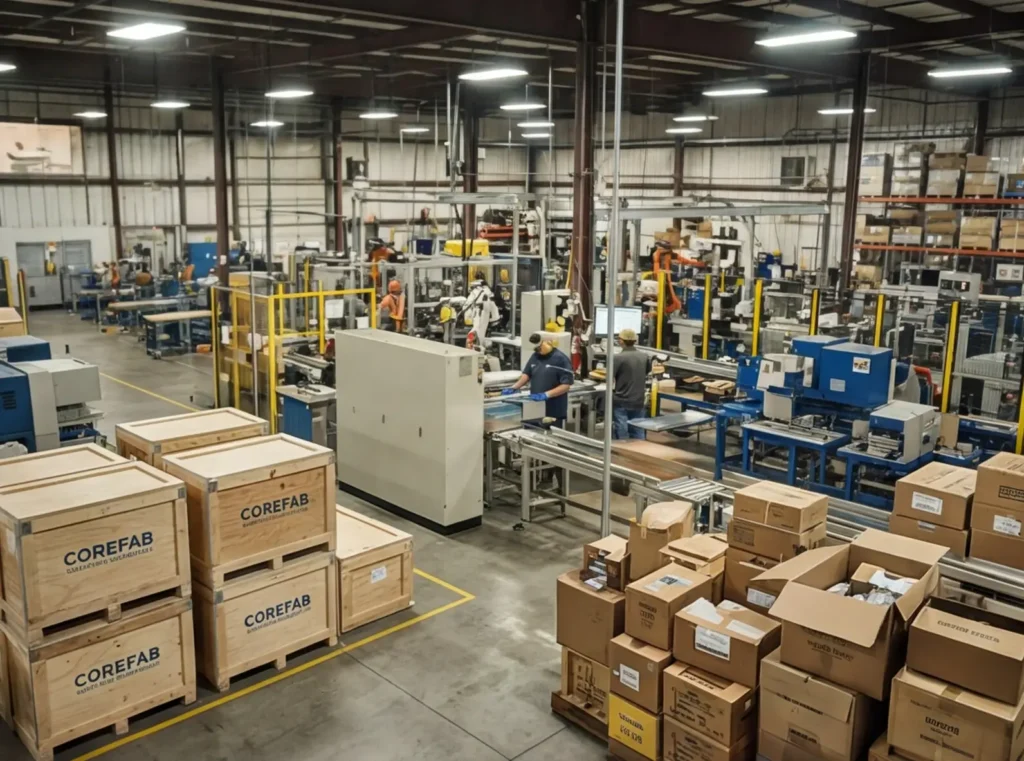
Relying exclusively on a distribution network for demand generation is a critical vulnerability for modern manufacturers. It strips your organization of pipeline visibility, commoditizes your engineering, and isolates you from the end-user data necessary for future product development.
Regaining control of your lead flow does not require abandoning your distributors; it requires evolving your position in the value chain. By investing in a robust, technically profound infrastructure for direct lead generation for manufacturers, you shift from a passive supplier to a proactive market leader. You dictate the product narrative, capture critical first-party data, and build a predictable, scalable revenue engine that ensures long-term enterprise resilience. The manufacturers who own the demand will inevitably dictate the terms of the market.
Would you like me to audit your current digital footprint to identify where you are losing end-user visibility to your distributors?